Ginger for early-pregnancy nausea: a comfort option, not a reason to wait for care
Table of Contents
If you’re pregnant and queasy, the ginger tea in your cupboard might sound easier than another conversation about treatment. That’s a reasonable thought if you’re feeling mildly sick and can still drink and go about your day. But if you’re repeatedly vomiting or struggling to keep fluids down, skip the kitchen experiment and call your pregnancy-care team. Dehydration and severe pregnancy sickness need assessment, not a stronger ginger drink. ACOG and the NHS both describe care that goes well beyond home remedies.
The short version: ginger has a tentative signal for nausea, not a dependable record of stopping vomiting. And the clinical research on ginger preparations doesn’t tell us that a cup of tea, a candy and a concentrated capsule will behave alike. That distinction matters when you’re deciding what to try - and when to stop trying things at home. (NCCIH; Hu and colleagues review)
First, check whether this is a self-care day #
Can you keep drinks down? Are you urinating as usual, and are you able to eat and function? If the answer’s no, or vomiting is persistent, speak to your pregnancy-care team promptly. Very little or dark urine, dizziness or faintness on standing, a racing heart, and weight loss are other reasons to get help. Abdominal pain, fever or blood in vomit also warrant a call; vomiting that starts for the first time after nine weeks deserves assessment rather than an assumption that it’s ordinary pregnancy nausea. If your team isn’t reachable, follow local urgent-care guidance. (ACOG; NHS)
Severe vomiting can be hyperemesis gravidarum (HG), with dehydration and weight loss. It can require medication, fluids given intravenously and sometimes hospital care. Ginger isn’t a way to manage that on your own. And asking for treatment isn’t a failure at doing pregnancy the ’natural’ way. (NHS; NICE)
What the ginger studies actually found #
It’s tempting to talk about ginger as if the evidence were one neat answer. It isn’t. Reviews of early-pregnancy trials find a possible reduction in nausea compared with placebo, while the results for vomiting are much less convincing. One focused review found a nausea signal but no clear reduction in vomiting episodes and no significant advantage over vitamin B6. An older Cochrane review found inconsistent results across interventions and little reliable reporting of maternal or fetal safety; it didn’t include trials of HG. (Hu et al.; Viljoen et al.)
There’s a counting problem, too. A 2024 umbrella review examined seven meta-analyses, but those reviews shared many of the same underlying studies. Its authors rated their methodological quality low or critically low. So seven reviews aren’t seven independent confirmations that ginger works. I’d read the finding as permission to consider it for mild nausea, not as a promise you’ll feel better by lunchtime.
That reading fits NICE’s antenatal-care guidance: ginger can be considered for mild-to-moderate symptoms when someone prefers a non-drug option. The same guidance also offers anti-sickness medication as an option. You don’t have to earn medical treatment by trying every home remedy first.
Tea isn’t a capsule #
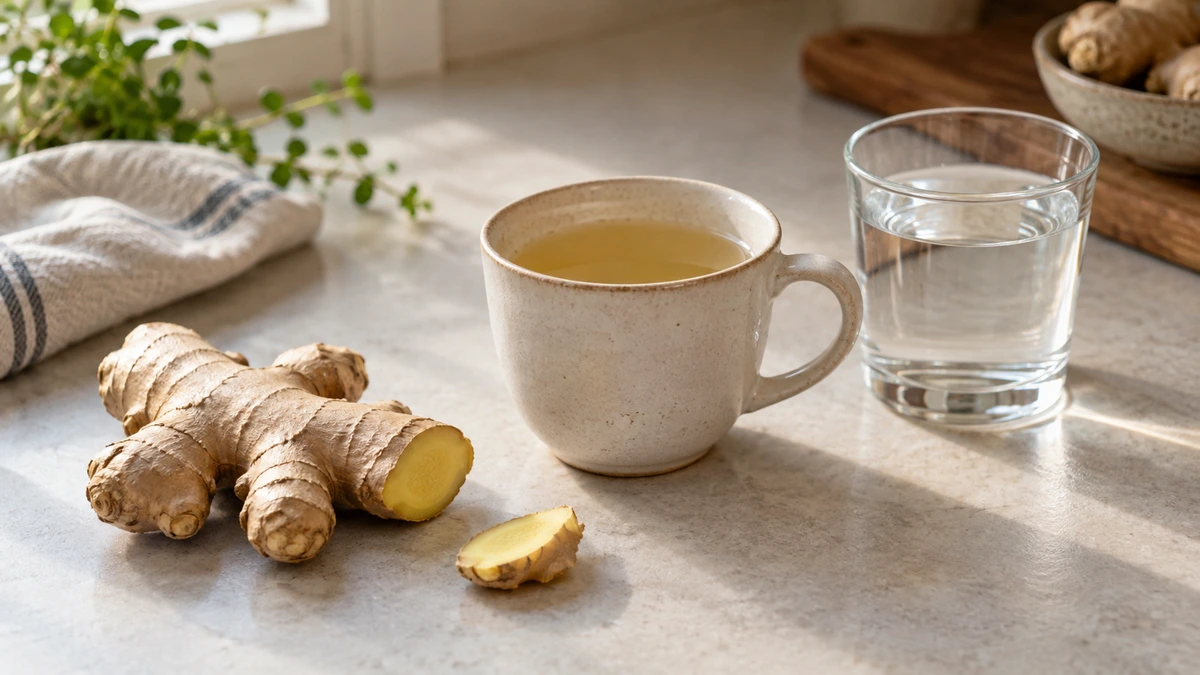
A bit of ginger in food, ginger tea, sweets marketed as ginger, capsules, extracts and concentrated shots all get called ‘ginger.’ They aren’t the same preparation. Research has largely examined defined preparations or supplements, not whatever happens to be in a mug or a shop-bought drink. There’s no sound conversion from a trial preparation into ‘one tea’ or ’two candies’ in this research pack. (NCCIH; 2024 umbrella review)
If a ginger-containing food or drink appeals to you and you’re otherwise keeping fluids down, think of it as an optional comfort measure - not a tested dose. Check what a packaged product actually contains, particularly if it’s sold as a supplement or mixes several herbs. The NHS mentions ginger foods and drinks as things some people try, but advises checking with a pharmacist before taking ginger supplements during pregnancy. I’d put extracts and concentrated products in that ‘ask first’ conversation with your obstetric clinician or pharmacist as well. No capsule schedule follows from a cup of tea, or vice versa.
Familiar doesn’t mean risk-free #
Some people get heartburn, abdominal discomfort, diarrhea or mouth and throat irritation from oral ginger. That’s not much comfort if heartburn is already part of your day. And if you take prescription or over-the-counter medicines, or have a condition that complicates pregnancy, tell your clinician or pharmacist about any ginger product you’re considering. Don’t stop a prescribed medicine to make room for a supplement. (NCCIH)
What about the baby? Available evidence hasn’t established that ginger supplements are risk-free at every dose or in every formulation. The early-pregnancy trials often reported maternal and fetal harms poorly, even though some available reports haven’t shown a clear harm signal. ‘No clear signal’ and ‘proven safe’ aren’t the same sentence. Ask your obstetric team before using a supplement rather than treating a natural label as a pregnancy safety check. (Cochrane; NCCIH; 2024 umbrella review)
And if nausea is interfering with eating, drinking or daily life, bring it up even if you aren’t sure it meets anyone’s definition of ‘severe.’ ACOG describes vitamin B6, doxylamine and other treatment choices to discuss with an obstetric professional. You can ask about those options while also mentioning what you’ve tried at home. (ACOG; NICE)
The practical bottom line #
For mild nausea with fluids staying down, ginger in food or drink is a choice you can discuss or simply skip. It might be comforting; it might not change much. But repeated vomiting, signs of dehydration or weight loss change the question entirely - call for care instead of testing another product. And before buying a ginger supplement during pregnancy, ask a pharmacist or your obstetric team what that particular product means for you. (NHS; ACOG)
Related
Tea and Longevity: Why Preparation Matters More Than the Halo
Herbs for Type 2 Diabetes: What the New Review Actually Found
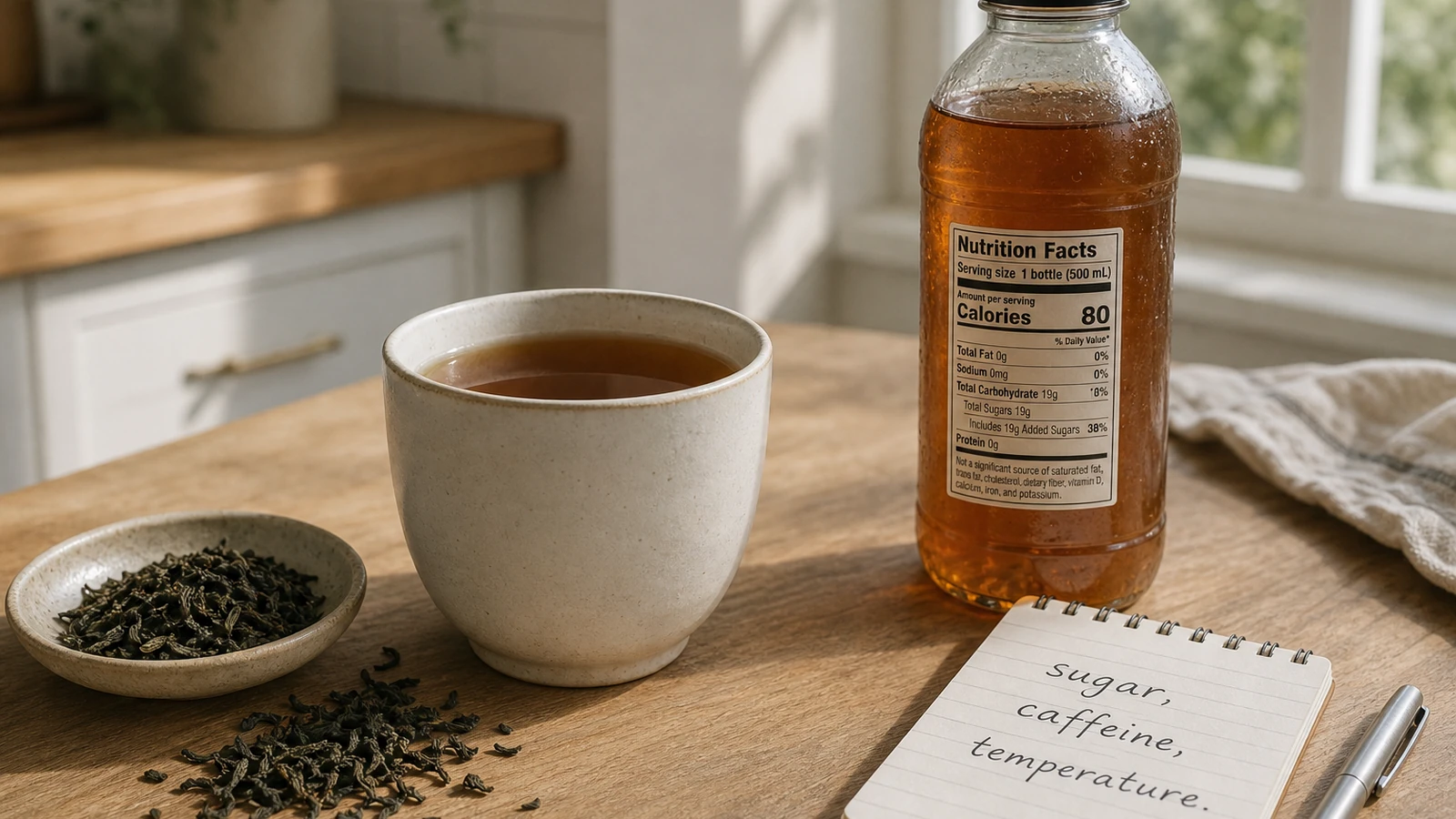
Tea's Health Halo Changes When It's Bottled, Sweetened, or Turned Into Boba