Tea and Longevity: Why Preparation Matters More Than the Halo
Table of Contents
Tea has one of those health reputations that can get away from the evidence pretty quickly.
A plain cup sounds traditional, low-cost, and a little virtuous. Green tea gets talked about for antioxidants. Black tea sits inside daily routines in a way that feels almost too ordinary to question. And then the word “tea” shows up on bottled drinks, sweet tea, milk tea, boba, and green tea extract capsules, as if all of those are the same thing.
They’re not.
The better longevity story is more careful: regular tea drinking is associated with lower all-cause and cardiovascular mortality in large observational studies, but that doesn’t prove tea itself makes people live longer. And the way you drink it changes whether the habit still looks like the tea pattern those studies were probably measuring.
So yes, tea can fit into a healthy routine. But it’s not a life-extension shortcut, and the cup still has to make sense.
What the longevity evidence actually says #
The strongest broad claim is cautious. Across prospective cohort studies, moderate tea drinking is linked with lower all-cause and cardiovascular mortality.
A 2024 meta-analysis of 38 prospective cohort datasets, including more than 1.9 million participants, found lower pooled estimates for all-cause mortality and cardiovascular mortality in the highest tea-intake groups compared with the lowest. The signal for cancer mortality was not clear enough to turn tea into a cancer-prevention claim (PubMed).
That distinction matters. Tea has a real association in population data. It doesn’t have permission to become “drink tea for disease protection.”
A separate dose-response review found that each 236.6 mL cup per day tracked with small reductions in cardiovascular mortality, cardiovascular events, stroke, and all-cause mortality, although the certainty varied by outcome (PubMed). Useful? Yes. A personal prescription? No.
Because cup size varies. Tea strength varies. People vary even more.
Tea drinkers may also differ from non-tea drinkers in diet, smoking, alcohol use, income, sleep, movement, health care access, and baseline health. Researchers adjust for some of that, but no statistical model can turn a lifelong drink habit into a clean randomized trial.
So the honest reading is this: tea drinking tracks with better outcomes in large datasets, especially for cardiovascular and all-cause mortality. It doesn’t outrank blood pressure care, diabetes care, cancer screening, medication, sleep, food quality, smoking status, or regular medical advice.
And that’s fine. A habit doesn’t need to be magical to be useful.
Why the “how” changes the meaning #
Tea is not just one exposure once it reaches your hand.
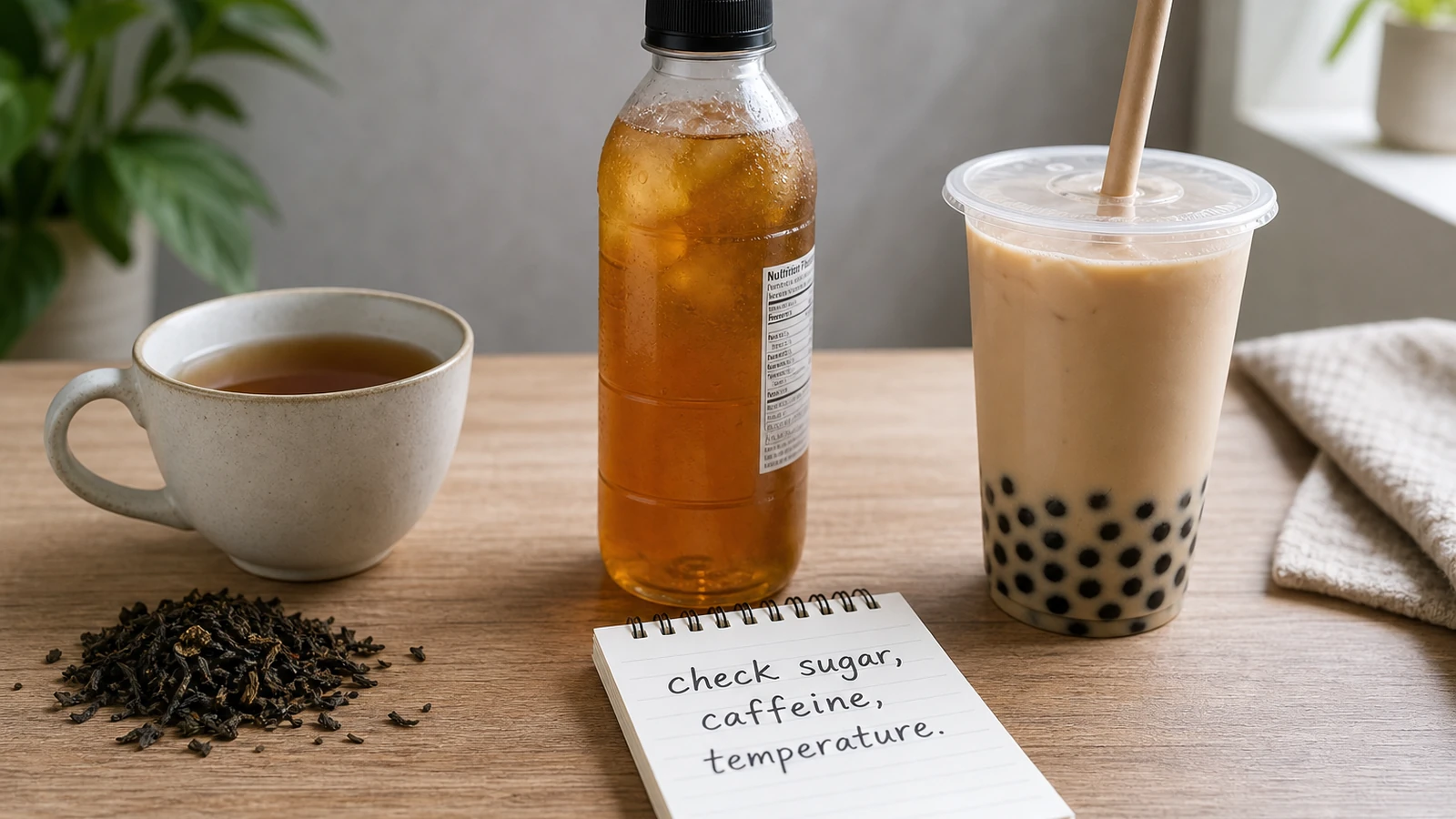
A mug of brewed black tea, an unsweetened bottled iced tea, a sweet bottled tea, and a large bubble tea with syrup and pearls are all called tea. Nutritionally, they can be miles apart. Chemically, they may not match either.
One large UK Biobank tea study noted a few practical limits: tea intake was self-reported, and researchers didn’t have exact portion size or tea-strength data (Annals of Internal Medicine / PMC). That’s the kind of detail that matters when people try to squeeze exact rules out of observational research.
Was the tea strong or weak? Sweetened or plain? Freshly brewed or bottled? Very hot or cooled? Black tea or green tea? With milk? With lemon? With a pile of tapioca pearls at the bottom?
The studies usually can’t answer all of that. But the practical pattern is still pretty clear: if you want tea to stay in the “simple daily beverage” category, keep it mostly unsweetened, avoid drinking it scalding hot, watch caffeine, and don’t put extracts in the same bucket as brewed tea.
Unsweetened tea is the cleaner default #
The newer sweetener-specific research sharpens the point, although it still stays in observational territory.
Two 2025 UK Biobank analyses looked at unsweetened, sugar-sweetened, and artificially sweetened tea. One Frontiers in Nutrition analysis found the clearest pattern for unsweetened tea, while sugar-sweetened and artificially sweetened tea didn’t show consistent statistically significant associations across mortality outcomes (Frontiers in Nutrition / PMC). A separate BMC Public Health analysis also found a favorable pattern for unsweetened tea, while artificially sweetened tea was more inconclusive (BMC Public Health / PMC).
But don’t over-clean that up into a fake rule. These studies don’t prove that one teaspoon of sugar cancels out tea. They also don’t prove that a precise number of unsweetened cups is the perfect longevity dose.
The better takeaway is less dramatic: if tea is going to be an everyday heart-health-minded drink, unsweetened is the cleaner default.
And if plain tea tastes like punishment, that’s useful information too. Try a different tea, brew it weaker, add lemon or mint, step sugar down slowly, or just admit you don’t love tea. A bitter cup you resent isn’t a wellness plan. It’s just a bitter cup.
Brewing loose-leaf tea at home makes it easy to control strength and sweetness. A fine-mesh basket such as the OXO Brew Tea Strainer Basket (affiliate link) is all it needs.
As an Amazon Associate we earn from qualifying purchases. Our disclosure.
Bottled tea and bubble tea need label literacy, not moral judgment #
Bottled tea sits in a weird middle zone.
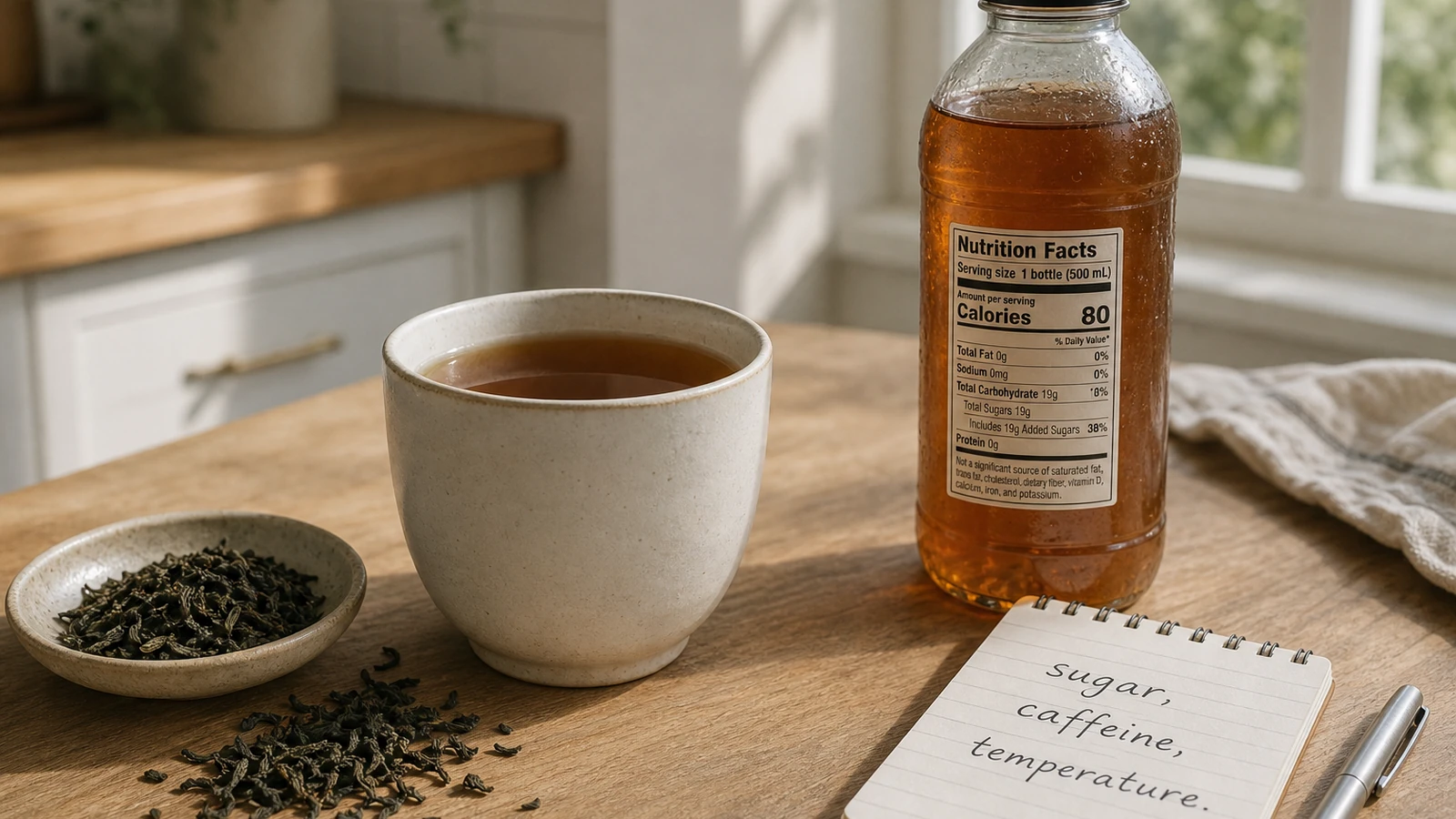
An unsweetened bottled tea can be a reasonable convenience drink. A sweet bottled tea can slide toward sugar-sweetened beverage territory. And the front label won’t always make that obvious, because “tea” still sounds healthier than “sweet drink.”
CDC lists sweetened coffee and tea among sources of added sugar, and WHO recommends reducing free sugars as part of a healthier diet pattern (CDC; WHO). That doesn’t mean every sweet tea is some moral failure. It means the sugar belongs in the decision.
So read the label. Check added sugars, serving size, calories, and caffeine. A bottle that looks like one serving may not match how the nutrition facts are presented. (Annoying, but common.)
Bubble tea is even more recipe-dependent. It may include brewed tea, milk or creamer, syrup, fruit flavoring, tapioca pearls, jelly toppings, cheese foam, and a large cup size. That can make it closer to a dessert drink than to the plain tea pattern in longevity studies.
But again, no need to turn this into scolding. If boba is an occasional sweet drink, call it that and enjoy it. If it’s a daily drink, the sweetness level, toppings, and portion size deserve more attention than the word “tea.”
One decent self-check: would this still look like a good everyday drink if the word “tea” disappeared from the cup?
Very hot tea is a separate safety issue #
There’s one preparation habit where “more intense” isn’t better: temperature.
IARC classifies very hot beverages above 65 C as probably carcinogenic to humans, with the heat itself considered the likely concern rather than coffee or tea as a beverage category (IARC / WHO). A meta-analysis of hot tea and esophageal cancer risk also linked higher-temperature tea with higher risk, while still dealing with the usual limits of observational temperature research (PubMed).
So let tea cool until it’s comfortable to drink.
That’s not fussy. It’s just the part of the tea habit where waiting a few minutes makes more sense than treating steam like proof of potency.
And no, hotter tea doesn’t mean stronger benefits. If anything, very hot tea belongs in the caution column.
Green tea extract is not “tea, but better” #
This is where wellness marketing can get sloppy.
Brewed green tea and green tea extract capsules are not the same exposure. NCCIH says green tea consumed as a beverage has not raised the same safety concerns for adults, although it does contain caffeine. Green tea extracts, especially in tablet or capsule form, have been associated with side effects such as nausea, constipation, abdominal discomfort, increased blood pressure, and uncommon reports of liver injury (NCCIH).
So don’t use tea-longevity research as a reason to buy concentrated green tea extract for weight loss, “anti-aging,” or a stronger health effect.
Same plant family, different risk conversation.
Medication interactions matter here too. NCCIH notes that green tea or green tea extract may interact with medicines including nadolol, atorvastatin, raloxifene, and possibly others (NCCIH). If you take regular medication, especially for blood pressure, heart disease, cholesterol, osteoporosis, or other chronic conditions, ask a clinician or pharmacist before using green tea supplements or drinking unusually large amounts of green tea.
Safety box: who should be more careful #
For many adults, ordinary brewed tea is a low-drama drink. The caveats show up when caffeine, pregnancy, breastfeeding, medications, liver concerns, extracts, very hot beverages, or sugar load enter the picture.
Pregnant readers should count tea toward total daily caffeine. ACOG says moderate caffeine consumption under 200 mg per day is the threshold often discussed during pregnancy and notes that caffeine is found in tea (ACOG). NHS guidance uses the same 200 mg daily pregnancy limit and also reminds readers that tea contains caffeine (NHS). Breastfeeding readers should keep caffeine in view too, since caffeine can pass into breast milk.
Caffeine-sensitive readers may need less tea, earlier timing, or lower-caffeine options if tea worsens insomnia, anxiety, reflux, headaches, palpitations, jitteriness, or frequent urination. And readers monitoring blood sugar, carbohydrates, triglycerides, fatty liver, weight, or diabetes risk should check sweetened tea and boba the same way they’d check other sweet drinks.
People with liver disease, abnormal liver tests, unexplained jaundice, dark urine, severe fatigue, or right-upper-abdominal pain shouldn’t self-prescribe green tea extracts. Get medical advice instead.
And tea shouldn’t replace prescribed medication, cardiovascular risk management, diabetes care, cancer screening or treatment, blood pressure care, lipid care, or clinician-directed treatment for any diagnosed condition.
Bottom line #
Tea’s longevity halo isn’t imaginary. Large observational reviews do link regular tea drinking with lower all-cause and cardiovascular mortality.
But the evidence isn’t a guarantee, and it isn’t a dosing protocol.
The practical version is much better anyway: drink tea if you enjoy it and it agrees with you. Keep it mostly unsweetened. Let it cool. Read bottled-tea labels. Treat boba as a sweet drink or dessert unless you order it much lighter. Count caffeine. Be careful with pregnancy, breastfeeding, medications, liver issues, and extracts.
A cup of tea can be a good habit. It just doesn’t need to become a miracle story.
Related
Tea's Health Halo Changes When It's Bottled, Sweetened, or Turned Into Boba

Coffee and Dementia: What 35 Percent Lower Risk Really Means