Herbs for Type 2 Diabetes: What the New Review Actually Found
Table of Contents
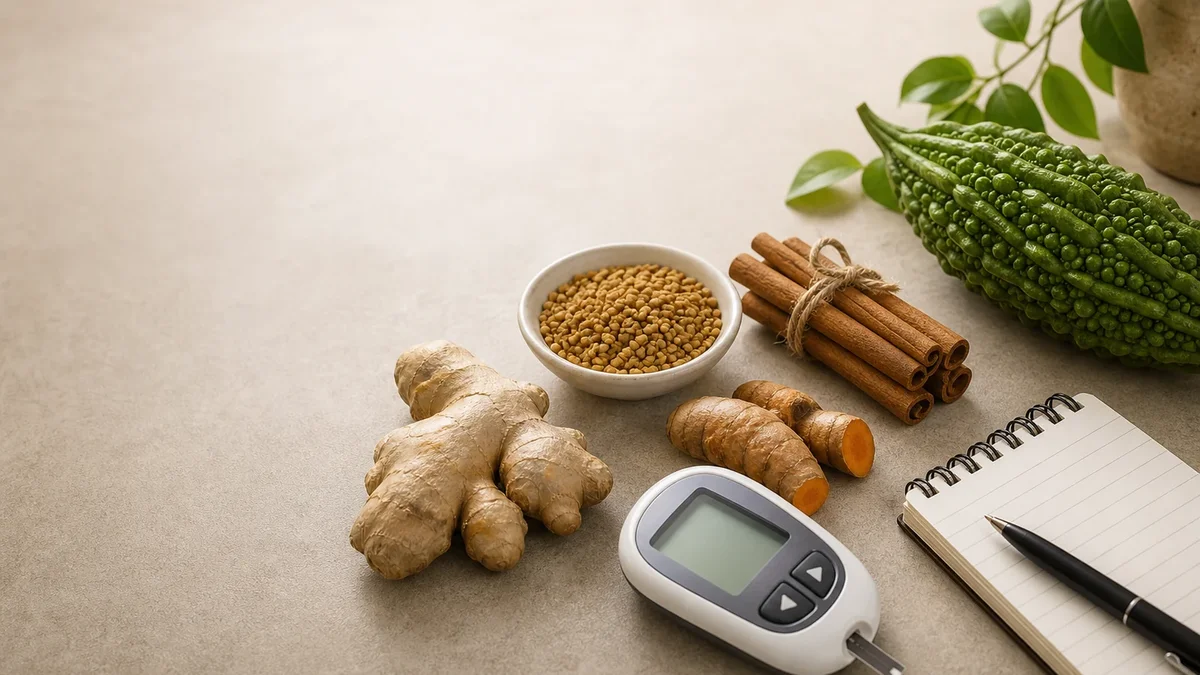
If you’ve seen ginger, turmeric, cinnamon, or berberine talked about as “blood sugar herbs,” the short version is this: some signals are real enough to discuss, but they’re not strong enough to turn herbs into diabetes treatments.
That distinction matters. Type 2 diabetes isn’t a wellness inconvenience. It’s a medical condition where blood sugar control, monitoring, food choices, movement, sleep, prescribed medication when needed, and follow-up care all matter. So the useful question isn’t “which herb treats diabetes?” It doesn’t. The better question is quieter and more practical: what does the review evidence say about herbs as possible add-ons, and where does the marketing run way ahead of the data?
A 2025 umbrella review in BMC Complementary Medicine and Therapies looked across eight meta-analyses and two systematic reviews on herbal medicines for glycaemic control and insulin resistance in people with type 2 diabetes. Its strongest signal was for ginger and turmeric, with reported HbA1c reductions of about 0.47 to 0.49 percentage points versus placebo. But the same review also flagged big caveats: low or critically low review quality, study differences, variable herbal products, and limited safety reporting. (2025 umbrella review)
And that’s the tone this subject needs. Curious, yes. Credulous, no.
The headline finding: ginger and turmeric had the strongest signal #
In the 2025 umbrella review, ginger and turmeric came out looking more promising than many other herbal options. The review described moderate-to-high certainty evidence for modest HbA1c reductions compared with placebo, at least in the pooled review evidence it analyzed. (2025 umbrella review)
Still, that doesn’t mean a reader should start spooning turmeric into everything and expect diabetes control to change. An herb used in a clinical trial isn’t the same thing as a supermarket spice jar, a tea, a gummy, a tincture, or a multi-ingredient supplement blend. Species, extract, dose, preparation, product quality, and trial duration all matter (annoyingly, but they do).
There’s another catch: reviews don’t all line up cleanly. A 2024 ginger-only meta-analysis of five randomized trials found no significant pooled effect on fasting blood sugar or HbA1c, even though individual studies were mixed. (Ginger meta-analysis)
So ginger and turmeric are probably the best place to start if you’re asking what the recent review literature noticed. But “best signal in a mixed evidence base” is not the same as “proven diabetes treatment.”
What guidelines say is more cautious #
The National Center for Complementary and Integrative Health says many supplements have been studied for type 2 diabetes, including chromium, cinnamon, and berberine, but the evidence is usually weak, inconsistent, or limited by study design, size, formulation, dose, and duration. NCCIH’s consumer guidance is blunt on the safety point too: don’t replace medical treatment for diabetes with an unproven product or practice.
The American Diabetes Association takes an even colder view of supplements for glucose control. Its consumer guidance says the Standards of Care don’t support herbal or nonherbal supplementation for lowering blood glucose or supporting diabetes management when there’s no deficiency or clinician-directed reason.
That can feel like a clash, especially on an alternative-medicine site. But it’s really a useful tension. Review papers can point to possible biological effects or modest changes in blood sugar markers. Guideline-style advice asks a different question: is the evidence strong, consistent, safe, and practical enough to recommend to people living with diabetes? Right now, for most supplements, the answer is no.
Cinnamon, berberine, fenugreek, and bitter melon are not all the same story #
Cinnamon is the classic example of a popular herb with messy evidence. NCCIH notes that newer reviews suggest cinnamon may help fasting glucose, insulin resistance, or blood lipids in some studies. But a Cochrane review found insufficient evidence to support cinnamon for type 1 or type 2 diabetes, including no significant HbA1c effect in the included trials.
Berberine has a more serious evidence base than many viral supplements, and some systematic-review evidence suggests modest glucose-lowering effects in type 2 diabetes. But NCCIH also flags study-quality limits, generalizability problems, digestive side effects, medication-interaction concerns, and avoidance during pregnancy, breastfeeding, and infancy.
And no, berberine shouldn’t be sold as “natural Ozempic” or “natural metformin.” That’s marketing, not responsible health writing.
Fenugreek has some randomized-trial review support, including reported improvements in fasting blood glucose, 2-hour glucose, HbA1c, and some lipid measures, with mild gastrointestinal side effects in the included trials. (Fenugreek systematic review)
Bitter melon is trickier. The 2025 umbrella review found low-certainty evidence for some modest glucose-marker changes, but it also noted substantial heterogeneity and gastrointestinal side effects. It also cited reports linking Momordica charantia to hypoglycemic coma, convulsions, and reduced fertility.
So if someone says “herbs help diabetes,” ask: which herb, which preparation, which outcome, in which people, compared with what, and with what safety monitoring?
The safety issue isn’t theoretical #
Natural products can still act like active substances in the body. That’s the whole reason people are interested in them. But it also means they can interact with diabetes drugs, sometimes pushing blood sugar too low and sometimes working against the treatment plan.
A review on interactions between antidiabetic drugs and herbs warned that co-use may alter drug effects and can increase the risk of hypoglycemia when glucose-lowering effects stack. (Herb-antidiabetic interaction review)
That matters most for people using insulin, sulfonylureas, meglitinides, or other glucose-lowering medication, because hypoglycemia can become dangerous fast. ADA also notes that some supplement ingredients may contribute to high blood glucose instead.
One more practical issue: diabetes is closely tied to kidney health, and NCCIH notes that kidney disease has been linked to some dietary supplements. People with kidney disease, liver disease, pregnancy, planned surgery, anticoagulant use, chemotherapy, or complicated medication lists should be especially careful.
This is where the “natural means safe” idea falls apart. Sometimes natural just means harder to standardize.
Watch for red-flag marketing #
The FDA has warned consumers about illegally sold diabetes products, including dietary supplements, over-the-counter products, ayurvedic products, and prescription drugs sold without a prescription. Products marketed to cure, treat, mitigate, or prevent diabetes without approval haven’t been evaluated by the FDA as safe and effective for that disease use.
Red flags include “natural diabetes cure,” “reverse diabetes naturally,” “replace your diabetes medicine,” “miracle cure,” and claims that a supplement is FDA-approved for diabetes. Another warning sign: any seller pushing herbs as an option for people who can’t afford medication. That’s not help. It’s risky.
Better product questions are boring but useful: Is the exact ingredient listed? Is the dose clear? Is it third-party tested? Is there a USP or similar quality mark? Are there hidden blends? Does the label make disease-treatment claims? And has a doctor or pharmacist checked it against the reader’s medications?
What to ask before trying an herb #
If a person with type 2 diabetes still wants to discuss an herbal product, the safest next step is a clinician-guided conversation, not a DIY experiment. Bring the bottle, ingredient list, and dose to a doctor, pharmacist, or diabetes care team. Ask whether it could interact with current medications, whether kidney or liver disease changes the risk, whether pregnancy or breastfeeding makes it unsafe, and whether glucose monitoring should change while trying it.
Also ask what would count as a reason to stop. Low blood sugar symptoms, unusual dizziness, stomach problems, rash, signs of liver trouble, or unexpected glucose changes aren’t things to tough out because a product is “natural.”
And if the goal is better blood sugar control, be honest about the scale of the claim. A modest shift in HbA1c in a review doesn’t replace food planning, physical activity, sleep, stress management, medication when prescribed, and routine care. It might be a research signal worth watching. It isn’t a permission slip to self-treat diabetes.
Bottom line #
The best reading of the current evidence is cautious. Ginger and turmeric showed the strongest recent review-level signal for modest improvements in HbA1c among people with type 2 diabetes, while berberine, cinnamon, fenugreek, bitter melon, and other herbs have more mixed, limited, or formulation-dependent evidence.
But the bigger message is simpler: herbs are not substitutes for diabetes care. If they’re considered at all, they belong in an adjunct conversation with a qualified health professional, with medication interactions, hypoglycemia risk, product quality, and glucose monitoring taken seriously.
That’s less exciting than a “natural cure” headline. It’s also the version that’s least likely to hurt someone.
Related
Berberine in 2026: What the Evidence Actually Shows (and What It Doesn’t)

Herb-Drug Interactions: The Supplement Safety Check Most People Skip