Tea's Health Halo Changes When It's Bottled, Sweetened, or Turned Into Boba
Table of Contents
Tea has one of those health reputations that feels almost too easy to accept.
A brewed cup sounds calm, traditional, inexpensive, and vaguely virtuous. Green tea gets linked with antioxidants. Black tea gets folded into everyday routines. And then the word “tea” shows up on bottled drinks, sweet tea, milk tea, and bubble tea, where the nutrition facts can look very different from the quiet mug people picture.
That’s the catch. The longevity research isn’t really about every drink with tea on the label.
Across prospective cohort studies, regular tea drinking is associated with lower all-cause and cardiovascular mortality, but that doesn’t prove tea itself makes people live longer. In a 2024 meta-analysis of 38 prospective cohort datasets, with more than 1.9 million participants, the highest tea-intake groups had lower pooled estimates for all-cause mortality and cardiovascular mortality than the lowest-intake groups. The cancer-mortality signal was not clear enough to turn tea into a cancer-prevention story (PubMed).
So yes, tea has a real health signal. But it’s an observational signal, and the drink in your hand still matters.
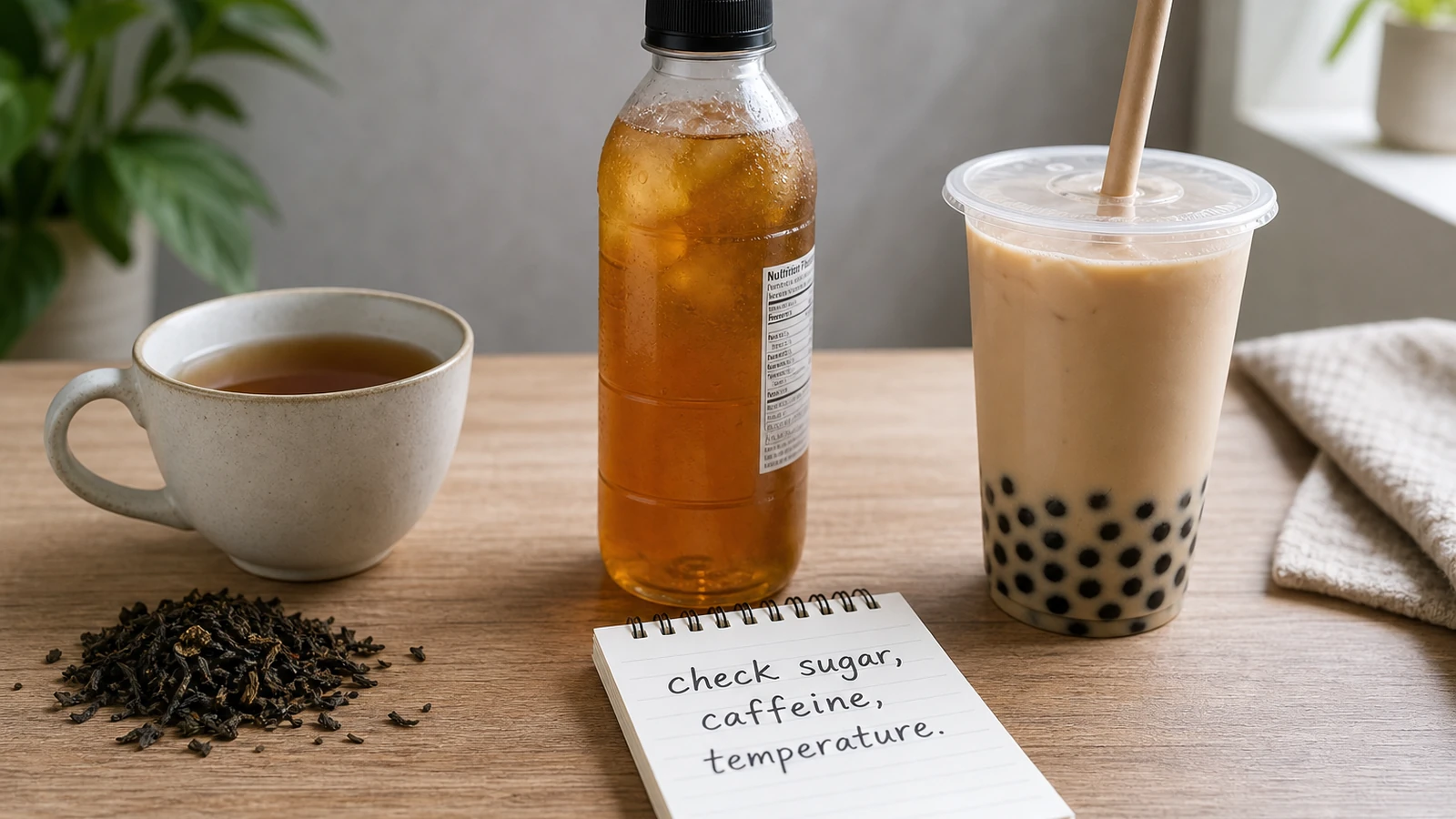
Is it brewed and unsweetened? Bottled and sugar-free? Bottled and sweet? A giant boba drink with tapioca pearls, syrup, and creamer? Those are not the same exposure - not nutritionally, and probably not biologically either.
The longevity evidence is promising, but it has limits #
The strongest broad claim is cautious: moderate tea drinking is associated with better longevity and cardiovascular outcomes in cohort research.
Another dose-response review found that each additional 236.6 mL cup per day was associated with lower cardiovascular mortality, cardiovascular events, stroke, and all-cause mortality, with evidence strength varying by outcome (PubMed). In review data, the most favorable observed range often sits around 2 to 3 cups per day, with benefits appearing more likely than harms at usual intake levels (PubMed).
But that’s not a prescription. It isn’t “drink three cups daily for longevity,” and it definitely isn’t “more tea is always better.”
People who drink tea may differ from non-tea drinkers in other ways: diet, smoking, alcohol use, income, health care access, sleep, exercise, and general routines. Researchers adjust for some of that, but they can’t fully turn a lifelong beverage habit into a randomized trial.
And cancer deserves a separate warning label in the reader’s head. The 2024 mortality meta-analysis did not give a clean cancer-mortality reduction for tea, while other research links very hot tea or high-temperature beverages with higher esophageal cancer risk (PubMed). Tea is not a cancer-prevention drink. Temperature matters too.
Brewed, unsweetened tea is closest to the evidence base #
If you’re trying to match the health signal in the research, the boring version wins: brewed tea, not scalding hot, with little or no sugar.
That doesn’t mean you need to turn tea into a joyless wellness ritual. Black, green, oolong, and other Camellia sinensis teas contain polyphenols and caffeine, and green tea in particular is often discussed for catechins such as EGCG. NCCIH describes green tea as a beverage as generally safe for adults when consumed in amounts commonly used, while also noting caffeine and safety issues around extracts (NCCIH).
The practical point is simpler than the chemistry: a plain brewed cup lets tea be tea.
It doesn’t add a sugar load. It doesn’t turn the serving into dessert. And you can control the strength, temperature, and add-ins. Letting it cool for a few minutes is not fussy - it’s part of keeping the “healthy tea habit” from becoming a very-hot-beverage habit.
Still, brewed tea isn’t magic. If caffeine makes you jittery, worsens reflux, triggers palpitations, or ruins sleep, that matters. A cup that looks healthy on paper can still be a bad fit at 9 p.m.
Bottled tea: read the label, not the front #
Bottled tea sits in the awkward middle.
An unsweetened bottled tea can be a reasonable convenience drink. USDA FoodData Central lists an unsweetened bottled green iced tea sample with 0 calories and 0 g sugars (USDA). That’s not the same problem as a sweetened tea.
But sweetened bottled tea can drift toward soft-drink territory quickly. USDA examples list bottled sweetened green iced tea at 27 calories and 5.32 g sugars per 100 g, and bottled sweetened black iced tea at 45 calories and 9.49 g sugars per 100 g (USDA green tea; USDA black tea). Those are examples, not universal brand numbers. The bottle in your hand may be higher, lower, or sweetened differently.
So the label matters more than the tea halo on the front.
Worth knowing: bottled tea may also differ from a fresh brewed cup in catechin and caffeine exposure. Food-chemistry studies have found that commercial tea drinks vary in catechin and caffeine contents, and that catechins can decline with processing or storage (Journal of Food and Drug Analysis; Journal of Agricultural and Food Chemistry). That doesn’t mean bottled tea has no useful compounds. It means “bottled tea” is not automatically chemically identical to fresh tea.
Sweet tea and bubble tea change the conversation #
Once tea is heavily sweetened, the health conversation shifts.
CDC lists sweetened coffee and tea among added-sugar sources and links too many sugary drinks with weight gain, obesity, type 2 diabetes, high blood pressure, and tooth decay (CDC). WHO recommends reducing free sugars to less than 10 percent of total energy intake, with possible extra benefits below 5 percent (WHO).
That’s where “but it’s tea” can become misleading.
Sweet bottled tea is not nutritionally identical to unsweetened tea. And bubble tea can be even farther from the beverage pattern studied in longevity research. USDA’s “tea, bubble” entry includes calories, carbohydrate, sugars, fat, and caffeine per 100 g (USDA). Real shop drinks vary a lot, of course, because pearls, milk or creamers, syrups, jellies, cheese foam, portion size, and sweetness level all change the math.
But the basic idea holds: boba may contain tea, but the tea is not always the main nutritional event.
That doesn’t mean nobody should enjoy bubble tea. It means the longevity halo from brewed tea shouldn’t be pasted onto a large sweet drink as if nothing changed. If it’s an occasional treat, fine, call it a treat. If it’s a daily habit, the sugar and serving size deserve more attention than the word “tea.”
How to keep the tea habit healthier without making it miserable #
The best tea choice is the one that fits your actual life and doesn’t pretend to be something it isn’t.
For brewed tea, that can mean using less sugar, trying cinnamon, mint, lemon, or a splash of milk if you like it, and letting hot tea cool before drinking. For bottled tea, it means checking added sugars, calories, serving size, and caffeine rather than trusting the front label. For bubble tea, it might mean ordering a smaller size, choosing less syrup, skipping extra toppings, using an unsweetened tea base, or treating it as dessert instead of hydration.
And hydration is a fair point. NHS guidance says water, lower-fat milk, and sugar-free drinks, including tea and coffee, can count toward fluid intake (NHS). But that doesn’t make every tea drink equal. A plain iced tea and a sweet milk tea with pearls are doing different jobs.
One small self-check helps: would this still look like a good everyday drink if the word “tea” disappeared from the cup?
If the answer is yes, great. If the answer is “actually, it’s more like a dessert,” that’s useful too.
Safety notes that shouldn’t get buried #
For most adults, ordinary brewed tea is a low-drama drink. The safety issues show up when caffeine, pregnancy, medications, extracts, very hot drinks, or sugar load enter the picture.
Caffeine is the everyday one. Tea can affect sleep, anxiety, palpitations, headaches, reflux, and jitteriness in sensitive people. Pregnancy changes the calculation as well. NCCIH advises pregnant people to consult a health care provider about green tea and caffeine, and NHS guidance says pregnant people should not exceed 200 mg caffeine per day (NCCIH; NHS). Breastfeeding readers should also keep total caffeine in view.
Medication interactions are another reason not to treat tea products casually. NCCIH notes that green tea or green tea extract may interact with medicines, including nadolol, atorvastatin, raloxifene, and possibly others (NCCIH). If you take regular medications, especially for blood pressure, heart disease, cholesterol, or bone health, ask a clinician or pharmacist before using green tea supplements.
And green tea extract is not just “stronger tea.” NCCIH notes reported side effects from green tea extracts, including nausea, constipation, abdominal discomfort, increased blood pressure, and rare liver injury reports, primarily with extract products (NCCIH). Anyone with liver disease, abnormal liver tests, dark urine, jaundice, severe fatigue, or right-upper-abdominal pain should not self-treat with an extract. Get medical advice.
So the cleanest rule is this: drink tea if you enjoy it and it agrees with you, but don’t turn it into a supplement project without a reason.
And don’t use tea, bubble tea, bottled tea, or green tea extracts as a substitute for prescribed treatment or medical care for cardiovascular disease, diabetes, cancer risk, blood pressure, liver disease, or any diagnosed condition.
Bottom line #
Tea’s health reputation is not imaginary. Regular tea drinking is associated with lower all-cause and cardiovascular mortality in large observational reviews, and unsweetened tea can be a sensible everyday drink for many people.
But the method changes the meaning.
Brewed, unsweetened tea is closest to the evidence base. Unsweetened bottled tea can be convenient, though products vary. Sweet bottled tea starts to overlap with sugar-sweetened beverages. Bubble tea is often better treated as a dessert drink with tea inside, unless it’s ordered in a much lighter way.
The honest takeaway is not “tea makes you live longer.” It’s more practical than that: if you want the tea habit with the best health logic behind it, keep it mostly unsweetened, don’t drink it scalding hot, watch caffeine, and don’t confuse tea extracts or sugary tea drinks with a plain cup.
The word “tea” is a starting point. The cup still has to make sense.
Related
Berberine in 2026: What the Evidence Actually Shows (and What It Doesn’t)
The Supplement Question Your Doctor May Forget to Ask