A Rhubarb Extract Showed a Menopause-Headache Signal. That's Not the Same as a Migraine Treatment
Table of Contents
A rhubarb headline can get weird fast.
The useful finding here is not that garden rhubarb is a migraine therapy. The study doesn’t show that. The new signal is narrower, and more interesting because of that: in one 2026 clinical trial, perimenopausal women taking a standardized rhapontic rhubarb root extract called ERr 731 had a bigger drop in a headache/migraine symptom score than women taking placebo over 12 weeks (Frontiers in Pharmacology; PubMed).
That sounds promising. But the shape of the evidence matters.
These were women aged 45 to 55 with climacteric complaints, not a migraine-clinic population diagnosed and tracked with migraine-standard endpoints. The study rated headache/migraine severity as one menopausal complaint on a 0 to 4 scale. It did not measure monthly migraine days, acute medication use, migraine disability, aura status, or neurologist-confirmed migraine patterns. The authors also disclosed product-adjacent ties: one author owned Health Research Services GmbH and two were employees, and the paper notes that sponsorship-related bias cannot be excluded. So if you’re reading this because your headaches changed around perimenopause, the study is worth knowing about. If you’re reading it as proof that a supplement is a migraine treatment, that’s the wrong read.
And, yes, that distinction is a little fussy. It’s also the difference between useful evidence and supplement hype.
What ERr 731 actually is #
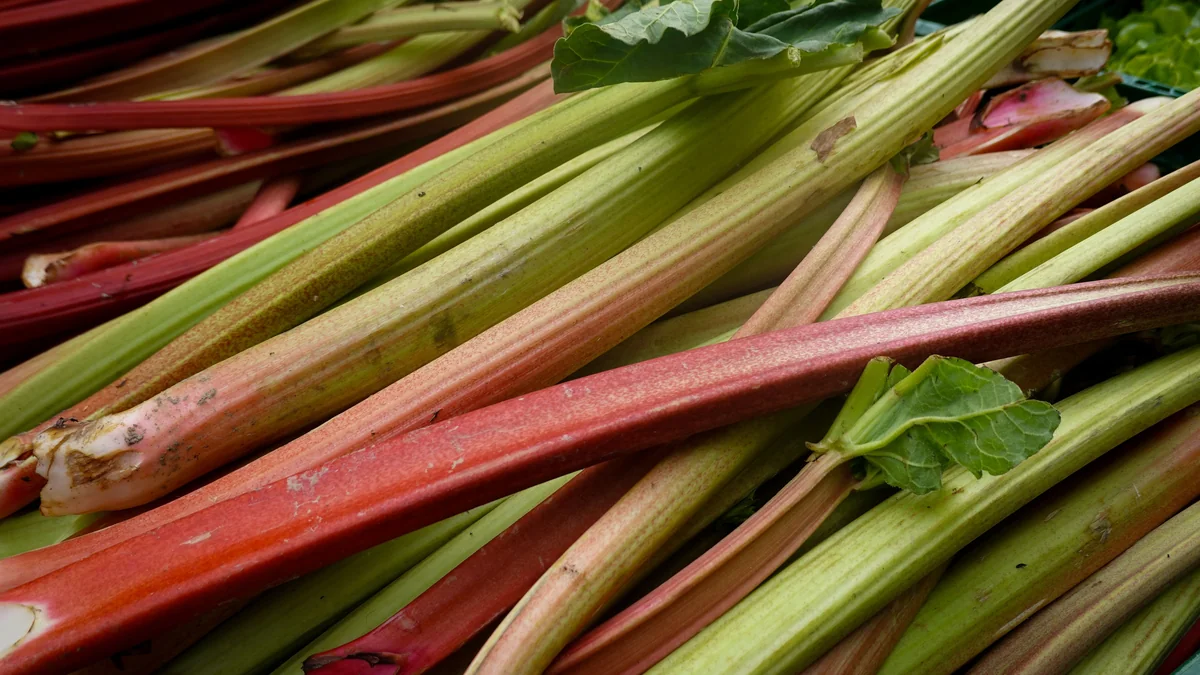
ERr 731 is a standardized extract from the root of Rheum rhaponticum, also called rhapontic rhubarb. It is not the same thing as rhubarb pie, rhubarb leaves, laxative rhubarb products, rhubarb tea, or whatever unstandardized rhubarb capsule happens to show up in a search result.
Researchers discuss ERr 731 as a phytoestrogenic extract with preferential activity at estrogen receptor beta, or ER beta, and much less emphasis on estrogen receptor alpha in the mechanistic literature (Chinese Medicine). The 2026 paper also talks through possible migraine-relevant pathways: hormonal fluctuation, inflammatory cytokines, nitric oxide, ER beta activity, and neuroendocrine or monoamine signaling (Frontiers in Pharmacology).
Worth knowing: mechanisms are not outcomes. A plausible pathway can explain why researchers ran a study. It can’t, by itself, prove that a product works for headaches, migraines, hot flashes, mood symptoms, or anything else.
What the 12-week trial found #
The strongest part of the 2026 paper is the randomized, double-blind, placebo-controlled phase.
The study randomized 112 perimenopausal women with climacteric complaints to ERr 731 or placebo for 12 weeks. In the headache/migraine analysis, severity on a 0 to 4 scale dropped from 2.5 ± 0.7 to 0.9 ± 0.6 in the ERr 731 group, based on 44 women. In the placebo group, it moved from 2.3 ± 0.9 to 2.1 ± 0.8, based on 45 women. The between-group difference at day 84 was reported as -1.22 ± 0.7, with a 95 percent confidence interval from -1.540 to -0.909 and p<0.0001 (Frontiers in Pharmacology).
That’s a real signal inside that trial design.
But it is still a small trial, in a specific group, using a symptom score that bundles headache/migraine into a climacteric-complaint rating. The paper also reported improvements versus placebo for dizziness and paresthesia at 12 weeks, while vaginal discharge did not improve. That pattern fits better with “possible support for a cluster of perimenopausal symptoms” than with “rhubarb is a migraine remedy.”
So the practical question is not, “Should everyone with migraine try this?” No. The better question is, “Could ERr 731 be relevant to some perimenopausal women whose headaches are part of a wider menopause-symptom pattern?” Maybe - with a clinician in the loop, and with expectations kept modest.
The 52-week follow-up is weaker evidence #
After the 12-week randomized phase, 89 women continued into a 52-week open-label observational phase. Everyone in that phase received ERr 731.
That makes the long-term part harder to interpret. Headache/migraine severity decreased further during observation, and the study reported a within-study reduction from baseline to day 364. But because there was no placebo group after week 12, the follow-up cannot prove long-term cause and effect. Expectation effects, regression to the mean, natural symptom changes, and selection bias could all be in the mix.
And by day 364, the difference between women who had previously received ERr 731 and women who had previously received placebo was no longer statistically significant (p=0.1092), according to the paper.
That’s not a reason to ignore the follow-up. It’s a reason not to oversell it. The 12-week randomized comparison carries more weight than the open-label year.
How this fits with the broader menopause-supplement evidence #
ERr 731 has more evidence behind it for broad menopausal symptoms than it does for migraine specifically. A 2024 systematic review and meta-analysis pooled four randomized controlled studies with 390 participants and found that ERr 731 improved Menopause Rating Scale scores versus control. But the same review flagged high heterogeneity, with I2=93 percent, along with risk-of-bias and reporting-bias concerns (Journal of Biomedical Research).
So, again, the answer lands in the middle. Not nothing. Not proven magic.
Guidelines are also more cautious than supplement marketing. The 2023 North American Menopause Society position statement lists several evidence-backed nonhormonal options for vasomotor symptoms, including CBT, clinical hypnosis, SSRIs/SNRIs, gabapentin, fezolinetant, and selected other approaches, while not recommending supplements or herbal remedies as a class for vasomotor symptoms (PubMed). AAFP guidance similarly places hormone therapy and selected prescription nonhormonal treatments on firmer ground than many alternative therapies (AAFP).
That doesn’t mean nobody should ever discuss ERr 731. It means ERr 731 belongs in the “bring this up carefully” category, not the “skip medical care and buy the herb” category.
Safety and contraindications: pause before trying it #
Safety box: ERr 731 is not a migraine treatment, not a medication replacement, and not FDA-approved as a migraine or menopause drug. Use this section as a pause point before treating a supplement headline like medical advice.
Before the usual supplement-brain kicks in - natural, plant-based, probably fine - this is the safety filter.
Do not use ERr 731, rhapontic rhubarb, or any herbal supplement as a substitute for medical evaluation if you have new, severe, changing, or neurologic headache symptoms. A new headache pattern around midlife deserves proper assessment, especially with weakness, vision changes, confusion, fever, fainting, head injury, sudden thunderclap pain, or a “worst headache” feeling.
Don’t stop migraine medications, hormone therapy, antidepressants, gabapentin, fezolinetant, blood pressure medicines, anticoagulants, or any prescribed treatment to try a supplement. That is not what the study supports.
If you’re pregnant or breastfeeding, avoid herbal supplements unless your clinician specifically advises otherwise. The ERr 731 menopause studies do not establish pregnancy or breastfeeding safety, and general NCCIH herb-safety guidance uses extra caution for those groups (NCCIH).
If you have breast cancer, uterine cancer, endometriosis, unexplained vaginal bleeding, or another hormone-sensitive condition, ask a qualified clinician before using a phytoestrogenic product. ERr 731 is often described through ER beta-related pathways, but “ER beta-preferential” is not the same as “safe for every hormone-sensitive history.”
And if you take medicines, ask a pharmacist or clinician before adding herbal products. NCCIH warns that herbs can interact with medicines, and the research pack did not find a clear ERr 731 interaction map for common migraine drugs, hormone therapies, antidepressants, anticoagulants, antiplatelets, antiepileptics, or CGRP-targeting migraine medications.
One more plain-language warning: do not self-substitute garden rhubarb, rhubarb leaves, laxative rhubarb root, or random Rheum products for the studied standardized extract. Rhubarb leaves are a known safety concern, and ordinary rhubarb products are not interchangeable with ERr 731.
Bottom line #
The best read is cautious but not dismissive. In one 12-week randomized trial, ERr 731 was linked to a larger improvement in a headache/migraine symptom score among perimenopausal women with broader climacteric complaints. That is a useful menopause-symptom signal.
But it is not proof that rhubarb treats migraine. It is not a migraine treatment, not a replacement for migraine medication, and not FDA-approved as a migraine or menopause drug. And the 52-week follow-up, while interesting, was open-label and observational.
So if your headaches seem tied to perimenopause, ERr 731 may be worth asking about - not self-prescribing around. The better conversation is with a clinician who can look at the headache pattern, your hormone history, your medications, and the other menopause options that already have stronger guideline support.
Related

Red Yeast Rice Has a New Contamination Warning. Here’s the Safety Context