64 Natural Remedies for Depression Were Tested. The Evidence Only Looks Strong for a Few
Table of Contents
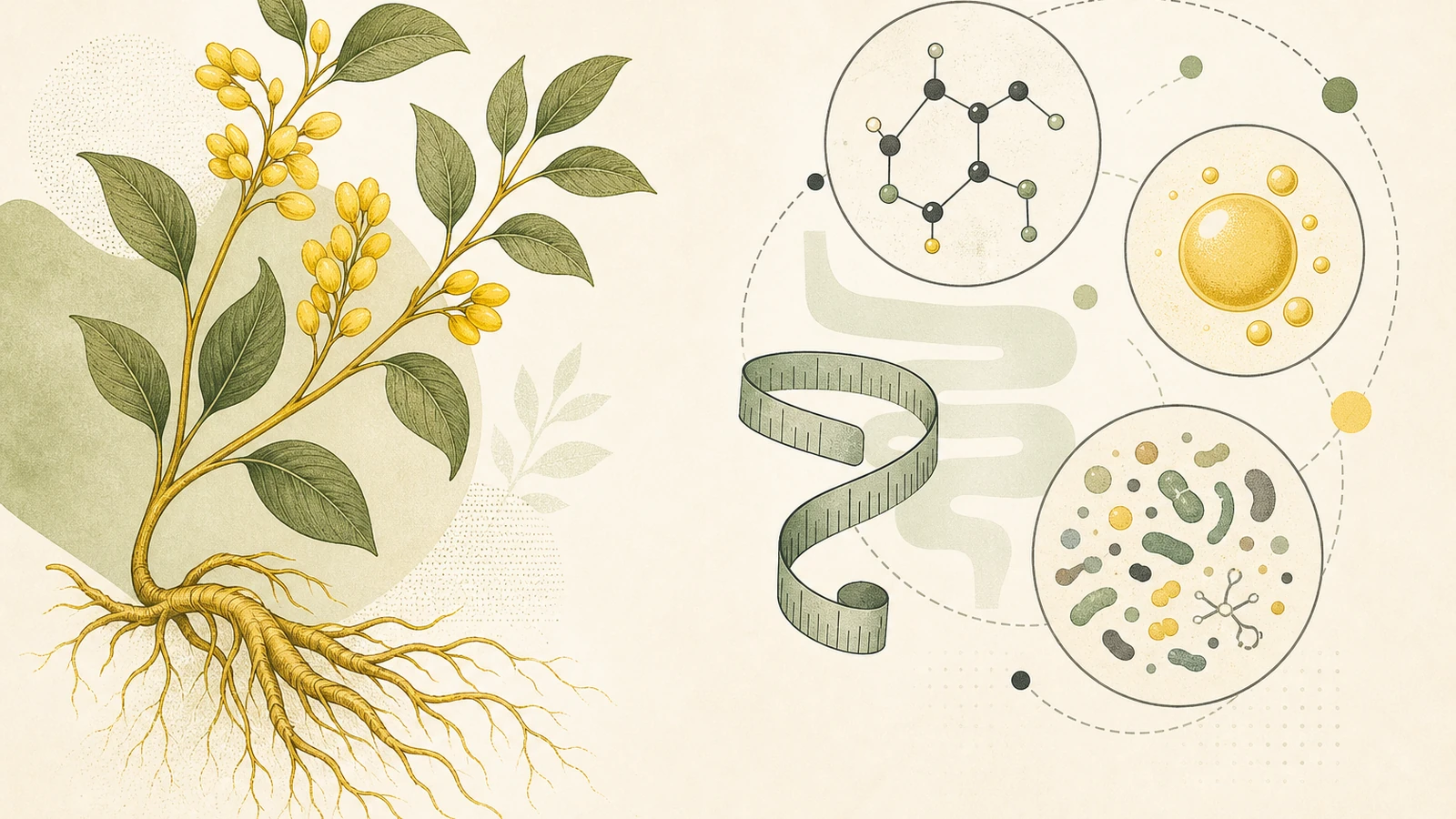
A new 2025 scoping review gives the “natural remedies for depression” aisle a much-needed reality check. Researchers mapped 209 randomized clinical trials across 64 over-the-counter herbal products, supplements, and OTC medicines used for depressive symptoms in adults. That sounds huge. But the evidence wasn’t spread evenly at all - most of the trial volume clustered around a few familiar names, including omega-3s, St John’s wort, saffron, probiotics, and vitamin D. (Frontiers in Pharmacology)
And that’s where the story gets more useful than a shopping list.
Depression is medical, not just a mood dip to troubleshoot with a bottle from the internet. Natural products are not replacements for professional diagnosis, therapy, prescribed medication, urgent care, or crisis support. Mayo Clinic says natural remedies aren’t a substitute for medical diagnosis and treatment, and NIMH says people should not stop treatment without talking with a health care provider. If you’re in the U.S. and having suicidal thoughts or severe emotional distress, call or text 988. If there’s life-threatening danger, call 911 or go to the nearest emergency room. (Mayo Clinic, NIMH)
So the better question isn’t “which natural antidepressant works?” It’s this: which products have actual human evidence, what kind of evidence is it, and where could the safety risks outweigh the curiosity?
The review found a crowded field, not 64 proven answers #
The Frontiers review is useful because it doesn’t pretend the supplement shelf is one thing. It looked at randomized clinical trials of OTC products for depressive symptoms in adults aged 18 to 60, then mapped where the research actually exists. The headline number - 64 products - can be misleading if you read it too quickly. It does not mean 64 products were proven to help depression. It means 64 products had been tested somewhere in the randomized-trial literature. (Frontiers in Pharmacology)
That distinction matters.
Forty-one of the products in the review had only one trial. One trial isn’t nothing, but it’s not much to build real-world confidence on, especially when depression trials can vary by population, diagnosis, product quality, study length, and whether the supplement was used alone or alongside other care. (Frontiers in Pharmacology)
The review also flagged a safety-reporting problem. According to the public summary of the paper, 145 of the 209 studies, or 69 percent, fully reported side effects. Flip that around and roughly a third didn’t fully report adverse events. So “few safety problems were reported” is not the same sentence as “these products are safe.” (ScienceDaily, Frontiers in Pharmacology)
That’s annoying, frankly, because safety is exactly what people need when they’re buying something without a prescriber watching the interaction list.
St John’s wort has one of the strongest signals - and one of the biggest warning labels #
St John’s wort is the complicated one. It has one of the more serious evidence signals among herbal products studied for depression, especially in mild-to-moderate depression trials. A Cochrane review of 29 randomized, double-blind trials with 5,489 participants found St John’s wort extracts were better than placebo and similarly effective to standard antidepressants in the included studies. (Cochrane)
But there are two catches, and neither is small.
First, the trial result doesn’t automatically apply to every St John’s wort product sitting on a store shelf. Cochrane noted variation across products and settings, and supplement quality is not the same thing as a standardized prescription drug. Second, St John’s wort is famous - or infamous - for herb-drug interactions. NCCIH emphasizes significant interaction concerns, and Mayo Clinic warns it can interfere with blood thinners, birth control pills, chemotherapy, HIV/AIDS medicines, transplant anti-rejection medicines, and prescription antidepressants. Combining it with antidepressants can cause serious side effects. (Cochrane, NCCIH, Mayo Clinic)
So yes, St John’s wort is one of the better-studied herbs here. But “better-studied” is not permission to self-prescribe it, especially if you take medication.
And if you have bipolar disorder, the caution gets sharper. Mayo Clinic warns that St John’s wort, SAMe, and omega-3 supplements have mania-related cautions for people with bipolar disorder. That’s not a tiny footnote for anyone with mood cycling, a bipolar diagnosis, or a family history that already has a clinician paying attention. (Mayo Clinic)
Saffron looks promising, but the evidence is still smaller than the hype #
Saffron is probably the most tempting product to overstate, because the early clinical literature is interesting. Meta-analyses of small randomized trials have reported short-term benefit signals for saffron in mild-to-moderate major depressive disorder, including comparisons with placebo and some antidepressants in included studies. (Journal of Integrative Medicine, Neuropsychiatric Disease and Treatment)
But promising is not settled.
The saffron evidence base is still limited by small sample sizes, short study duration, and a heavy concentration of trials in Iran. That doesn’t invalidate the research. It does mean a careful reader shouldn’t jump from “signal in trials” to “saffron works like an antidepressant” or “here’s the dose to take.” This article isn’t a dosing guide, and saffron supplements aren’t risk-free just because saffron is also a food spice. (Journal of Integrative Medicine, Neuropsychiatric Disease and Treatment, Mayo Clinic)
Mayo Clinic notes possible saffron side effects including upset stomach, vomiting, and headache. It also warns that higher doses can cause bleeding problems, medication interactions, and pregnancy danger. That’s enough reason to keep saffron in the “discuss first” category, not the “harmless mood booster” bucket. (Mayo Clinic)
Omega-3s are heavily studied, but that doesn’t make them a winner #
Omega-3s are the perfect example of why research volume and confidence are not the same thing.
The 2025 scoping review found a lot of trial activity around omega-3s. Yet Cochrane’s review of omega-3 fatty acids for depression in adults found low- or very-low-certainty evidence, with a small-to-modest average benefit that may not be meaningful for people with major depressive disorder. NCCIH also says it’s uncertain whether omega-3 supplementation is useful for depression, and monotherapy trials are inconclusive. (Frontiers in Pharmacology, Cochrane, NCCIH)
That doesn’t mean omega-3s are pointless for every person or every health context. Someone may have cardiovascular, dietary, inflammatory, or deficiency-related reasons to ask about them. But as a depression answer, the honest word is “uncertain,” not “proven.”
Also, supplements can still matter medically even when they’re common. Mayo Clinic notes fishy taste and possible medication interactions at high doses, and it flags mania reports in some people with bipolar disorder taking omega-3 supplements. Again, not panic. Just don’t treat “I can buy it at the store” as the same thing as “it can’t affect anything important.” (Mayo Clinic)
Probiotics and vitamin D need more specific questions #
Probiotics and vitamin D showed more favorable signals than placebo in the 2025 review summary, which makes them worth watching. But both categories have a built-in problem for shoppers: they’re not single standardized interventions. (Frontiers in Pharmacology, ScienceDaily)
A “probiotic” can mean different strains, different combinations, different doses, and different target populations. You can’t assume one product’s trial result applies to a random capsule with different microbes. Earlier meta-analysis work has suggested probiotics may reduce depression scores, but the practical question is strain-specific and still evolving. (PubMed)
Vitamin D has a different issue. If someone is deficient, correcting that deficiency may be medically relevant. But that’s not the same as saying high-dose vitamin D is a depression treatment. A recent systematic review and dose-response meta-analysis supports a possible signal, but baseline vitamin D status, study heterogeneity, and medical testing matter. Vitamin D is fat-soluble, and dose decisions belong with a clinician, especially for people with kidney disease, calcium problems, sarcoidosis, or medications that affect vitamin D or calcium metabolism. (Systematic review)
So the reasonable takeaway is not “buy any probiotic” or “take more vitamin D.” It’s “ask a better question.” Which strain? Which deficiency status? Which medical context? Which other treatments are already in place?
Be skeptical of depression-treatment claims on supplement labels #
The FDA has already warned companies about illegally selling dietary supplements with claims to treat depression and other mental health disorders. The agency’s position is blunt: supplements marketed to cure, treat, mitigate, or prevent depression can be unapproved new drugs, and FDA has not evaluated those products for effectiveness, proper dosage, interactions, or dangerous side effects for those disease claims. (FDA)
That’s the regulatory version of a very practical shopping rule.
If a product page says or strongly hints that it treats depression, replaces medication, works like an antidepressant, fixes serotonin, prevents relapse, or lets you manage serious symptoms without professional care, slow down. Don’t just ask whether the ingredient has a study somewhere. Ask whether the finished product is being sold with disease-treatment promises it hasn’t earned.
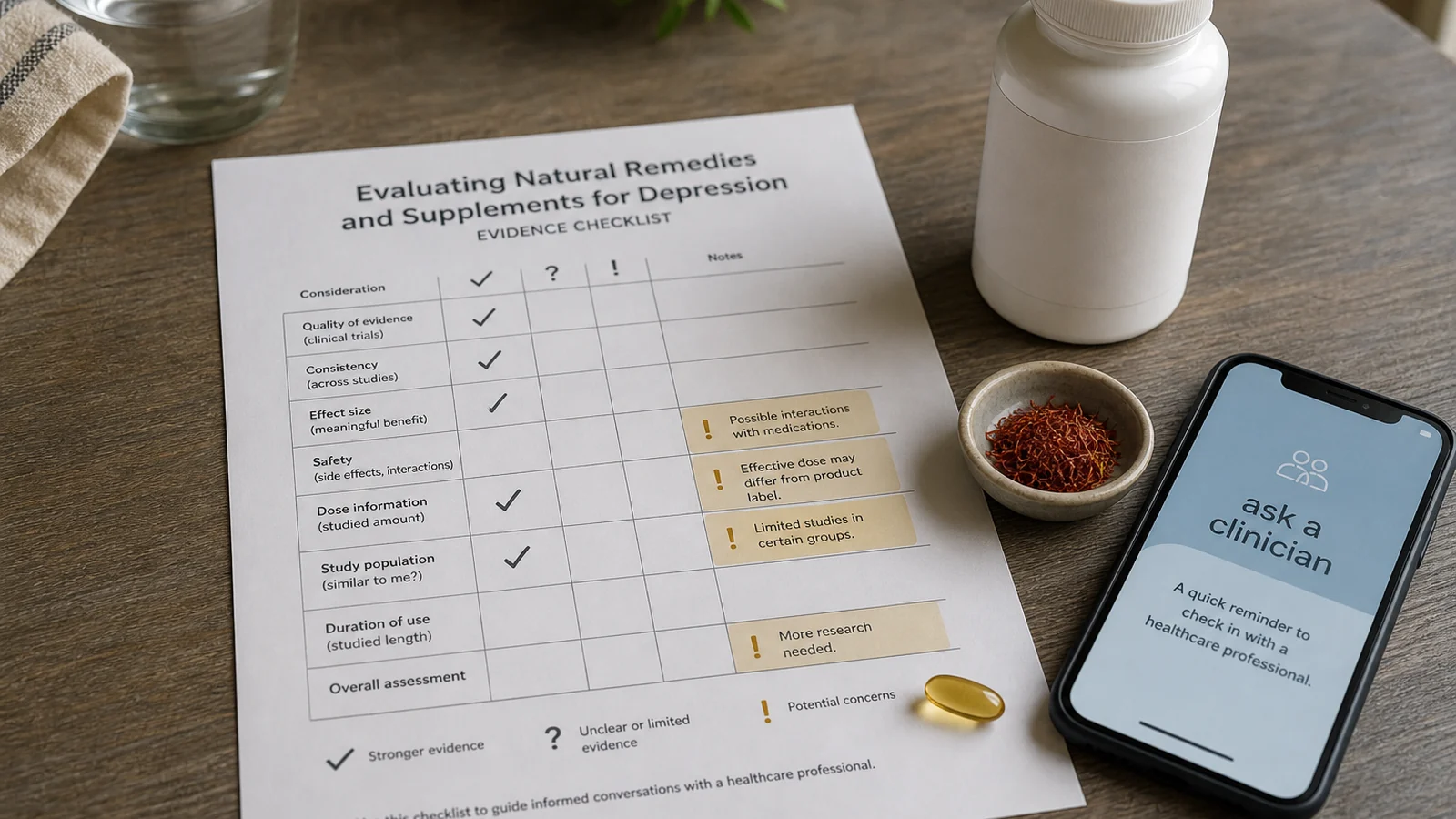
And if you’re already taking antidepressants, birth control, blood thinners, chemotherapy drugs, HIV medications, transplant medications, bipolar disorder medications, or any regular prescription medicine, this is pharmacist territory. Same if you’re pregnant, trying to become pregnant, breastfeeding, immunocompromised, medically complex, or managing severe depression. Bring the bottle, the label, and screenshots of the claims - not just the ingredient name.
Bottom line #
The 2025 review doesn’t prove that 64 natural remedies work for depression. It shows something more interesting and more useful: the evidence is crowded, uneven, and safety-sensitive.
St John’s wort has one of the stronger evidence signals, but it also has the interaction profile that makes self-treatment risky. Saffron is promising, but the trials are still small and short. Omega-3s are heavily studied, but the depression evidence remains mixed and low-certainty. Probiotics and vitamin D are worth watching, but product details and baseline health status matter a lot.
So if you’re using this research well, it shouldn’t send you racing to buy the “winning” supplement. It should make you more skeptical of big claims, more careful about interactions, and better prepared to ask a clinician or pharmacist a specific question.
Because with depression, the safest natural-remedy article is the one that doesn’t pretend a supplement shelf can replace care.
Related

Glucosamine and Alzheimer's: A Caution Flag, Not a Panic Button