Complementary Therapies for Menopause: The Strongest Evidence Isn't Where Most People Look
Table of Contents
Black cohosh and red clover still get most of the attention when people talk about “natural” menopause relief. They’re easy to understand, easy to buy, and honestly, much easier to market than a course of cognitive behavioral therapy or a trained hypnosis session.
But that’s exactly where the evidence gets interesting.
A 2024 review in Nursing Clinics of North America keeps complementary and alternative medicine for menopause in the conversation, especially popular botanicals such as black cohosh and red clover. It doesn’t crown a miracle herb, though. The review says efficacy and safety are still controversial, and that more research is needed (Nursing Clinics of North America review).
The sharper practical takeaway comes from the 2023 North American Menopause Society position statement on nonhormone therapy. For vasomotor symptoms - the clinical term for hot flashes and night sweats - it recommends cognitive behavioral therapy and clinical hypnosis. It does not recommend supplements, herbal remedies, soy/equol, yoga, mindfulness-based interventions, or acupuncture for hot flashes based on the evidence it reviewed (The Menopause Society position statement).
So the surprise is not that every complementary therapy is useless. It’s that the better-supported options aren’t the ones sitting on the supplement shelf.
Start by separating the symptom targets #
And menopause articles often blur everything together: hot flashes, night sweats, poor sleep, mood changes, anxiety, vaginal symptoms, weight changes, and broad wellness. That sounds tidy, but it’s not how the evidence works.
A practice that helps sleep may not reduce hot flashes. A supplement that has a plausible estrogen-like mechanism may still fail in clinical trials. And a mind-body therapy may help with the distress or frequency of symptoms without being a “cure” for menopause itself.
That distinction matters because hot flashes and night sweats are often the symptoms that send people searching for relief. They can interrupt sleep, work, sex, and basic day-to-day comfort. Hormone therapy remains the most effective treatment for hot flashes, although it isn’t right for everyone and should be individualized with a clinician. Nonhormonal prescription medicines also exist. Complementary options belong in that wider conversation - not as a replacement for care, and not as a reason to tough it out.
For hot flashes, hypnosis and CBT have the stronger support #
If you came here expecting the “best herbs for menopause,” this is the left turn.
The 2023 Menopause Society guidance recommends clinical hypnosis and cognitive behavioral therapy as nonhormone options for vasomotor symptoms. That doesn’t mean they work for everyone, and it doesn’t mean a random phone recording is the same thing as a studied protocol. But as categories, they have better guideline support for hot flashes than the better-known supplement options.
Clinical hypnosis has randomized trial evidence behind it. A 2013 trial in postmenopausal women found that hypnosis reduced self-reported and physiologically measured hot flashes compared with a structured-attention control (2013 clinical hypnosis trial). And a newer 2025 randomized trial found that self-administered hypnosis reduced hot flash scores more than sham white-noise hypnosis over six weeks (2025 self-administered hypnosis trial).
That newer study is useful because access is one of the awkward parts of this whole topic. A therapy can be evidence-supported and still hard to use if trained practitioners are expensive, booked out, or simply not available nearby. Self-administered approaches may help close that gap, though one newer trial shouldn’t be treated as the final word.
CBT is also easy to misunderstand. In menopause care, it isn’t “your hot flashes are all in your head.” It’s more like: the body may still have heat surges, but the way the brain anticipates, interprets, and recovers from them can affect sleep, distress, and quality of life. That’s not a small thing. Anyone who’s woken up drenched at 3 a.m. and then spent the next hour anxious about tomorrow already knows the symptom is more than the flash itself.
Yoga looks better for sleep and mood than for hot flashes #
But yoga is one of those practices where the answer depends heavily on the question.
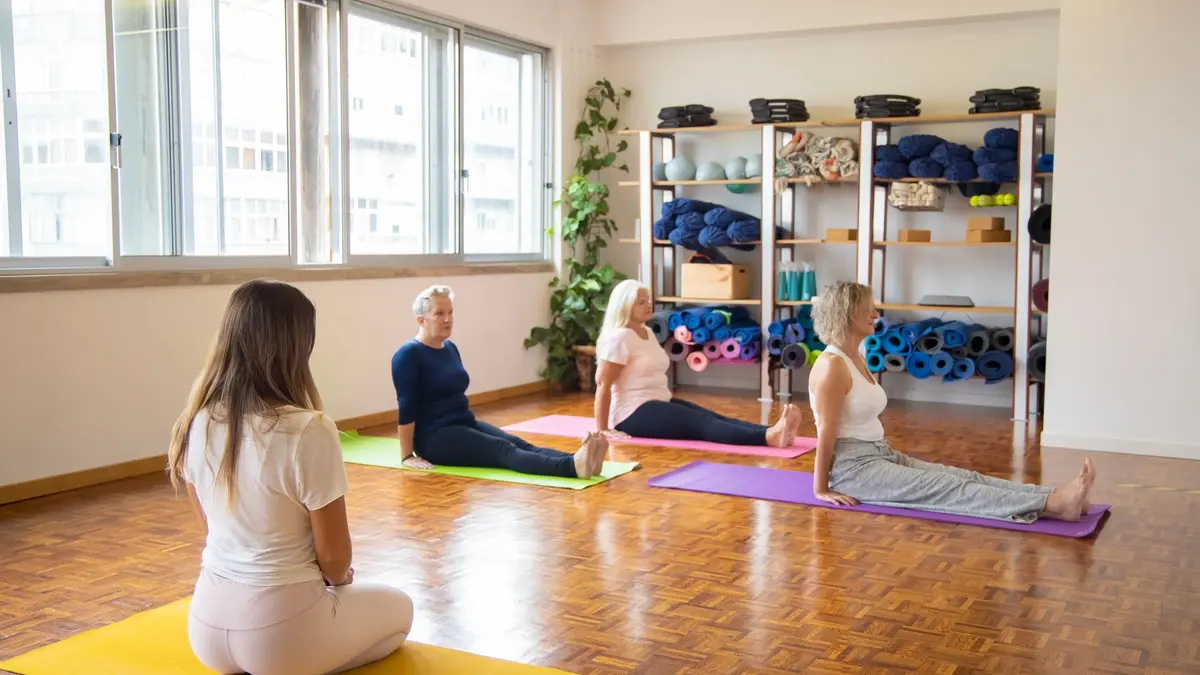
If the question is “Can yoga support sleep, mood, anxiety, and general well-being during menopause?” the evidence looks more encouraging. A 2025 systematic review and meta-analysis of randomized trials found improvements in total menopausal symptoms, sleep quality, anxiety, depressive symptoms, BMI, and blood pressure (2025 yoga meta-analysis).
But if the question is “Does yoga directly reduce hot flashes?” the same review did not find a significant improvement compared with usual care.
That’s not a reason to dismiss yoga. It’s a reason to describe it honestly. Yoga may be worth considering as a lower-risk supportive practice, especially when sleep, tension, mood, stiffness, or broader stress load are part of the picture. But it shouldn’t be sold as a proven hot-flash treatment, and it definitely shouldn’t be positioned as a substitute for medical options when symptoms are severe.
And yes, this is a little frustrating. People often want one answer: works or doesn’t work. Menopause rarely gives that kind of clean box to tick.
Black cohosh is debated, not proven #
Black cohosh is probably the most recognizable menopause herb in the United States. It has a long history of traditional use, including Native American use for several conditions and later medicinal use in Germany. Today, it’s promoted heavily for hot flashes and other menopausal symptoms.
Traditional use is part of the story. It just isn’t the same thing as clinical proof.
The evidence has been mixed for years. A 2012 Cochrane review found no significant benefit over placebo for hot flush frequency or menopausal symptom scores (Cochrane review). NCCIH, meanwhile, notes that a 2023 review found products containing black cohosh extracts were potentially beneficial for menopause symptoms and hot flashes, while also stressing safety and product-quality concerns (NCCIH).
The safest wording is boring but accurate: black cohosh is debated. Product-specific evidence may vary. Some newer analyses are more positive than older reviews, but that doesn’t make black cohosh a proven menopause treatment.
The safety caveats are not decorative. Rare cases of serious liver damage have been reported in people taking products labeled as black cohosh, although causality is uncertain. NCCIH also warns that some products have contained the wrong herb or undeclared mixtures. People with liver disorders should talk with a health professional before using it, and anyone taking it should seek care for possible liver-damage symptoms such as dark urine, fatigue, or jaundice.
There’s another catch: safety is uncertain for people with hormone-sensitive conditions, such as a history of breast or uterine cancer. Black cohosh may also be unsafe during pregnancy or breastfeeding. So no, this is not a “safe for everyone because it’s natural” herb.
Red clover and soy are plausible, but still uncertain #
Red clover and soy both bring phytoestrogens into the discussion. These plant compounds have structures similar to estrogen, which makes them biologically plausible for menopausal symptoms. That same estrogen-like activity is also why some people need extra caution.
Red clover studies for hot flashes have had inconsistent results, and NCCIH notes that some studies have had a high risk of bias (NCCIH). The fair summary is that red clover remains plausible but unproven for hot flashes.
Soy and equol get complicated quickly. Some people can convert soy isoflavones into equol, a compound with stronger estrogen-like activity, while others can’t. That may help explain why individual responses vary. But the 2023 Menopause Society statement still does not recommend soy foods, soy extracts, or equol for vasomotor symptoms.
This is where marketing often gets slippery. “Estrogen-like” does not mean “natural hormone therapy.” It does not mean safe for everyone. NCCIH says phytoestrogen supplements may not be safe for women who should not take estrogen, and red clover supplements may be unsafe during pregnancy or breastfeeding (NCCIH menopause overview; NCCIH red clover).
If you’re considering concentrated phytoestrogen supplements and you have a history of hormone-sensitive cancer, clotting problems, complex medication use, or you’ve been told to avoid estrogen, this is a clinician conversation - not a checkout-cart decision.
Acupuncture and mindfulness are not a clean yes/no #
Acupuncture is another place where the evidence can look different depending on which review you read and how much weight you give to sham-controlled trials.
NCCIH says acupuncture has not been shown to be more effective than simulated acupuncture for hot flashes (NCCIH). A 2022 systematic review found some signals, but concluded that firm conclusions couldn’t be drawn because the included trials were limited and low quality (2022 systematic review). The 2023 Menopause Society statement does not recommend acupuncture for vasomotor symptoms.
That doesn’t mean no one finds acupuncture sessions relaxing, meaningful, or useful for other reasons. It means the hot-flash claim is not established enough to treat it as evidence-backed. If someone chooses acupuncture, they should use a qualified practitioner with sterile needles and keep expectations realistic.
Mindfulness has a similar boundary problem. It may support stress management, coping, and general well-being for some people. But guideline support for hot flashes is not the same as “mindfulness is good for stress.” Those are different claims.
The supplement shelf needs more caution than confidence #
NCCIH’s consumer-facing menopause summary is blunt: phytoestrogens, herbs, and other dietary supplements have not been clearly shown to relieve menopause symptoms (NCCIH). That line should probably be taped to the shelf above half the menopause products in any pharmacy.
Supplements can also cause side effects, interact with medications, and come with limited long-term safety data. Product quality varies. Labels may not tell the whole story. And because menopause often arrives at a time when people may also be managing thyroid disease, blood pressure, cancer history, cardiovascular risk, sleep problems, anxiety, or prescription medications, “natural” is not enough information.
One more thing: no supplement dose belongs in this article. Not for black cohosh, not for red clover, not for soy isoflavones. Dosing without personalized safety context can make a cautious evidence article sound like a recommendation, and the source base doesn’t justify that here.
Questions worth asking before trying something #
Before trying a supplement or spending money on a complementary therapy, it helps to make the conversation concrete. Ask a qualified health professional whether your symptoms fit typical menopause or need evaluation, especially if you have unexpected bleeding, early menopause, severe sleep disruption, or symptoms that feel out of proportion.
Ask whether hormone therapy or a nonhormonal prescription option is appropriate for you, even if you ultimately prefer a complementary approach. Ask whether your cancer history, clot history, cardiovascular risk, liver disease, pregnancy or breastfeeding status, or medication list changes the safety picture. Ask specifically about supplement interactions. And if you’re drawn to non-drug options, ask whether CBT, clinical hypnosis, or another structured program is available through a menopause clinic, therapist, or trained practitioner.
That last part matters. The evidence-supported mind-body options are not always the easiest ones to access. But they may be a better place to start than buying the herb with the loudest label.
Bottom line #
The latest review keeps complementary therapies for menopause on the table, but the evidence does not support a simple “best natural remedies” ranking.
For hot flashes and night sweats, the strongest complementary-adjacent support is for clinical hypnosis and CBT, not herbs. Yoga may be useful for sleep, mood, anxiety, and general well-being, but it shouldn’t be described as a proven hot-flash remedy. Black cohosh, red clover, soy, acupuncture, mindfulness, and other supplements or practices sit in a more uncertain zone - sometimes plausible, sometimes personally appealing, but not clearly recommended for vasomotor symptoms by the 2023 Menopause Society guidance.
And look, that’s not anti-natural medicine. It’s the more useful version of natural medicine: respectful of tradition, honest about evidence, and careful enough not to steer people away from care that could actually help.
Related
What the NIH Says About Menopause Supplements in 2026
Vitamin D and Calcium Aren't Bone-Protection Insurance, New Evidence Says