Common Herbal Supplements That Can Interfere With Medications
Table of Contents
You buy the herb in one aisle and pick up the prescription in another. Different bottle, different mood, different set of assumptions.
But your body doesn’t sort them that way.
A sleep tincture, a “mood support” capsule, a memory supplement, a heart-health tea, or an immune blend can still change what happens to a medication you count on. Sometimes that means the drug effect gets stronger. Sometimes it gets weaker. And sometimes the problem is not the drug level at all, but a shared effect - more bleeding risk, more sedation, lower blood sugar, higher blood pressure, or a serotonin-related problem.
That’s the useful frame here. Not “herbs are bad.” Not “natural is fake.” More like this: herbs can be active enough to matter, and the riskiest combinations are worth checking before you try them.
NCCIH’s clinician digest is careful about this, which is refreshing. Some herb-drug interaction warnings are well supported, but many are still hypothetical, based on lab studies, animal data, case reports, or indirect evidence. FDA makes the consumer-safety point from the other direction: dietary supplements can change how medicines are absorbed, metabolized, or cleared, so a medicine may become too strong or not strong enough.
So yes, the evidence is uneven. And no, that doesn’t make guessing safer.
The two ways herbs can cause trouble #
Most supplement-medication interactions fall into two buckets.
First, an herb can change drug exposure. It may affect absorption in the gut, metabolism in the liver, transport proteins such as P-glycoprotein, or how a drug is cleared. That’s why a supplement can sometimes make a medicine less effective without causing an obvious side effect right away (which is the scary part, honestly).
Second, an herb can add to, or push against, what a medication already does. A blood-thinning medicine plus a supplement with bleeding-risk concerns is one example. A sedative medication plus a calming herb or alcohol is another. Diabetes medicine plus a supplement that may lower blood sugar deserves the same kind of check.
The stakes go up with narrow-therapeutic-index medicines, where small changes in blood level or effect can create big clinical problems. NCCIH specifically flags drugs such as warfarin, digoxin, cyclosporine, and some cancer chemotherapies as higher-caution examples.
And this is why the safest question is boring: “Can anything I take make my medication too strong, too weak, or riskier?”
St. John’s wort is the clearest red flag #
If there’s one herb that should never be treated as a casual add-on, it’s St. John’s wort.
St. John’s wort has a long traditional-use history and is commonly marketed for mood. But its medication-interaction profile is one of the best documented in the herbal supplement world. NCCIH says it can interact with medicines in dangerous, sometimes life-threatening ways, and FDA specifically warns about interactions involving HIV/AIDS medicines, heart medicines, depression medicines, transplant drugs, and birth control pills.
The short version: St. John’s wort can affect pathways that process many drugs, including CYP3A4 and P-glycoprotein. That can lower the effect of certain medicines. For something like hormonal birth control, transplant medicine, HIV treatment, seizure medicine, cancer therapy, warfarin, or some heart medicines, “lower effect” is not a small footnote.
But there’s another side too. Combining St. John’s wort with antidepressants or other serotonin-affecting products can raise serotonin-related risks. That’s not something to troubleshoot with internet timing advice.
So the practical rule is simple: if you take regular medication, St. John’s wort belongs in the pharmacist-or-clinician conversation before use. And if you’re dealing with depression symptoms, don’t use it as a reason to delay care, stop an antidepressant, or self-manage worsening mood.
Goldenseal is less famous, but still important #
Goldenseal doesn’t have the same name recognition. It still deserves a spot near the top of the list.
AAFP’s review of common herbal dietary supplement-drug interactions classified St. John’s wort and goldenseal as the two supplements with the highest likelihood of clinically important interactions. NCCIH also notes drug-processing concerns, including an NCCIH-funded study where goldenseal extract reduced metformin exposure by about 25% in healthy adults.
That finding does not prove goldenseal worsens diabetes outcomes. It’s narrower than that. It shows goldenseal can change exposure to a medication in a human study, and that’s enough to make casual mixing a bad idea.
Worth checking: goldenseal can hide in “immune,” digestive, respiratory, or multi-herb blends. If it’s on the label, it counts. The blend doesn’t get safer just because the marketing copy talks about seasonal wellness.
Ginkgo, garlic supplements, and the bleeding question #
Blood thinners are one of the places where supplement advice needs to slow down.
Warfarin is the classic example because its safe and effective range is narrow. Antiplatelet medicines such as clopidogrel and aspirin can matter too, depending on why you take them. Mayo Clinic and NCCIH both flag bleeding-related concerns with supplements such as ginkgo, garlic, danshen, evening primrose, saw palmetto, and others in heart-medicine or blood-thinner contexts.
Ginkgo is a good example of the gray area. NCCIH warns about bleeding risk with anticoagulants such as warfarin, and says ginkgo with efavirenz is not recommended. AAFP also notes that the broader bleeding evidence is mixed, with some studies not showing a clear bleeding increase across the whole evidence base.
So don’t flatten that into “ginkgo makes everyone bleed.” That’s not the point.
The point is that if you’re on warfarin, clopidogrel, aspirin for heart protection, or another anticoagulant or antiplatelet medication, ginkgo and concentrated garlic supplements are not shrug decisions. Same goes for similar products with bleeding-risk concerns, especially before surgery or dental procedures.
And no, normal garlic in dinner is not automatically the same thing as concentrated garlic capsules. Product form matters.
Ginseng and green tea extract depend on the product #
Ginseng is where readers can get whiplash. One source talks about traditional use. Another warns about warfarin, blood sugar, blood pressure medicines, statins, or antidepressants. Both can be true in their own lanes.
NCCIH notes that Asian ginseng may lower blood sugar and may interfere with blood clotting, while some interaction concerns remain uncertain. Mayo Clinic also includes ginseng among supplements that may not mix well with heart medicines.
So the careful wording is this: ginseng should be checked first if you take warfarin, diabetes medicines, heart or blood-pressure medicines, statins, or antidepressants. That does not mean every ginseng product has the same evidence behind it. Species, extract, dose, and product quality can all change the question.
Green tea is another product-form trap.
A cup of brewed green tea is not the same conversation as concentrated green tea extract in a capsule or “fat burner” blend. NCCIH says high-dose green tea can reduce blood levels and effectiveness of nadolol, a beta blocker, and that green tea extract can reduce blood levels of atorvastatin. Green tea extract products have also been linked to rare liver-injury reports.
So if you take heart, blood-pressure, cholesterol, or liver-risk medications, concentrated green tea products belong on the list you bring to a pharmacist. Ordinary tea drinking should not be treated as identical unless your clinician tells you it matters for your situation.
Kava, hawthorn, licorice, and the heart/sedation overlap #
Kava sits in a different danger zone: sedation, alcohol, psychiatric medicines, Parkinson’s medicines, liver concerns, and surgery.
Older systematic-review evidence and AAFP guidance flag kava around medicines such as alprazolam, paroxetine, levodopa, central nervous system depressants, alcohol, and anesthesia-related situations. The exact risk depends on the person and product, but that’s not permission to wing it. If a supplement is marketed for calm or sleep, and you already use sedatives, alcohol, antidepressants, or other psychiatric medicines, it needs a professional check.
Hawthorn, licorice, coenzyme Q-10, danshen, and similar heart-focused products are another category where the marketing can sound gentle while the medication context is anything but.
Licorice root, especially real licorice containing glycyrrhizin, can affect potassium, blood pressure, fluid balance, and heart rhythm. Hawthorn is often marketed for heart support. Coenzyme Q-10 and danshen show up in heart-health conversations too. Mayo Clinic’s heart-medicine interaction guide lists these among supplements people should discuss when they take cardiovascular medications.
But don’t turn that into a homemade contraindication chart. Heart drugs are complicated. The useful move is disclosure: show the bottle, name the dose you actually take, and ask whether it changes anything about your care plan.
The medication categories where caution should jump #
Some medication categories deserve a lower threshold for asking first.
Blood thinners and antiplatelet drugs are high on that list, including warfarin, clopidogrel, aspirin used for heart protection, and related medicines. Heart and blood-pressure medicines matter too, including digoxin, beta blockers, calcium channel blockers, nitrates, statins, and medicines for irregular heartbeat. Transplant and immunosuppressant drugs such as cyclosporine and tacrolimus are especially high stakes because reduced drug levels can have serious consequences.
And the same goes for HIV medicines, some cancer medicines, seizure medicines, antidepressants, serotonergic drugs, sedatives, diabetes medicines, and birth control pills.
Pregnancy, breastfeeding, children, and surgery also raise the bar. FDA advises people who are pregnant or breastfeeding, and caregivers of children, to discuss supplements with a health professional. Before surgery, supplements can matter because of bleeding, blood pressure, heart rate, sedation, or anesthesia-related concerns. Don’t choose your own stop date from a webpage - tell the surgical team everything and follow their instructions.
Bring the boring list #
Here’s the least glamorous advice in this whole article, and probably the most useful.
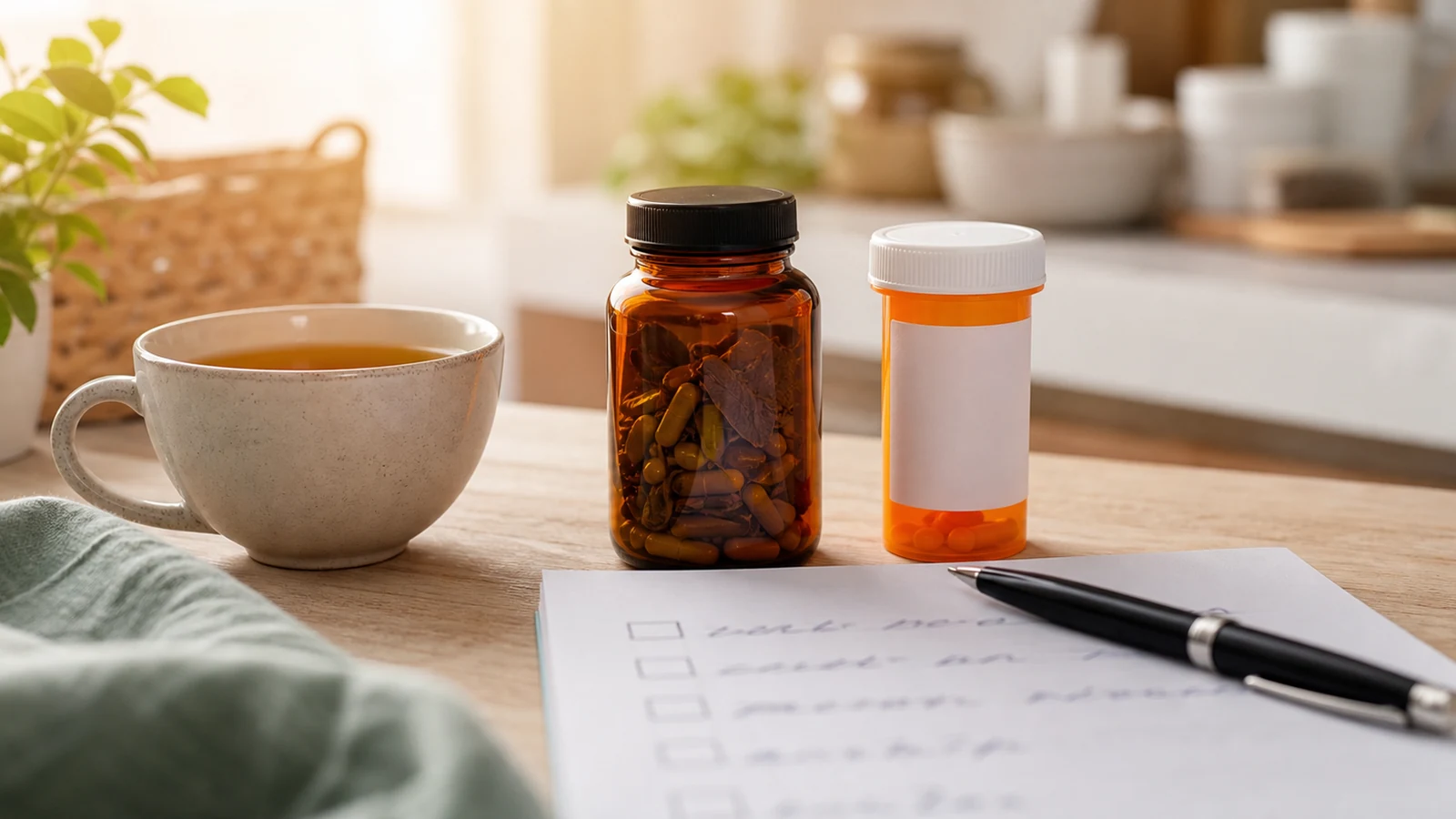
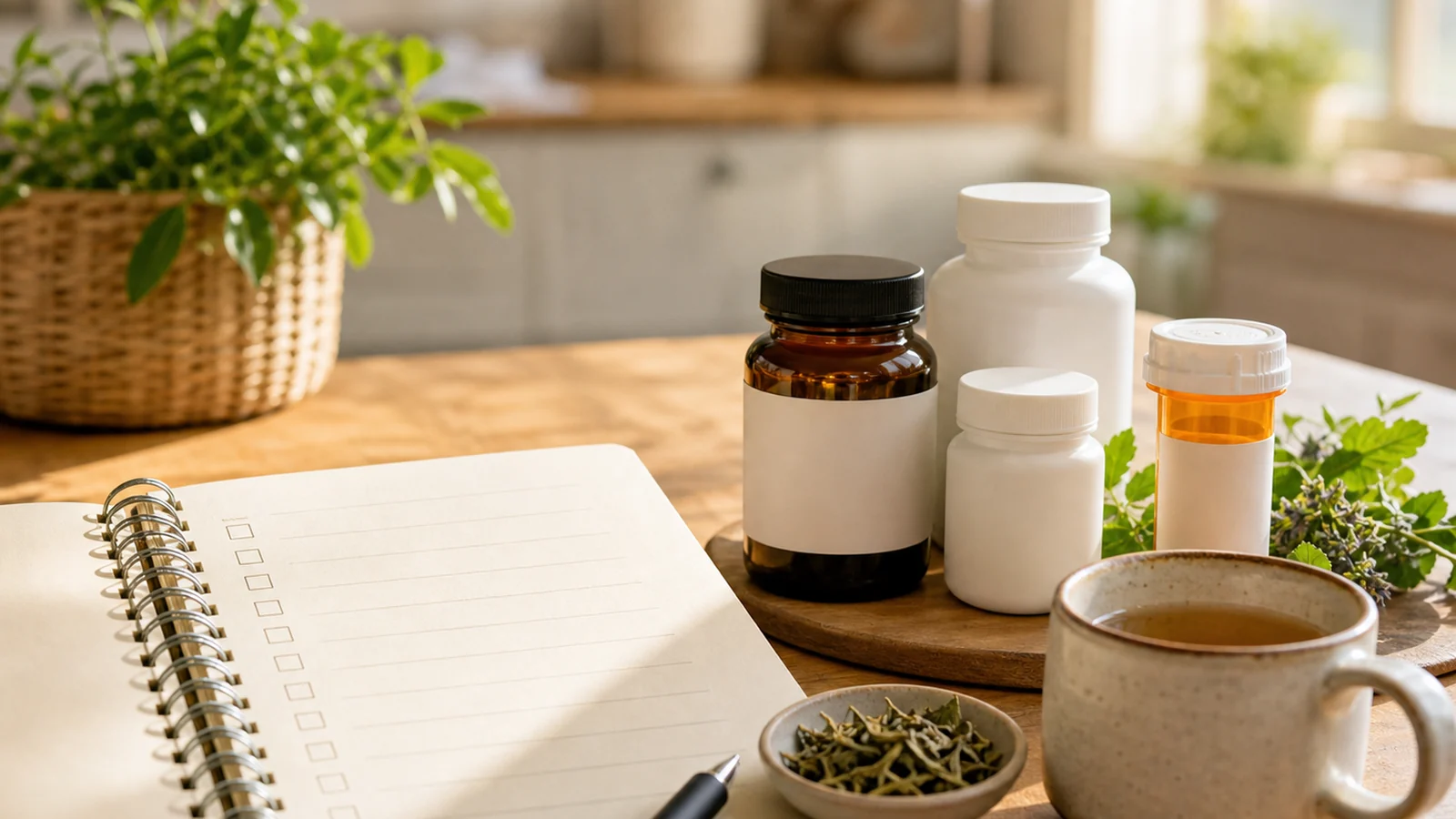
Keep a list of everything you take: prescriptions, over-the-counter medicines, aspirin and NSAIDs, allergy pills, sleep aids, vitamins, minerals, herbs, teas, powders, tinctures, gummies, protein or weight-loss products, mood products, and “immune” blends. Add photos of labels if the ingredient list is long or tiny.
Then bring that list to a pharmacist, clinician, surgeon, midwife, or other qualified health professional when medication decisions come up.
Because “I take a supplement” is not specific enough. Which supplement? Which extract? Which dose? Which brand? Which medication? Which medical condition? That’s where interaction risk actually lives.
What should make you call sooner #
Most supplement questions can be handled through a pharmacist call, a portal message, or a medication-review appointment.
But some situations shouldn’t wait: unusual bleeding or bruising, black stools, severe dizziness or fainting, chest pain, fast or irregular heartbeat, severe agitation, confusion, high fever, or rapid heartbeat after mixing mood products with antidepressants, signs of liver trouble after using extracts, pregnancy while relying on hormonal contraception after taking St. John’s wort, or any concern that a critical medication has stopped working.
That’s not a diagnosis list (a webpage can’t do that). It’s a nudge to get medical help instead of trying to reason your way through symptoms at home.
Bottom line #
Herbal supplements can be useful, traditional, interesting, and still not neutral.
St. John’s wort and goldenseal are the clearest “ask first” examples. Ginkgo, garlic supplements, ginseng, concentrated green tea extract, kava, hawthorn, licorice, danshen, evening primrose, saw palmetto, and coenzyme Q-10 all deserve context, especially with blood thinners, heart medicines, transplant drugs, HIV medicines, cancer medicines, antidepressants, sedatives, diabetes drugs, birth control, pregnancy, breastfeeding, children, or surgery.
The honest answer is messy: not every warning is proven, not every product is risky for every person, and product quality varies. But that’s exactly why the boring medication-and-supplement list matters.
Bring the bottles. Ask the pharmacist. Keep the prescription working the way it’s supposed to work.
Related
Herb-Drug Interactions: The Supplement Safety Check Most People Skip

The Supplement Question Your Doctor May Forget to Ask