Berberine in 2026: What the Evidence Actually Shows (and What It Doesn’t)
Table of Contents
Berberine has become one of those supplements people talk about with slightly too much confidence. You’ll see it framed as “natural metformin,” a blood-sugar fix, a cholesterol helper, sometimes even a quieter cousin of GLP-1 weight-loss drugs. And I get why it caught on. Berberine isn’t a random wellness dust. It’s a plant compound with a long traditional-use history, and there are PubMed-indexed reviews looking at its effects on glucose, lipids, waist circumference, and gut-microbiome markers.
But that’s exactly where the careful reading has to start. Review-level evidence for marker changes is not the same thing as proof that a supplement treats diabetes, replaces a statin, substitutes for metformin, or works like Ozempic. Those are different claims, with different evidence standards and very different safety stakes.
So the useful question isn’t “Does berberine work?” That’s too blunt. The better question is: what does berberine seem to do in human studies, what is still uncertain, and who really shouldn’t treat it like a harmless natural add-on?
What Berberine Is #
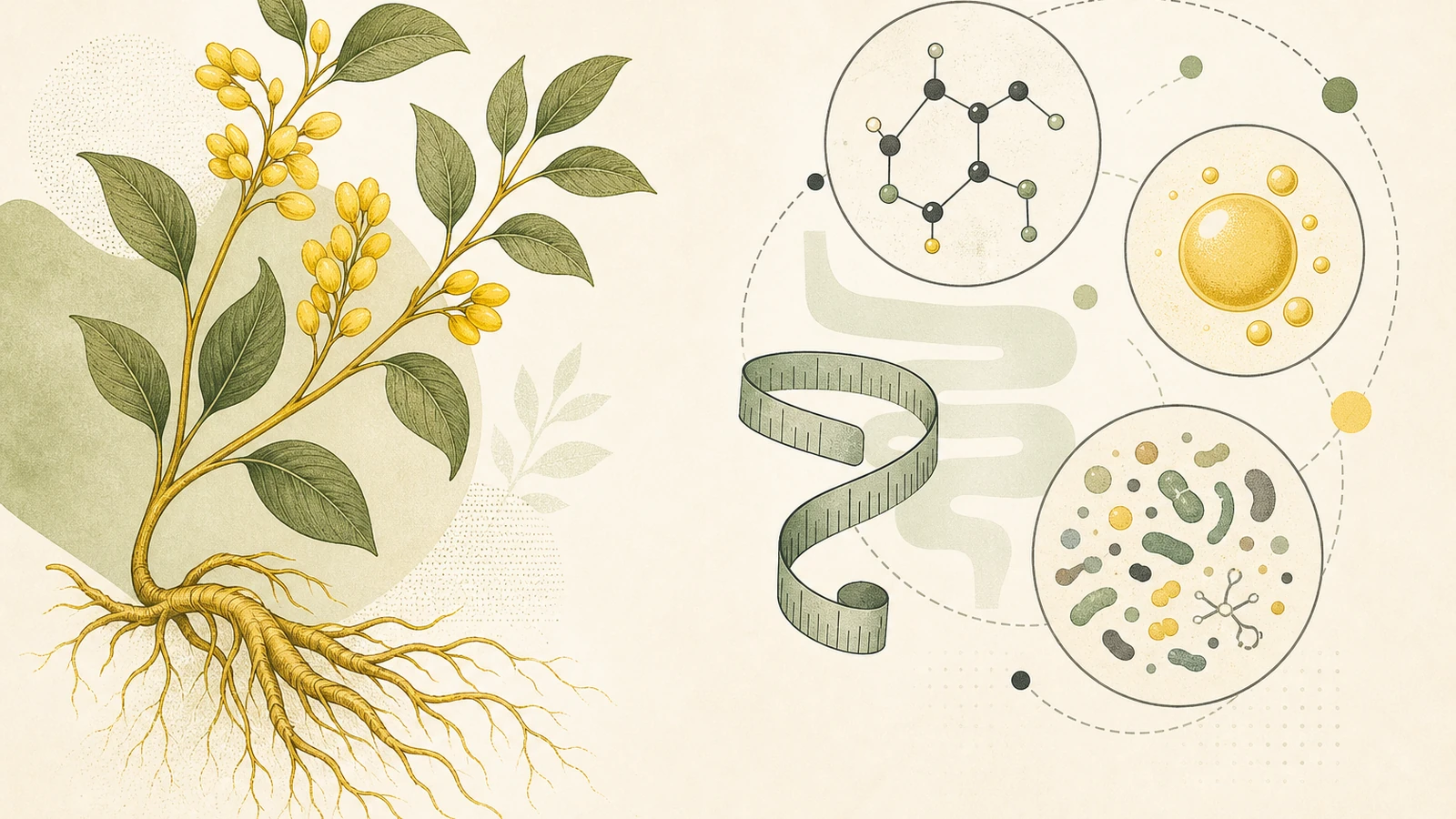
Berberine is an isoquinoline alkaloid found in several plants, including goldenseal, barberry, Oregon grape, and others. It has been used in Chinese and Ayurvedic medicine for a very long time, and modern supplement marketing usually positions it around metabolic health Medical News Today.
Traditional use matters as context. It can tell us why a substance stayed interesting across cultures and why researchers might study it now. But traditional use doesn’t prove a modern clinical effect by itself. That’s not a knock on traditional medicine - it’s just the line between historical use and clinical evidence.
Mechanistically, berberine is interesting. Research discusses effects on metabolic pathways such as AMPK/SIRT1 signaling, possible antimicrobial activity, gut-microbiota shifts, and drug-metabolism pathways including cytochrome P450 enzymes PubMed, PMID 42356246 PubMed, PMID 39141022. But mechanism can be a trap for readers. A plausible pathway is not the same as a proven treatment outcome. A supplement can move a lab marker and still not be a substitute for medical care.
The Strongest Signal: Metabolic Markers, Not Miracle Results #
The best 2026-friendly framing for berberine is pretty restrained: it’s one of the better-studied alternative supplements for certain metabolic markers, but the evidence is uneven and the claims have to stay narrow.
A 2025 systematic review and meta-analysis of randomized placebo-controlled trials looked at berberine and components of metabolic syndrome. The review found significant reductions in triglycerides, fasting plasma glucose, and waist circumference. Some secondary markers also improved, including LDL cholesterol, total cholesterol, BMI, and 2-hour oral glucose tolerance PubMed, PMID 40740996.
That’s not nothing. If a supplement shows movement in glucose and lipid markers across randomized trials, it deserves more than a hand-wave.
But the same review did not find significant improvement in HDL cholesterol or systolic or diastolic blood pressure PubMed, PMID 40740996. And that matters, because the internet tends to flatten “some metabolic markers improved” into “good for metabolism” and then into “treats metabolic syndrome.” Those aren’t the same sentence. They shouldn’t be treated as if they are.
A 2023 umbrella review of 11 meta-analyses also found broad signals across blood glucose, insulin resistance, lipid markers, body-composition measures, inflammatory markers, colorectal adenoma outcomes, and H. pylori-related outcomes. But the authors also said the methodological quality needed improvement and that clinical effects need confirmation in higher-quality randomized trials PubMed, PMID 36999891. So, yes, the review literature is broad. And no, that doesn’t make berberine a proven all-purpose metabolic treatment.
Blood Sugar: The Metformin Comparison Is Where Things Get Risky #
This is the claim area most likely to get readers into trouble.
Berberine has been studied in people with type 2 diabetes, and a 2021 systematic review and meta-analysis reported possible improvements in glycemic and metabolic profiles PubMed, PMID 34956436. That’s a legitimate evidence signal. But it’s supportive-marker evidence, not permission to swap out prescribed diabetes care.
Medical News Today’s 2026 consumer explainer is unusually direct on this point: people prescribed metformin should not take berberine as an alternative without speaking with a doctor, and berberine may interact with metformin in ways that make blood sugar harder to manage Medical News Today.
And that’s the practical line. If you take metformin, insulin, a sulfonylurea, a GLP-1 medication, or any other glucose-lowering therapy, berberine is not a casual experiment. The concern isn’t only “will it work?” The concern is what happens when a glucose-active supplement is layered onto a glucose-active medication, or used instead of a medication that is keeping blood sugar controlled. That’s clinician territory.
So no, berberine shouldn’t be called “natural metformin” in any responsible way. It may affect some of the same broad metabolic conversations, but it isn’t metformin. It doesn’t have metformin’s regulatory pathway, prescribing oversight, dosing controls, long clinical history, or guideline role.
Cholesterol: Promising Numbers, Messier Evidence #
The lipid story is similar: promising enough to discuss, not strong enough to oversell.
A 2018 systematic review and meta-analysis on berberine for dyslipidemias found reductions in total cholesterol, LDL cholesterol, and triglycerides PubMed, PMID 30466986. That sounds like a clean win until you read the caveat: the included trials had high clinical heterogeneity and generally low methodological quality.
Translation: the results are interesting, but the trial base is not clean enough to turn berberine into a cholesterol-treatment headline. And it absolutely doesn’t make berberine a statin substitute. Statins are prescribed to reduce cardiovascular risk in specific patients, based on evidence that goes far beyond moving a cholesterol number. Berberine’s evidence doesn’t establish that kind of hard-outcome benefit.
Could berberine turn out to have a useful adjunctive role for some people? Maybe. But the honest sentence is narrower: berberine may improve some lipid markers in studies, while the quality and consistency of the evidence leave real uncertainty.
Weight and Waist Circumference: Don’t Turn This Into “Natural Ozempic” #
Berberine’s weight-loss reputation has outrun the evidence.
The 2025 metabolic-syndrome review reported improvements in waist circumference and BMI PubMed, PMID 40740996. That’s worth mentioning. But BMI and waist changes in supplement trials are not the same as GLP-1 drug outcomes, and they don’t justify the “natural Ozempic” label.
GLP-1 drugs are prescription medications with specific mechanisms, dosing, contraindications, monitoring, adverse-effect profiles, and clinical trial programs. Berberine is a dietary supplement category product. Those worlds overlap only in marketing language, not in the level of evidence or oversight.
So if the pitch you’re hearing is “berberine is basically Ozempic,” that’s your cue to slow down. The evidence supports a much smaller statement: some pooled trials show movement in body-size-related markers, but that doesn’t make berberine a weight-loss drug or a replacement for obesity care.
The Gut Microbiome Evidence Is Interesting, But Still Hard to Translate #
The microbiome angle is one of the more scientifically interesting parts of the berberine story. It’s also easy to overclaim.
A 2026 systematic review of seven randomized clinical trials looked at berberine, gut microbiota modulation, and cardiometabolic outcomes. Most trials reported shifts in gut microbiota composition, especially in type 2 diabetes populations, but the studies varied by population, methods, and the way microbiome changes were measured PubMed, PMID 42356246.
That leaves us with an awkward but honest conclusion: berberine appears to affect the gut microbiome in human trials, but we don’t yet have a simple consumer-level meaning for those shifts. “Changes microbiota composition” is not the same as “repairs your gut,” “resets your microbiome,” or “guarantees better metabolic health.”
And honestly, that’s where a lot of gut-health marketing goes wrong. It takes a real research signal and translates it into a story that sounds cleaner than the science actually is.
Who Should Be Careful or Avoid It #
This is the part supplement marketing tends to make small. It should be large.
Berberine can interact with medicines. NCCIH warns that people taking any medicine should talk with a health care provider before using goldenseal or other herbal products, because some herb-medicine interactions can be harmful NCCIH. A 2025 review on Berberis vulgaris and berberine’s effects on cytochrome P450 enzymes also highlights CYP2D6 and CYP3A4 inhibition as interaction concerns PubMed, PMID 39141022. That doesn’t prove every user will have a dangerous interaction. But it does mean medication users should treat berberine as pharmacologically active, not as “just a plant.”
People taking metformin or other glucose-lowering drugs should be especially careful because berberine may affect blood sugar and may interact with metformin Medical News Today. Anyone taking cholesterol drugs, blood-pressure medication, anticoagulants, immunosuppressants, psychiatric medications, or multiple prescriptions should talk with a doctor or pharmacist before adding berberine. The exact interaction question depends on the medicine, which is the point - it’s not something a generic article can safely personalize.
Pregnancy, breastfeeding, and infants are another clear caution zone. NCCIH says pregnant or breastfeeding women should not use goldenseal, and it should not be given to infants; the berberine constituent can be harmful to newborns NCCIH. Goldenseal isn’t identical to isolated berberine, but the safety warning is strong enough that this is not a DIY supplement category for pregnancy, breastfeeding, or infant use.
Digestive side effects are also common enough to expect. Review literature and consumer medical references mention gastrointestinal symptoms such as constipation, diarrhea, nausea, and upset stomach, along with reports such as rash and headache PubMed, PMID 36999891 Medical News Today. Not catastrophic for most people, maybe, but not “side-effect-free” either.
One more thing: long-term safety is still less settled than the marketing implies. The research pack flags animal and goldenseal-review literature discussing possible liver, kidney, neurotoxic, hepatotoxic, and phototoxic concerns, while human long-term safety remains under-characterized PubMed, PMID 32683037. That shouldn’t be turned into a scare claim that typical berberine use damages organs. But it is a reason to avoid casual long-term self-experimentation, especially if you have chronic disease or take medication.
Supplement Labels Aren’t Drug Approval #
There’s a regulatory reality here that readers need to understand before buying any berberine product.
The FDA says dietary supplements are not approved by the agency before they are marketed. Manufacturers and distributors are responsible for evaluating safety and labeling, and consumers are advised to talk with a doctor, pharmacist, or other health professional because supplements can interact with medicines or other supplements FDA.
That doesn’t mean every supplement is bad. It means the category is different from prescription drugs. A berberine bottle on a shelf doesn’t mean the FDA has checked that product for effectiveness, purity, dose consistency, or drug-like safety. And because this article isn’t giving dosage advice, the safest practical note is simple: if you’re considering berberine, bring the exact product label to a clinician or pharmacist and ask about interactions, quality, and whether it makes sense for your situation.
Bottom Line #
Berberine deserves a more serious conversation than either side usually gives it. It isn’t wellness fairy dust, and it isn’t useless just because supplement marketing gets carried away. The best recent evidence points to modest improvements in some metabolic markers, especially glucose and lipid-related measures, along with waist circumference in some pooled trial data. There’s also early but real human-trial interest around gut-microbiome changes.
But the limits are just as important as the signals. Berberine is not a replacement for metformin, statins, GLP-1 drugs, blood-pressure medication, or medical care. It should not be used to self-treat diabetes, high cholesterol, metabolic syndrome, PCOS, infections, H. pylori, liver disease, or weight-loss concerns. And if you take medication, are pregnant or breastfeeding, are considering it for a child, or have a chronic condition, this is a conversation for a qualified health professional.
The most useful way to think about berberine in 2026 is this: promising for some markers, overmarketed as a treatment, and safety-relevant enough that “natural” is the least useful word on the label.
Related

Garlic Supplements and Metabolic Health: What the New Review Really Shows


The Supplement Question Your Doctor May Forget to Ask