Pre-Workout Supplements and Sleep Loss: The Recovery Cost Hiding in the Scoop
Table of Contents
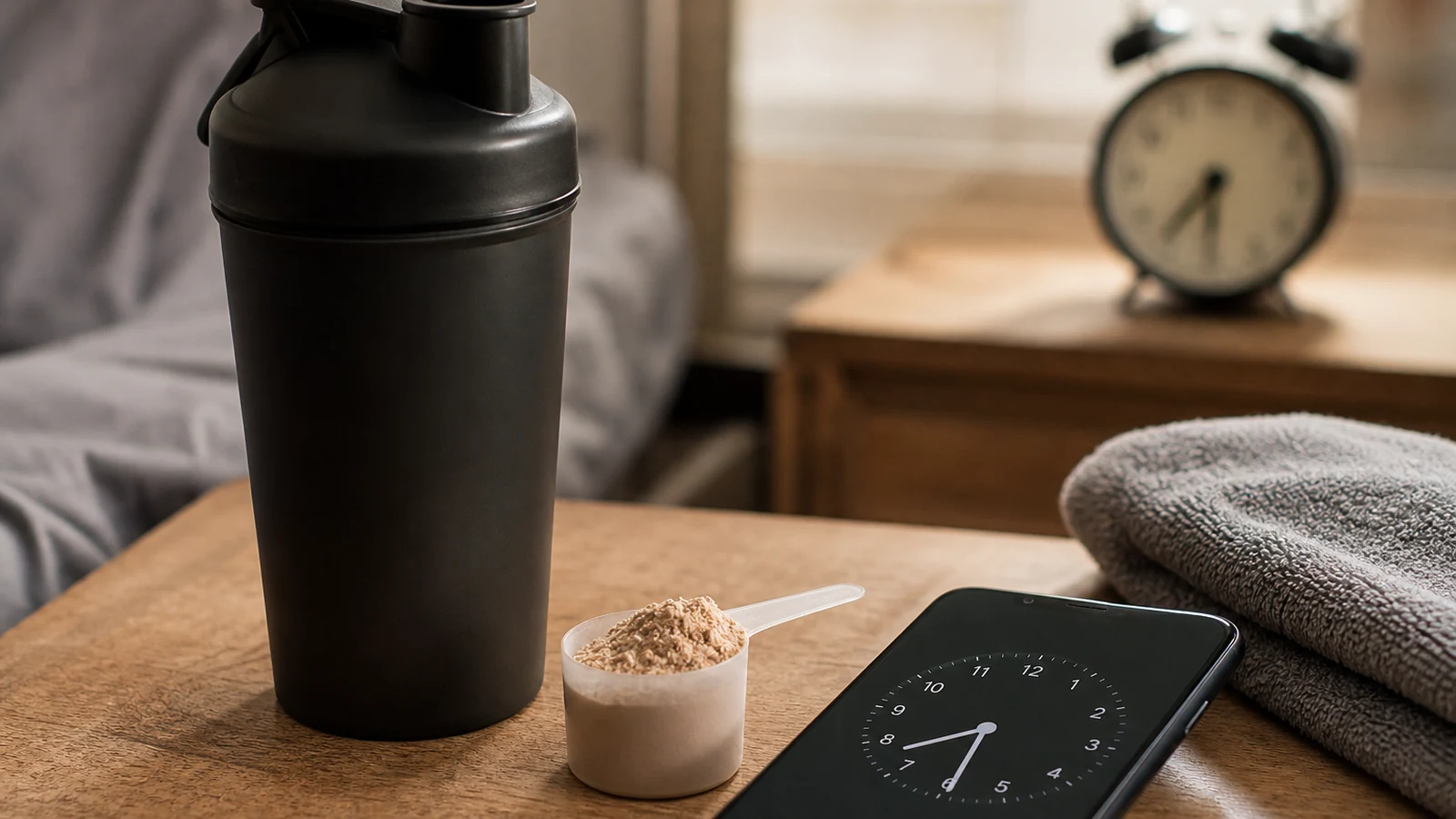
Pre-workout supplements are sold as the thing that helps you train harder. Fair enough. If you’re dragging after school, after work, or after a bad night, a scoop of something sweet, fizzy, and aggressively labeled can feel like the difference between showing up and skipping the gym.
But the recovery math can get awkward fast.
A 2025 Sleep Epidemiology study reported that Canadian adolescents and young adults who used pre-workout supplements in the past year were more than twice as likely to report sleeping five hours or less per night (DOI, ScienceDaily, News-Medical). That’s not a small sleep dip. Five hours is well below CDC guidance for both teenagers, who need 8 to 10 hours, and adults 18 to 60, who need 7 or more hours (CDC).
And yes, the caveat matters. This was a cross-sectional, self-reported study. It can’t prove pre-workouts caused the short sleep. Short sleepers might reach for pre-workouts because they’re tired. Pre-workouts might push some users into shorter sleep. Or both could be happening at once.
Still, the finding is worth taking seriously, because the biology behind it isn’t mysterious.
The study doesn’t prove cause and effect, but it points to a real tradeoff #
The study looked at people aged 16 to 30 in the Canadian Study of Adolescent Health Behaviors. According to the available summaries, participants reported whether they had used pre-workout supplements in the prior 12 months and how much they slept, on average, over the previous two weeks. Sleep was grouped as five hours or less, six, seven, eight, or nine or more hours.
The researchers adjusted for several factors, including demographics, depression and anxiety symptoms, and recent weight training. But adjustment doesn’t turn a survey into a sleep-lab experiment (annoying, but true). The study didn’t capture exact brand, dose, caffeine amount, timing, frequency, or whether someone used the product at 6 a.m. or 7 p.m.
So the safe read is this: pre-workout use was associated with very short sleep in young people. It wasn’t proven to cause it.
That distinction protects readers from panic - and it also keeps the useful question in view. If a supplement is meant to improve performance, what happens if it also eats into the sleep needed for recovery, mood, reaction time, learning, and the next workout?
Caffeine is probably the first suspect #
Pre-workouts aren’t all the same product. Some are stimulant-heavy. Some are lower caffeine. Some are marketed as stimulant-free. But many popular pre-workouts are, in practical terms, high-caffeine products with extra ingredients wrapped around them.
A 2019 analysis of the top 100 commercially available pre-workout supplements found caffeine listed in 86 percent of products, with an average of 254 mg where caffeine was declared. The same paper found a mean of 18.4 ingredients per product, and 44.3 percent of ingredients were included in proprietary blends with undisclosed amounts (Nutrients).
Another study, which tested 15 pre-workouts commonly used by Australian consumers, found caffeine content ranging from 91 to 387 mg per serving. Only 6 of the 15 labels listed caffeine, and measured caffeine ranged from 59 percent to 176 percent of label claims (Drug Testing and Analysis). That’s a small sample in one market, so don’t treat it as a map of every tub on every shelf. But it does show why “I took one scoop” isn’t always a precise caffeine count.
And caffeine timing can be rougher than people expect. A 2023 systematic review and meta-analysis found that caffeine reduced total sleep time by about 45 minutes and sleep efficiency by 7 percent. The authors estimated that a standard pre-workout caffeine dose of 217.5 mg may need to be taken at least 13.2 hours before bedtime to avoid reductions in total sleep time (Sleep Medicine Reviews).
Not everyone metabolizes caffeine the same way. Some people can drink coffee after dinner and sleep. Others take caffeine at noon and feel it at midnight. But if you train after work or evening classes, a stimulant pre-workout can land very close to bedtime in caffeine terms, even when it doesn’t feel close on the clock.
The label may not tell you the whole stimulant load #
Here’s the part I wouldn’t gloss over: caffeine isn’t always just listed as “caffeine.”
Guarana, for example, contributes caffeine too. Other stimulant-like ingredients may be stacked into a formula. And proprietary blends can make it harder to know how much of each ingredient you’re actually getting. A review of multi-ingredient pre-workout supplements notes that these products commonly include caffeine, creatine, beta-alanine, amino acids, and nitric oxide-related ingredients, but formulas vary and long-term safety evidence is limited (JISSN).
That doesn’t mean every pre-workout is shady. It doesn’t mean creatine or beta-alanine are the sleep problem. And it doesn’t mean caffeine has no performance upside. The International Society of Sports Nutrition’s position stand says caffeine can improve several aspects of exercise performance, with responses and side effects varying by person (JISSN).
But performance benefit and sleep cost can exist in the same scoop. That’s the less marketable sentence.
Watch for the “I need it because I’m tired” loop #
So what does this look like in real life?
Someone sleeps badly, feels flat the next afternoon, takes pre-workout to train, trains later than planned, stays wired at night, sleeps badly again, then needs more help getting through the next day. It’s not a moral failure. It’s a loop.
And young users may be more exposed to that loop because their schedules are already squeezed. High school athletes, college students, shift workers, and young adults training after work often don’t have a clean morning-workout option. The product promises energy when energy is low. Unfortunately, late stimulant use can push the sleep problem downstream.
Worth knowing: the FDA says up to 400 mg of caffeine per day is not generally associated with negative effects for most adults, but sensitivity varies. Pregnancy, breastfeeding, medications, and medical conditions can change what makes sense for a person (FDA).
And 400 mg is not a challenge target. If you’re also drinking coffee, energy drinks, strong tea, caffeinated soda, or taking other supplements, the total can climb without looking dramatic on any one label.
A practical pre-workout sleep check #
Before using a pre-workout, especially later in the day, ask a few blunt questions.
How much caffeine is in one serving? If the label doesn’t say, are there caffeine-containing ingredients such as guarana? Are you taking a full scoop, a heaping scoop, or more than one serving because your tolerance has crept up? How much caffeine have you already had today from coffee, tea, energy drinks, or soda? And if bedtime is within the next several hours, is this workout boost worth a shorter night?
But don’t stop there. Check whether the product uses a proprietary blend that hides amounts. Avoid stacking pre-workout with energy drinks or extra caffeine pills. Skip bulk pure or highly concentrated caffeine powders and liquids; FDA warns that measuring errors can lead to dangerous or even lethal doses (FDA).
Also check for DMAA. FDA advises consumers not to buy or use dietary supplements containing DMAA, and warns that DMAA combined with stimulant ingredients such as caffeine can raise blood pressure and contribute to cardiovascular problems (FDA).
One more thing: supplements being sold in stores or online doesn’t mean FDA pre-approved them for safety or effectiveness. FDA regulates dietary supplements, but generally does not approve them before they reach consumers (FDA). If the label language feels slippery, our guide to proprietary blends and supplement labels is a useful next read.
Who should be extra cautious? #
If you’re already dealing with insomnia, anxiety, panic symptoms, palpitations, high blood pressure, heart rhythm issues, chest pain, or stimulant sensitivity, a high-caffeine pre-workout probably deserves more caution than the label copy suggests.
Same if you’re pregnant, trying to conceive, breastfeeding, taking regular medications, or managing a medical condition. That’s a pharmacist or clinician conversation, not a “see how two scoops feels” experiment.
NCCIH warns that large amounts of caffeine may cause serious heart and blood-vessel problems, and that caffeine use may be associated with anxiety, sleep problems, digestive problems, and dehydration. It also notes special concern around children, teenagers, and young adults with energy/stimulant products (NCCIH). Pre-workouts aren’t identical to energy drinks, but the stimulant issue overlaps enough to pay attention.
And if you get chest pain, fainting, severe palpitations, confusion, seizures, severe vomiting or diarrhea, or symptoms that feel like caffeine toxicity, don’t try to troubleshoot it with internet advice. Stop the product and seek urgent medical help.
Bottom line #
Pre-workouts can help some people feel more ready to train. That’s the appeal, and it’s not imaginary.
But if the product is stimulant-heavy, the tradeoff may show up later, when you’re trying to sleep. The new Sleep Epidemiology study doesn’t prove pre-workouts cause dangerous sleep loss, but it does add a useful warning sign: young users were more than twice as likely to report sleeping five hours or less.
So the better question isn’t “Do pre-workouts work?”
It’s “What are they costing me tonight?”
If your pre-workout helps you squeeze out a better session but leaves you wired, anxious, or stuck on five hours of sleep, it’s not supporting recovery. It’s borrowing from it.
Related

Berberine in 2026: What the Evidence Actually Shows (and What It Doesn’t)

Glucosamine and Alzheimer's: A Caution Flag, Not a Panic Button