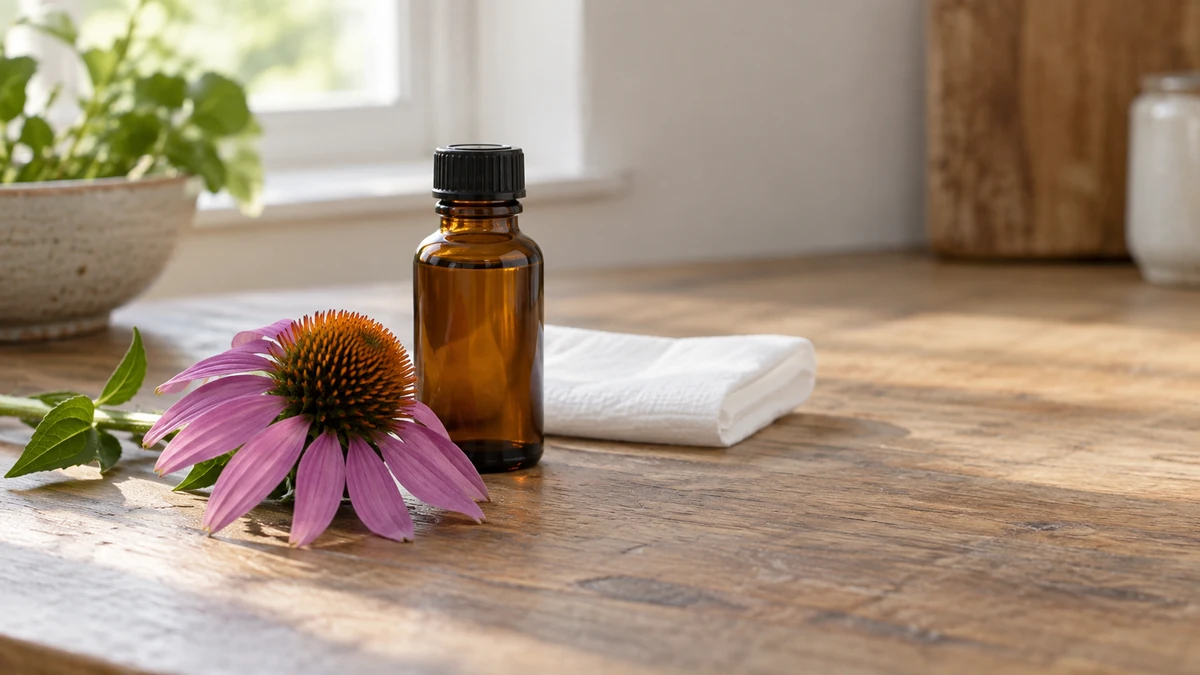
Echinacea for a cold: why ‘may slightly reduce’ isn't a reason to stock up
Table of Contents
That bottle of echinacea beside the cold medicine makes a tempting promise: buy it now, have fewer colds later, and maybe get over the next one faster. But those are two different bets. NCCIH’s current consumer summary, updated in November 2024, says echinacea may slightly reduce the chance of catching a cold. Whether it shortens a cold you’ve already caught remains unclear. I’d read that as a reason to pause at the shelf, not to fill a cupboard.
The annoying part is that “echinacea” isn’t one reproducible ingredient. Studies have used different species, plant parts and preparations. Even a promising result for one extract doesn’t tell you much about the tea, gummy or capsule in your hand (Cochrane review; NCCIH).
Fewer colds isn’t the same as a shorter cold #
Here’s the prevention case, such as it is. A 2014 Cochrane review, covering trials searched through July 2013, found that none of the individual prevention comparisons reporting the proportion of people who caught at least one cold was statistically significant. Exploratory pooling suggested a relative reduction, but the products and studies differed too much for the reviewers to treat that pooled answer as decisive. That’s not “echinacea prevents colds.” Nor is it proof that nothing in the category could work.
A 2019 review found fewer upper respiratory tract infections in pooled echinacea trials. It also warned about differences between studies and reporting limitations, and didn’t establish that infections ended sooner. Upper respiratory tract infection is a wider outcome than the ordinary cold a shopper hopes to avoid. So the prevention signal deserves mention, without turning a relative estimate from pooled trials into a promise about how many colds you won’t get.
And starting a supplement after a sore throat appears is another question again. The Cochrane reviewers didn’t establish a clinically relevant benefit for treating a cold. NCCIH still calls the evidence on shortening one unclear. If you’re buying echinacea to knock days off this week’s cold, the evidence isn’t a reliable sales pitch.
The newer positive findings need their own labels #
There is newer, more favorable research; it shouldn’t disappear just because the headline is cautious. A 2025 review of pediatric trials of E. purpurea reported fewer upper respiratory tract infections and a small pooled signal for shorter illness. It also reported more adverse events in the echinacea groups, with varied formulations and outcomes and unresolved safety questions. Children aren’t miniature adult supplement shoppers (and that analysis doesn’t validate the adult bottle on the shelf). NCCIH advises parents to talk with a child’s health-care provider before giving echinacea.
Another 2024 synthesis reported encouraging results for broader respiratory tract infections and antibiotic use. But those aren’t all plain common-cold outcomes, and the included studies encompassed mixed-ingredient products and some open-label comparisons. The paper disclosed manufacturer support and honoraria. Those details don’t erase its findings - they do limit how confidently you can apply the abstract to one retail echinacea product. It certainly isn’t a reason to skip prescribed antibiotics.
Which preparation was tested? That’s the shopping question the pooled numbers can’t answer for you. Species, plant part and extraction method matter in this literature (Cochrane; NCCIH). A label saying “echinacea” alone doesn’t bridge the gap between a study and a purchase. And buying a bigger bottle doesn’t fix it.
Before you try it, check the safety side #
Some studied echinacea preparations appear likely safe for most adults over short periods, according to NCCIH. That’s narrower than “natural, so harmless.” Stomach discomfort and nausea can occur; allergic reactions sometimes can be severe. If you’ve reacted to ragweed or related daisy-family plants, don’t assume you’ll tolerate echinacea. A review of Asteraceae allergy describes cross-reactivity as a concern, not a prediction that every person with pollen allergy will react. Ask a clinician or allergist before use, and seek urgent care for signs of a severe allergic reaction rather than trying it again.
Medicines complicate the decision, too. NCCIH describes conflicting evidence for interactions with some liver-metabolized drugs and theoretical concerns involving immunosuppressants and caffeine. Theoretical doesn’t mean a transplant medicine is proven to fail if someone takes echinacea. But if you’re taking prescription medicine - especially an immunosuppressant - or you’re immunocompromised or managing a chronic condition, talk with your prescriber or pharmacist before adding it. Don’t change your medication on the strength of a supplement claim.
Pregnant or breastfeeding? NCCIH says limited early-pregnancy research on particular extracts doesn’t establish general safety, and little is known about breastfeeding safety. Check with your clinician. And for children, the newer positive pooled results have to sit beside increased reported adverse events and NCCIH’s advice to consult the child’s clinician first (2025 review; NCCIH). This isn’t a dosing guide for a child - or for anyone else.
When “just a cold” needs a different response #
A cold-like start can also be flu, COVID-19 or another respiratory infection. CDC guidance urges people at higher risk of severe illness to seek testing and treatment advice promptly when those illnesses are possible; the window for treatment matters. Don’t wait on an herb trial instead.
Get medical advice for fast or difficult breathing, dehydration, fever lasting more than four days, symptoms persisting past ten days without improvement, symptoms that improve then worsen, or a worsening chronic illness, as described in the CDC’s cold fact sheet. A baby under three months with a fever of 100.4°F (38°C) or higher needs prompt professional advice (CDC).
The practical call? If you’re a healthy adult considering echinacea for prevention, the evidence leaves room for a small possible benefit, not a dependable reason to stock up. If you’ve already caught a cold, the case for shortening it is weaker still. I’d spend more attention on what illness you might have, whether you need care, and whether that particular supplement is safe with your medicines than on the promise printed across its box.
Related
Psyllium and LDL cholesterol: a useful number, not a heart-health shortcut
Propolis and metabolic health: two promising numbers aren't a treatment
Honey for Cough: What Natural Remedies Can and Can't Do
Tart Cherry Extract, Uric Acid, and the Gout Claim That Needs a Brake