Tart Cherry Extract, Uric Acid, and the Gout Claim That Needs a Brake
Table of Contents
A tart cherry study can sound bigger than it is if you only read the lab numbers.
That’s the trap with the new tart cherry extract trial. A 2026 Journal of Dietary Supplements randomized, double-blind, placebo-controlled crossover study reported lower plasma urate and lower C-reactive protein, or CRP, after four weeks of a standardized tart cherry extract in 10 selected healthy adults (Taylor & Francis; PubMed).
And yes, the urate movement was attention-grabbing. But no, this does not prove tart cherry treats gout. It doesn’t prove fewer flares. It doesn’t prove kidney-stone protection. It doesn’t give anyone a reason to swap out allopurinol, febuxostat, probenecid, pegloticase, colchicine, NSAIDs, steroids, or clinician-guided gout care.
The useful story is narrower - and honestly more useful: lab markers can move in a small supplement study without becoming a treatment claim.
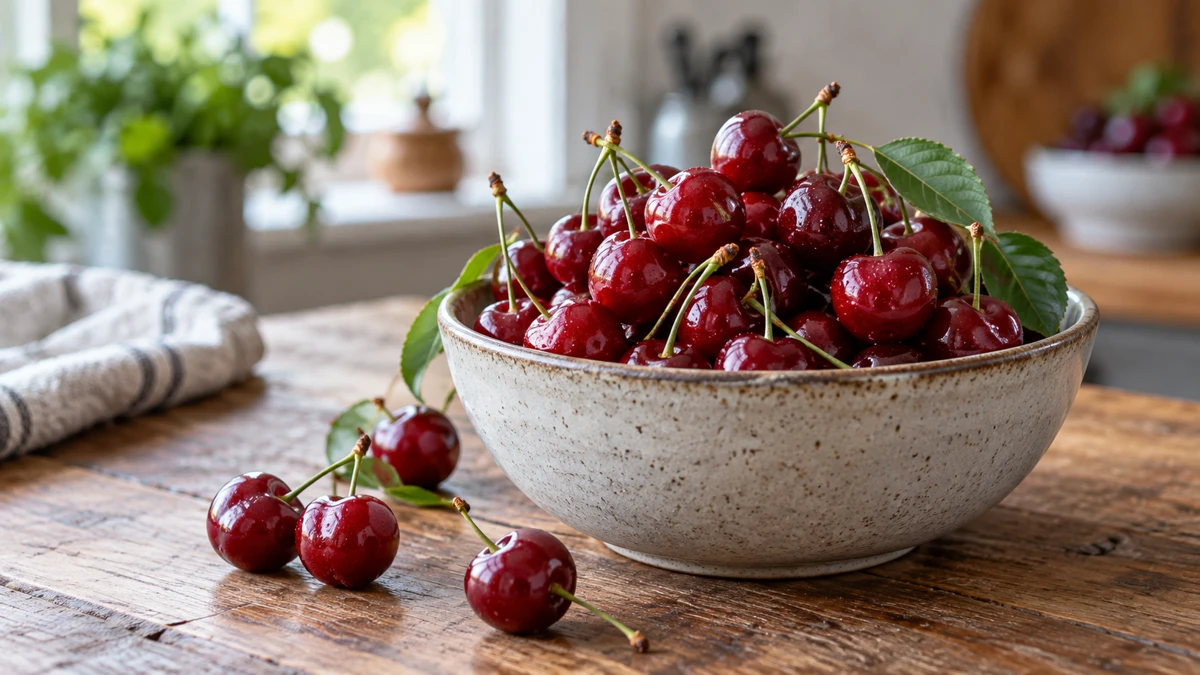
Header image: AI-generated editorial illustration of cherries. Whole fruit is not the standardized extract tested in the trial, and the image implies no treatment benefit.
What the small trial actually tested #
The study tested NordicCherry, a specific European tart cherry (Prunus cerasus L.) extract powder in vegan capsules. The paper describes a water-extracted 10:1 powder, stabilized with rosmarinic acid from rosemary extract, with total polyphenols measured by a third-party lab. The placebo was acacia gum in identical capsules (Taylor & Francis).
That product detail is not label trivia. It means the evidence belongs to this studied extract, in this protocol, in this tiny group. It does not automatically travel to tart cherry juice, concentrate, gummies, powders, fresh cherries, or whatever capsule happens to rank well on a shopping site.
The trial used 500 mg per day for 28 days. That’s study context, not AMZ dosage advice. Readers shouldn’t turn that number into a home experiment, especially if gout, kidney disease, diabetes, pregnancy, medication use, or recurrent joint pain is part of the picture.
The participants were healthy adults aged 18-45. Ten completed the study: six men and four women, with eight overweight, one obese, and one normal-weight participant. The trial excluded diabetes, kidney disease, liver disease, cardiovascular disease, inflammatory bowel disease, cancer, known tart cherry or Prunus allergy, relevant medication or supplement use, current smoking, alcoholism or drug abuse history, recent surgery or hospitalization, and abnormal screening tests (Taylor & Francis).
So when the paper says no adverse events were reported, that is reassuring inside a very selected short trial. It isn’t a broad safety pass for everyone else.
The marker result was real enough to notice, not strong enough to generalize #
After four weeks, plasma urate in the tart-cherry condition fell from 7.01 +/- 0.50 to 4.39 +/- 0.86 mg/dL. CRP fell from 5.91 +/- 0.55 to 4.56 +/- 0.35 mg/L. Acute testing at 2, 4, and 8 hours did not significantly change urate or CRP (Taylor & Francis).
That’s interesting. I wouldn’t wave it away.
But the design puts a fence around the claim. This was n=10. It lasted four weeks per phase. The tart-cherry phase started with a higher urate baseline than the placebo phase. Participants maintained their usual diet and activity, but the paper did not clearly describe controlled purine intake, detailed alcohol tracking, or food-frequency controls.
Most important, the study did not enroll gout patients. It did not measure gout flares. It did not measure pain, tophi, joint damage, kidney stones, medication changes, or long-term urate control. Those missing endpoints are not minor. They’re the difference between “a marker moved” and “a patient outcome improved.”
CRP needs the same brake. CRP is a nonspecific inflammation marker. A lower CRP value in a 10-person healthy-adult supplement trial is not proof of an anti-inflammatory treatment for gout, arthritis, heart disease, or any diagnosed inflammatory condition.
The gout-specific trial people may skip #
Here’s the awkward counterweight: a gout-specific tart cherry trial did not find the same urate story.
A 2020 study in Rheumatology tested tart cherry concentrate in 50 people with gout over 28 days. It found no significant effect on serum urate area under the curve, no significant effect on urine urate excretion, and no significant effect on gout-flare frequency. The study reported 24 adverse events, with one hyperglycaemia event considered possibly related to the cherry concentrate (PubMed).
That doesn’t make tart cherry research worthless. But it does make simple “tart cherry lowers uric acid, therefore gout” copy look sloppy.
And the broader cherry-and-gout evidence isn’t settled. A 2019 systematic review found some association signals, but the authors could not run an effective meta-analysis because the studies were few and heterogeneous (PMC). An older observational study in 633 gout patients linked cherry intake over two days with lower recurrent-attack risk, but observational, self-reported data can’t prove flare prevention (PMC).
So, what’s the fair read? There are signals worth studying. There is not a reliable consumer claim that tart cherry products control gout.
Why gout is not a supplement-shopping problem #
Gout care has a medical logic that a supplement headline can’t replace.
The American College of Rheumatology guideline discusses clinician-guided urate-lowering therapy, treat-to-target serum urate monitoring, and medicines such as allopurinol, febuxostat, probenecid, and pegloticase when indicated. It also strongly recommends colchicine, NSAIDs, or glucocorticoids as appropriate first-line therapies for gout flares (ACR guideline).
Mayo Clinic separates medicines used for gout attacks from medicines used to prevent gout complications by lowering uric acid. It also notes that long-term medication may be considered for people with frequent attacks, tophi, kidney disease, kidney stones, or very high uric acid, depending on the full clinical picture (Mayo Clinic).
And asymptomatic hyperuricemia is its own category. The AAFP summary of the ACR guideline says urate-lowering therapy has not been shown beneficial for asymptomatic hyperuricemia (AAFP). In plain English: a number on a lab report doesn’t mean the same thing for every person.
That’s why this article is about marker literacy. If you have a painful hot swollen joint, recurrent flares, kidney stones, kidney disease, tophi, or questions about gout medication, the next step is clinician evaluation - not a tart cherry dose hunt.
Product form matters more than marketing admits #
Cherry extract capsules, tart cherry concentrate, juice, gummies, powders, and fresh cherries are not interchangeable.
NCCIH warns that supplements sold in stores or online may differ from products tested in studies, and FDA says dietary supplements generally aren’t approved for safety and effectiveness before marketing (NCCIH; FDA). FDA also says supplement labels cannot claim to diagnose, treat, cure, mitigate, or prevent disease.
Worth keeping practical: juice and concentrate are food forms, not free lab-marker hacks. The BMJ Open gout-flare trial protocol described a tart cherry drink serving that supplied 80 kcal and 20 g carbohydrate per day (PMC). For someone with diabetes, insulin resistance, metabolic syndrome, or careful carbohydrate targets, that matters.
The 2026 extract trial excluded diabetes. The 2020 gout concentrate trial included a possibly related hyperglycaemia event. That’s not panic material, but it’s enough to keep sugar/carbohydrate and glucose-control cautions visible.
Safety box: who should be extra cautious #
Don’t treat tart cherry as automatically safe just because cherries are food.
People with diabetes or metabolic issues, kidney disease or kidney stones, liver disease, pregnancy or breastfeeding, children, cherry or other Prunus fruit allergy, GI intolerance or side effects, planned surgery, and complicated medication lists should talk with a qualified clinician or pharmacist before using tart cherry supplements or concentrated products. Same goes for anyone taking gout medicines, anti-inflammatory drugs, blood thinners, diabetes medicines, kidney-related medicines, or several supplements at once.
Because supplements can interact with medicines and may not match studied products, NCCIH advises telling health professionals about supplement use, stopping a supplement and contacting a provider if side effects occur, and discussing supplements before surgery (NCCIH).
No drama here. Just a reminder that the people most tempted by a gout-adjacent headline are often the people least represented by the tiny healthy-adult trial.
Bottom line #
The 2026 tart cherry extract trial is worth reading because the urate and CRP changes were not boring. A four-week signal in a randomized, blinded crossover design deserves attention.
But it deserves the right size of attention. Ten selected healthy adults are not a gout population. Plasma urate and CRP are markers, not flare outcomes. A standardized NordicCherry capsule is not every tart cherry juice, gummy, powder, or concentrate. And a short study with no gout flares, no kidney-stone endpoint, and no medication-comparison endpoint cannot carry a treatment claim.
So the AMZ read is careful: tart cherry extract may be worth more research for urate and inflammation markers. It is not proven gout care, not a flare-prevention plan, not a kidney-stone strategy, and not a substitute for monitored urate-lowering or flare medicine when those are needed.
If a tart cherry headline makes you curious, fine. Let it make you a better reader of lab-marker claims - not your own gout pharmacist.
Related
Akkermansia Is Interesting Microbiome Science, Not a GLP-1 Shortcut
6 Popular Supplements That Deserve a Liver-Safety Check

Corn Leaf Extract and Sleep: What One Small Trial Can and Can't Say

The Herbal Reflux Trial Worth Reading Carefully, Not Copying at Home