Psyllium and LDL cholesterol: a useful number, not a heart-health shortcut
Table of Contents
An elevated LDL result can make a tub of psyllium look like an easy answer. The evidence is narrower - and more useful - than a promise on a label. A December 2025 review of randomized trials found a modest average drop in LDL cholesterol among adults taking psyllium compared with trial comparators. It didn’t test whether psyllium prevents heart attacks or strokes. And it didn’t pit a tub of husk against a diet built around fiber-rich foods.
That’s the distinction worth keeping in view if you’re considering it for cholesterol. A better lab number can be meaningful, but it isn’t a complete treatment plan.
What the trials actually measured #
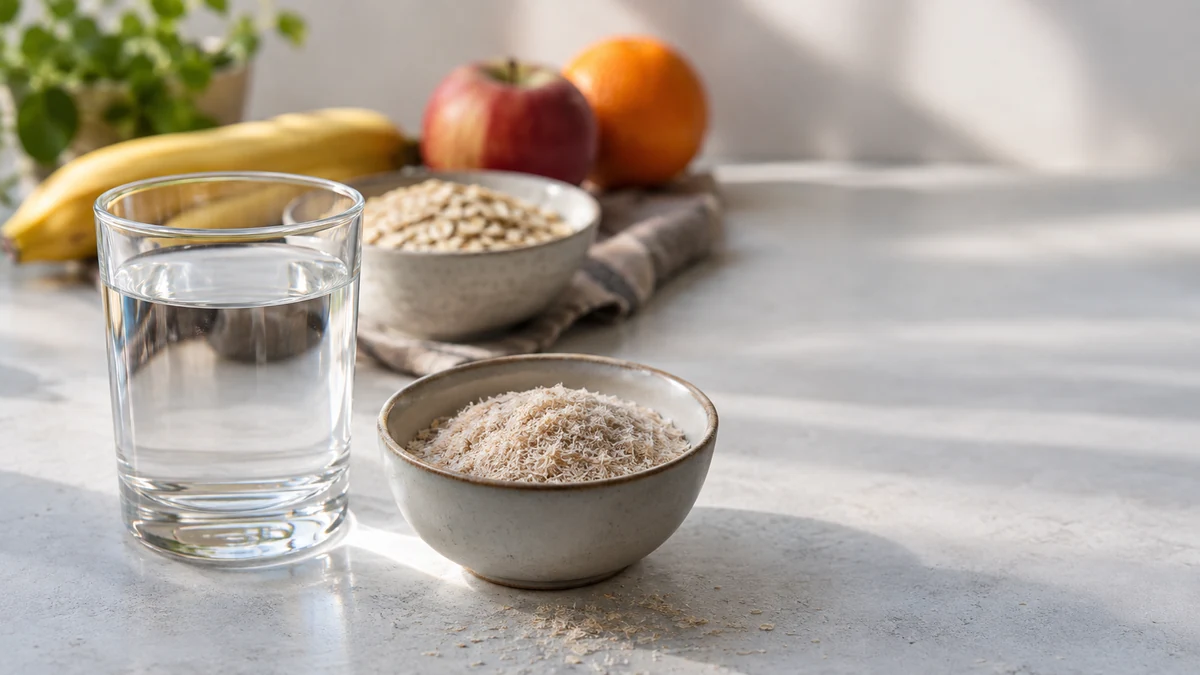
Psyllium is a gel-forming soluble fiber, commonly sold as a husk powder or in other oral forms. Researchers have proposed that its viscous fiber helps remove bile acids, which could help explain a cholesterol effect. A plausible mechanism isn’t proof of what happens to any one person’s arteries, though. The 2025 review combined 41 randomized-trial articles involving 2,049 adults. It found lower LDL cholesterol on average in the psyllium groups than in comparator groups, but the size of that difference isn’t a number to subtract from your own next test result. The review also found a reduction in total cholesterol, but its overall findings for triglycerides and HDL cholesterol weren’t statistically convincing.
An earlier review, published in 2018, likewise reported lower LDL across 28 trials involving 1,924 people. That points in the same direction. But these are reviews, not two new clinical trials, and some underlying studies may overlap. Adding their participant totals together would make the evidence look bigger than it is.
Why the average needs a warning label #
Imagine seeing one LDL figure in a headline and expecting the same movement on your next blood test. The 2025 paper gives a good reason to resist that: results differed markedly across studies (LDL heterogeneity, I² = 88.46%). The authors’ Egger test also flagged a possible small-study or publication-bias signal for LDL. And although one subgroup analysis showed a stronger signal in higher-dose studies, the analysis didn’t establish a significant linear dose-response relationship. That’s not a license to chase a number of grams per day on your own.
Who was enrolled, what they were compared with and what else they ate weren’t identical from study to study. So the fair reading is a modest LDL-marker signal with considerable uncertainty about its size for a particular person - not a personalized prescription. Most importantly, these trials measured blood lipids. They didn’t establish that taking psyllium itself cuts heart attacks or strokes.
Food fiber isn’t the same decision as a fiber supplement #
If the choice in front of you is a scoop of psyllium or actually eating more fiber-rich food, the review can’t declare a winner. It wasn’t a direct comparison of a food-first diet against a supplement. Fiber-rich foods also bring other nutrients that an isolated supplement doesn’t; Mayo Clinic recommends getting fiber from food where possible, while noting that supplements can contribute to daily intake. That doesn’t mean every bean, oat or piece of fruit produces the same LDL change as psyllium.
I wouldn’t treat a fiber supplement as a replacement for lunch (or for the rest of a diet). It can be one practical addition if getting enough fiber from food is hard. But the LDL number on its own tells you nothing about the nutrients that didn’t come with the scoop.
Two checks before you try it #
First, water. MedlinePlus says psyllium powder or granules must be mixed into 8 ounces (240 mL) of liquid immediately before use and taken with adequate liquid. Don’t swallow the powder dry. If you’ve had trouble swallowing, an intestinal blockage, rectal bleeding or a persistent digestive problem, ask a clinician before using it; Mayo Clinic also flags a history of blocked bowel or Crohn’s disease for a conversation with your care team. Those details matter more than an attractive cholesterol claim.
Second, your medicine list. Psyllium can complicate how some medicines are taken. MedlinePlus specifically warns against taking digoxin, salicylates such as aspirin, or nitrofurantoin within three hours of psyllium; that is not a universal three-hour rule for statins or every other medicine. If your aspirin is prescribed, don’t stop it or change when you take it on your own. The same goes for other prescribed or critical medicines - ask the prescriber or a pharmacist to work out the timing before adding psyllium. Bring the exact prescription, over-the-counter and supplement list. A generic internet spacing rule is a poor way to manage a prescribed drug.
Gas and bloating can show up, particularly at first, according to Mayo Clinic. Don’t confuse those with symptoms to push through: MedlinePlus lists breathing trouble, difficulty swallowing, rash, itching, stomach pain, nausea and vomiting as reasons to contact a clinician immediately. If breathing or swallowing suddenly becomes difficult, seek emergency care. Avoid breathing in the powder as you mix it, too.
And if you have diabetes, kidney or heart disease, high blood pressure, or are pregnant or breastfeeding, check with your clinician first. Mayo notes that fiber supplements can affect blood sugar and diabetes medicine needs; MedlinePlus flags those conditions and pregnancy or breastfeeding for discussion. Don’t change insulin or any other treatment yourself.
If you and your clinician decide a supplement makes sense, a plain unflavored powder such as NOW Psyllium Husk Powder (affiliate link) avoids the sugar and flavorings in some fiber drinks. The water and medicine checks above still apply.
As an Amazon Associate we earn from qualifying purchases. Our disclosure.
Where psyllium fits in an LDL conversation #
At your next appointment, ask what your LDL result means for you, alongside your other heart and stroke risk factors, and whether a fiber supplement makes sense with your diet and medications. The American Heart Association’s LDL guide puts lab numbers inside a wider risk assessment and treatment plan. Follow-up testing still matters; so does taking prescribed cholesterol medicine unless your treating professional changes the plan.
Psyllium has a real, if variable, LDL signal in adult trials. It has no demonstrated heart-attack-prevention result from this review, no proven win over a food-first diet, and no pass on water or medicine checks. That’s less exciting than a supplement pitch. It’s also a better basis for a decision.
Related
Propolis and metabolic health: two promising numbers aren't a treatment
Tart Cherry Extract, Uric Acid, and the Gout Claim That Needs a Brake
The Herbal Reflux Trial Worth Reading Carefully, Not Copying at Home