
The Herbal Reflux Trial Worth Reading Carefully, Not Copying at Home
Table of Contents
A Chinese herbal reflux trial can be interesting precisely because it was so carefully defined.
That’s the part people may miss with the 2026 Xiangsu Hewei Granules study. A multicenter, randomized, double-blind phase III trial reported much higher 8-week symptom-response rates for heartburn and acid regurgitation in a selected non-erosive reflux disease group than in the placebo/low-dose control group (PubMed; ScienceDirect).
But the careful definition is also the warning label. This was not “anyone with heartburn.” It was adults 18-65 with confirmed non-erosive GERD, a GerdQ score of at least 8, negative H. pylori status, low anxiety/depression scores, and a specific traditional Chinese medicine pattern described as liver-stomach stagnation heat syndrome (PubMed).
So the takeaway isn’t “try this for reflux.” It is much narrower (and more useful): a promising herbal-medicine trial still has to be read against diagnosis, product identity, standard GERD care, red flags, interactions, and supplement-quality rules.
What the trial actually tested #
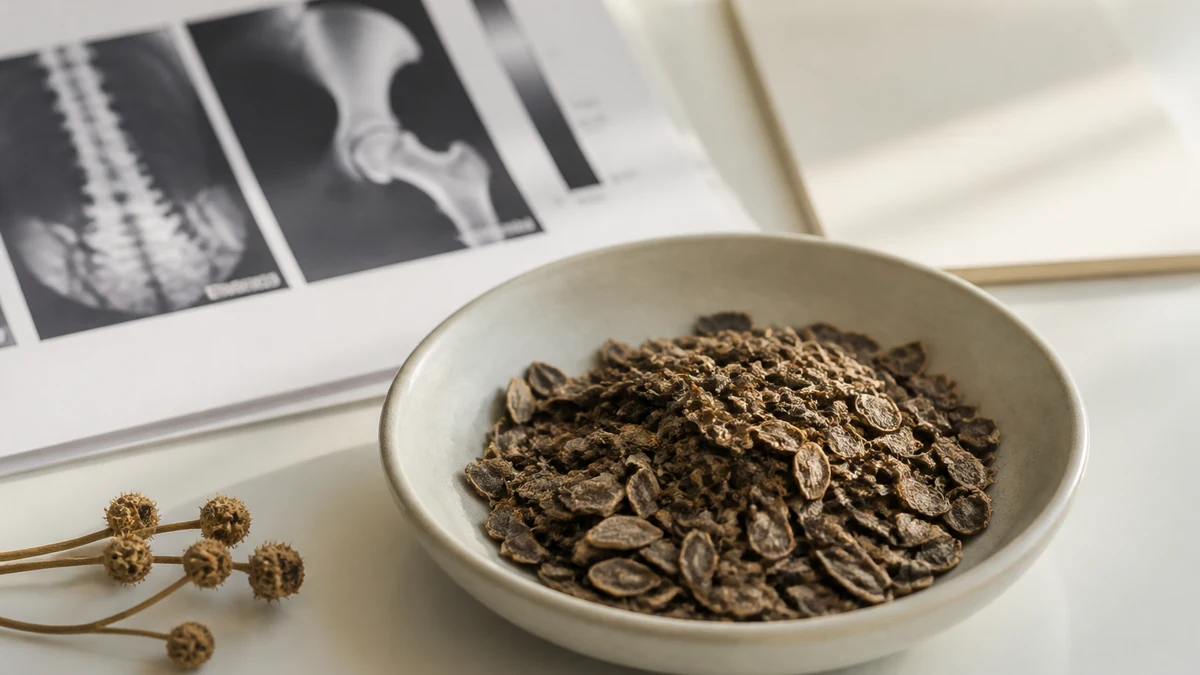
Xiangsu Hewei Granules are presented as a traditional Chinese medicine formula based on soothing the liver, harmonizing the stomach, regulating Qi, and directing it downward. That’s the traditional rationale, not clinical proof by itself. The public ScienceDirect preview lists a multi-herb formula including Cyperus rotundus, fried Citrus aurantium, Coptis chinensis, Citrus reticulata, Reynoutria japonica, Perilla frutescens, Glycyrrhiza inflata, and two auxiliary Chinese medicinal herbs (ScienceDirect).
And that ingredient detail matters. A named, manufactured trial product is not the same thing as a random capsule, tea, powder, imported granule, or “similar” formula sold online. With herbal studies, product identity is part of the evidence.
The study randomized 480 adults, with 479 included in the analysis/safety set, on a 3:1 allocation. Participants used the assigned trial product for 8 weeks. The main symptom endpoints were visual analog scale response rates for heartburn and acid regurgitation (PubMed).
The reported numbers were eye-catching: 76.39% versus 21.01% for heartburn response, and 79.72% versus 23.53% for acid-regurgitation response at week 8 (PubMed). That’s a real signal inside this study design.
But no, that still doesn’t make it home-use advice. The authors themselves said broader generalizability to other NERD populations and comparative effectiveness against standard PPI therapy need more investigation (PubMed). That’s not a footnote. It’s the boundary of the story.
Why reflux is not a “just experiment” symptom #
Reflux sounds ordinary because so many people get it. Still, GERD has established diagnostic and management pathways for a reason.
The American College of Gastroenterology guideline recommends an 8-week empiric PPI trial for classic heartburn and regurgitation when alarm symptoms are absent, and endoscopy first when symptoms such as dysphagia, weight loss, or gastrointestinal bleeding are present (ACG guideline). AAFP also summarizes PPIs as the most effective medical therapy for GERD and says alarm symptoms require endoscopy (AAFP).
And NIDDK notes that PPIs reduce stomach acid, work better than H2 blockers for GERD symptoms, and can heal the esophageal lining in most people with GERD (NIDDK). In other words, this trial should not be framed as an herbal replacement for standard reflux care.
Worth keeping blunt: if someone is using over-the-counter reflux medicine more than twice weekly, or reflux is frequent or persistent, the ACG patient page says it’s time to consult a physician rather than just keep self-managing (ACG patient page).
Safety box: when reflux symptoms need medical care #
Don’t use an herbal study as a reason to delay urgent care or proper evaluation.
Seek urgent care for chest pain with shortness of breath, sweating, dizziness, or pain spreading to the jaw or arm. Chest pain is not something to sort out with a supplement search.
See a clinician promptly for trouble swallowing, food sticking, bleeding, black or tarry stools, vomiting blood or coffee-ground material, choking or airway symptoms, unexplained weight loss, anemia, persistent vomiting, or frequent/persistent reflux. The ACG guideline and ACG patient page both flag alarm symptoms as reasons for medical evaluation, including endoscopy when indicated (ACG guideline; ACG patient page).
And don’t stop prescribed GERD medicine, skip recommended testing, or delay endoscopy because a herbal trial looked encouraging. That’s the wrong direction to take from this evidence.
The supplement-quality problem isn’t theoretical #
Traditional Chinese medicine deserves to be discussed carefully, not dismissed. NCCIH says Chinese herbal products studied for different medical problems have produced mixed results, and many studies have been poor quality, making firm conclusions difficult (NCCIH TCM).
But NCCIH also warns that some Chinese herbal products have been found contaminated with undeclared plant or animal material, drugs, heavy metals, pesticides, microorganisms, sulfites, or incorrect herbs (NCCIH TCM). That doesn’t mean the studied Xiangsu Hewei product had those problems. It means a trial product and a consumer product found online cannot be treated as automatically equivalent.
The U.S. regulatory context adds another layer. FDA says dietary supplements are not approved before marketing for safety or effectiveness, and manufacturers or distributors are responsible for making sure their products are not adulterated or misbranded (FDA). FDA also advises people to talk with a doctor, pharmacist, or other health professional before using supplements because they can interact with medicines or other supplements (FDA).
So product quality is not a boring manufacturing detail. It’s part of whether the evidence can travel from a controlled study into real life - and often, it can’t travel very far.
Multi-herb formulas mean interaction questions #
The ingredient preview is enough to raise caution, not enough to support a how-to guide.
Glycyrrhiza inflata matters because licorice-family compounds can have real physiological effects. NCCIH warns that glycyrrhizin can cause serious adverse effects, with extra concern around high intake or long-term use, high-salt intake, hypertension, heart or kidney conditions, corticosteroids, pregnancy, and breastfeeding uncertainty (NCCIH licorice).
Citrus aurantium, often discussed as bitter orange, also comes with cardiovascular and medication-caution issues in NCCIH materials, along with pregnancy and breastfeeding uncertainty (NCCIH bitter orange). And Coptis chinensis brings berberine-family caution into the conversation; NCCIH materials on goldenseal and berberine flag medication interactions and avoidance during pregnancy, breastfeeding, and infancy (NCCIH goldenseal; NCCIH berberine).
That doesn’t prove this trial product caused those ingredient-specific harms. The study preview reported no drug-related serious adverse events and safety comparable to the control group (ScienceDirect). But short-term trial safety in a selected population isn’t the same as proven safety for older adults, pregnant or breastfeeding people, children, people with heart or kidney disease, people with hypertension, or anyone taking anticoagulants, steroids, diabetes medicines, immunosuppressants, heart medicines, or several supplements at once.
So if a person is even considering a multi-herb product, the boring-sounding step is the important one: bring the exact label to a clinician or pharmacist. Not a similar product. Not a translated guess. The exact thing.
What this study can and can’t tell us #
The fair read is a little awkward, because the evidence is genuinely more interesting than an anecdote but still much narrower than a consumer recommendation.
It can tell us that one carefully run trial reported larger symptom-response rates for a specific formula in a specific NERD-plus-TCM-pattern group over 8 weeks (PubMed). It can tell us that researchers are taking some traditional reflux-related formulas seriously enough to test them with randomized methods.
But it can’t tell us that Xiangsu Hewei Granules should be used broadly for GERD, reflux, NERD, or heartburn. It can’t tell us how the formula compares with PPIs, H2 blockers, lifestyle measures, endoscopy-guided care, or clinician-led diagnosis. It can’t tell us that a product found in another market has the same identity, quality control, contaminant testing, or safety profile.
And broader Chinese-herbal GERD evidence still has quality problems. A 2022 umbrella review on Banxia Xiexin decoction for GERD found generally unsatisfactory methodological quality and no high-quality evidence, while newer refractory-GERD reviews are mostly about adjunctive Chinese herbal medicine alongside conventional therapy, not stand-alone home substitution (PMC umbrella review; PMC adjunctive CHM review).
Bottom line #
Xiangsu Hewei Granules are worth writing about because the 2026 reflux trial is not just folklore dressed up as a blog claim. It was randomized, controlled, multicenter, and specific. The symptom-response differences were large enough to notice.
But the study’s own design tells readers not to copy it at home. The population was selected. The product identity matters. The authors called for more work on generalizability and comparison with standard PPI therapy. And U.S. supplement regulation, ingredient-level cautions, red-flag reflux symptoms, and medication interactions all sit between a trial abstract and a safe consumer decision.
So the AMZ read is cautious but not dismissive: respect the trial, don’t inflate it. If reflux is frequent, persistent, severe, or mixed with alarm symptoms, the next step is medical evaluation - not an imported formula, not a dosage hunt, and not a “natural replacement” story built from one interesting study.
Related

Akkermansia Is Interesting Microbiome Science, Not a GLP-1 Shortcut

6 Popular Supplements That Deserve a Liver-Safety Check