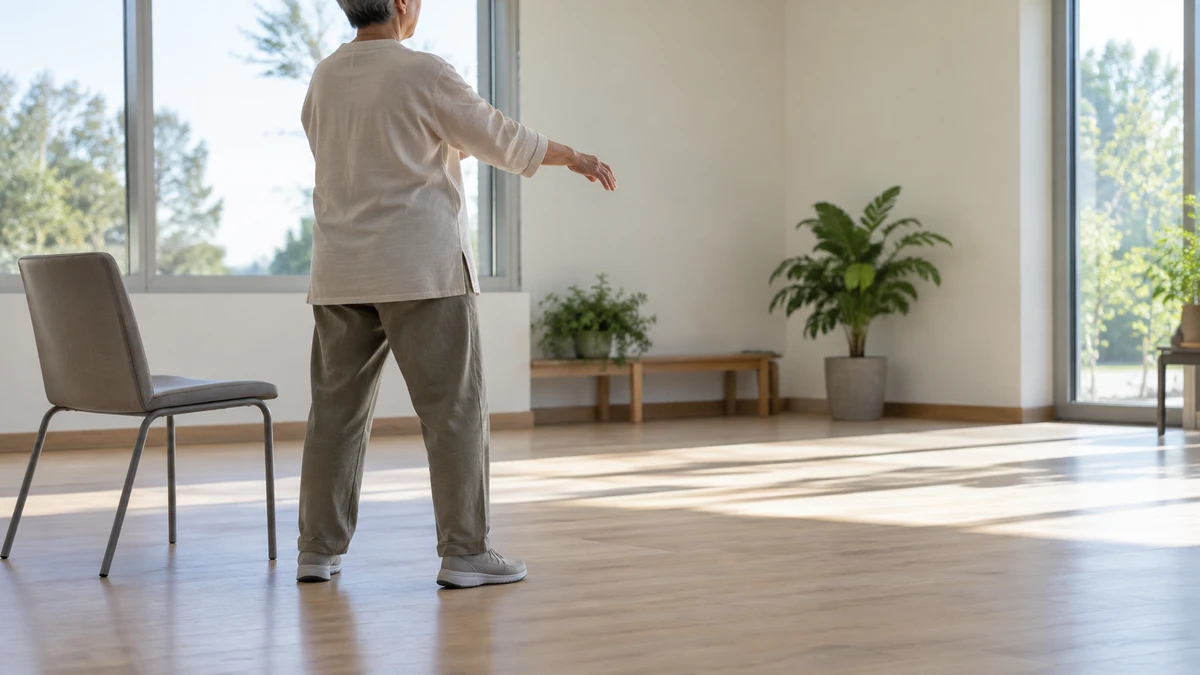
Baduanjin for balance: a better test score isn't the same as fewer falls
Table of Contents
If you’re worried about an older parent’s next fall, a gentle routine sounds appealing. Baduanjin (often called the eight brocades) has some encouraging balance-test results. But a person doing better on a timed walk or standing test isn’t necessarily a person who’ll avoid a fall at home. And those tests tell us even less about fractures.
That’s the distinction worth holding onto when you see a headline about this Chinese movement practice. A 2025 review of Baduanjin studies found favorable results across several measures of balance. It didn’t establish a reliable Baduanjin-specific reduction in recorded falls or broken bones.
What the eight brocades actually are #
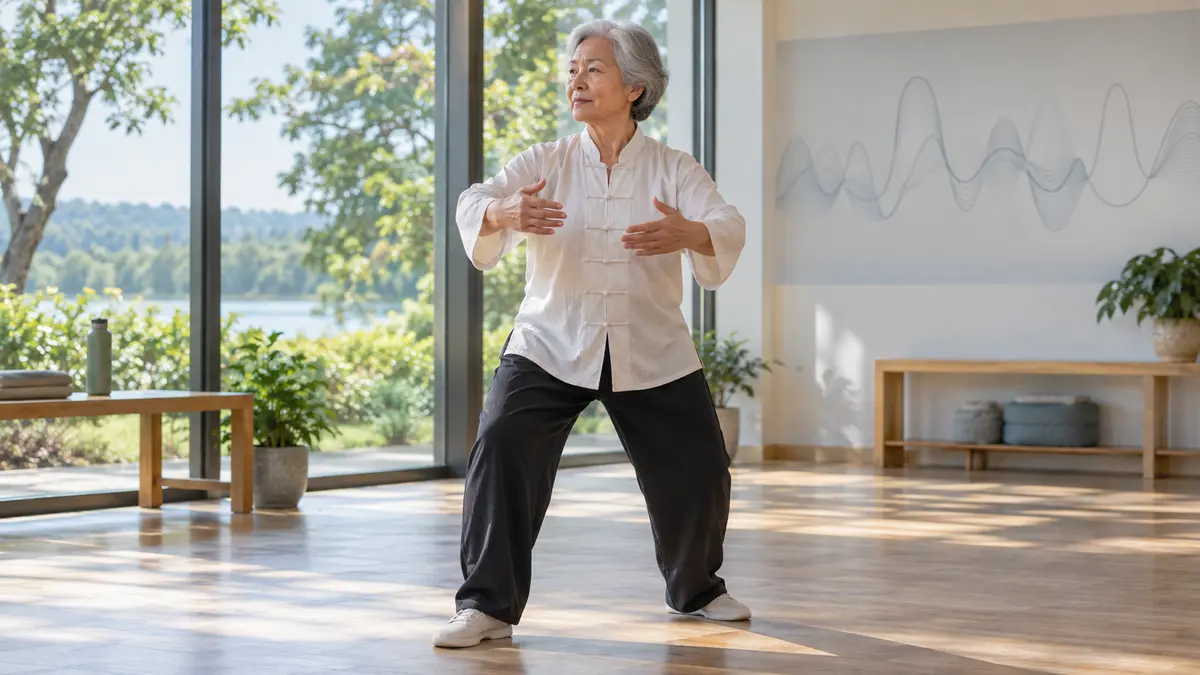
Baduanjin is a form of qigong, a practice with roots in Chinese tradition that combines movement, breathing and attention. It’s a particular routine - not another name for tai chi. Traditional use explains where the practice comes from; it can’t tell us whether this routine prevents an injury. NCCIH’s qigong overview makes that broader practice distinction, while the Baduanjin review describes slow postural movements and weight shifts.
Why might it be useful for balance? You have to move your weight and pay attention to where you’re standing. That’s a reasonable training idea, not a proven explanation for fewer falls. We shouldn’t turn a plausible movement mechanism into an injury-prevention claim.
What changed in the balance studies #
The 2025 systematic review gathered 40 controlled studies. On average, the people assigned to Baduanjin did better on pooled static and dynamic balance measures than people in the comparison groups. The reported standardized mean differences were 0.87 for static balance and 0.85 for dynamic balance. Those figures compare test scores on a standardized scale; they don’t mean falls fell by 87% or 85%. Some instrument-based postural measures, in fact, didn’t show a statistically significant improvement.
The comparison matters too. Controls ranged from usual activity and health education to walking, routine care or rehabilitation. The review excluded studies that compared Baduanjin with other qigong, resistance training or balance training. So it can’t answer the question a reader might actually have: is this better than a structured strength-and-balance program?
There’s another wrinkle. The abstract calls overall study quality relatively low, yet the review’s detailed PEDro ratings describe 29 of 39 assessed studies as good (one quasi-experimental study wasn’t rated). Both statements appear in the same paper. Ratings don’t erase the mixed study populations, varied tests, limited follow-up and publication-bias concerns the authors discuss. One higher-rated study found no significant balance or fall-confidence benefit after four months. The pooled result points in a favorable direction - but it isn’t a guarantee for an individual.
The missing step between a test and a fall #
A fall-risk assessment score can shift without anyone counting fewer actual falls. Fourteen studies in the review supplied some fall-related indicators, including risk scores and fall-efficacy measures (how confident someone feels about avoiding a fall). Its pooled fall-risk number is a standardized score contrast, not the relative risk of falling. The review doesn’t provide a robust pooled estimate of prospectively recorded fall events or a Baduanjin-specific fracture-prevention result.
Picture a person getting quicker on a clinic test, then stepping over a loose rug at home while dizzy from standing up. The test improvement is worth noticing. The rug and dizziness haven’t disappeared. Would that better score alone settle the question of whether they’re safer? No.
NCCIH summarizes broader qigong evidence favorably for balance training and fall prevention, while also noting that research in older adults is limited. That broader evidence isn’t a substitute for measured Baduanjin-specific fall or fracture outcomes. Nor should tai chi findings be silently borrowed for the eight brocades (they aren’t the same routine).
Where it fits in a real fall-risk plan #
Exercise does have stronger guideline support than a single named routine. The US Preventive Services Task Force recommends exercise for community-dwelling adults 65 and older at increased risk of falls (a grade B recommendation), often involving gait, balance and functional training. It separately says clinicians should individualize decisions about multifactorial interventions (grade C). Neither grade is a special endorsement of Baduanjin or a requirement that everyone follow the same checklist.
And exercise isn’t the only thing to discuss. The CDC’s STEADI assessment pathway looks at gait and balance, medications, blood pressure changes on standing, vision, footwear and home hazards, with referrals or interventions matched to what turns up. Someone who has fallen repeatedly or feels unsteady needs that bigger picture, not a promise that a short routine will solve the problem. Ask a clinician or physical therapist what kind of balance and strength work fits your circumstances, especially if you already use an aid or have a rehabilitation plan. Don’t replace either with qigong on the strength of a balance score.
If you want to try Baduanjin as movement you enjoy, that’s a different and more defensible conversation. Make room for it alongside an appropriate plan - not instead of an assessment after a fall, prescribed care or help making the home safer. There’s no validated one-size-fits-all Baduanjin schedule in this review, despite its discussion of session lengths and frequency.
Gentle doesn’t mean risk-free #
For a person with marked instability, recurring falls, recent injury, frailty, dizziness or a condition that limits mobility, unsupported weight shifts aren’t an obvious starting point. Speak with a clinician or physical therapist first; ask about suitable modifications or supervised exercise. A clear space and stable support can be sensible precautions if you’re unsteady, though those are practical safeguards, not a Baduanjin protocol proven in the trials. Stop a movement that brings on pain or dizziness rather than pushing through it.
Adverse-event reporting is thin. A safety review of 47 Baduanjin trials found that only 22 described how adverse events were monitored; two trials reported events during training. Reported symptoms included dizziness, musculoskeletal pain, fatigue, palpitations, chest tightness and shortness of breath. Sparse reporting can’t prove the practice is harmless. NCCIH describes qigong as generally safe, but that broad description isn’t personal clearance for an unstable or medically complex reader.
Chest pain or tightness, fainting, severe breathlessness or a fall with a suspected serious injury calls for urgent medical evaluation. Recurrent dizziness or worsening pain deserves a clinician’s attention. And if medicines or lightheadedness might be part of your fall risk, request a medication review - don’t change prescriptions yourself. For readers who are pregnant, NCCIH notes that pregnancy safety hasn’t been established; ask a healthcare professional about appropriate activity and modifications. Breastfeeding-specific safety evidence wasn’t established in the sources reviewed here.
Bottom line #
Baduanjin is a reasonable practice to ask about if you enjoy gentle, attentive movement. The measured-balance signal is interesting. But the question for someone afraid of falling is about actual falls and injuries, and this Baduanjin review doesn’t settle it. I’d start with a fall-risk conversation - especially after a fall - and find an exercise plan that fits the person rather than asking one routine to carry the whole job.
Related


A Probiotic Did Not Boost COVID Booster Antibodies. That’s the Point.