A Probiotic Did Not Boost COVID Booster Antibodies. That’s the Point.
Table of Contents
Probiotics and vaccines are an easy place for a wellness claim to get too confident. A label says “immune support,” a study mentions antibodies, and suddenly the internet acts as if a capsule can tune up a COVID booster. That’s not what the best new trial found.
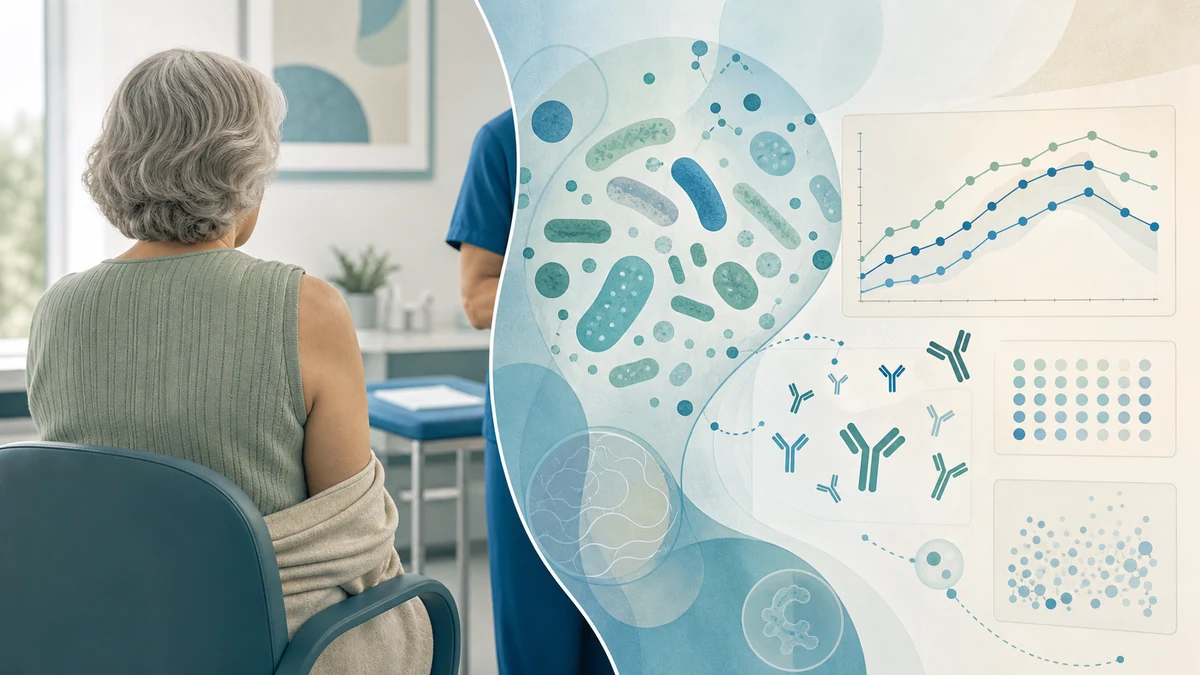
A 2026 randomized, double-blind, placebo-controlled PIRATES-COV trial followed 592 adults aged 65 to 89 in Quebec around an mRNA COVID-19 booster. Researchers tested a specific two-strain probiotic combination, not a generic “good bacteria” idea. And the main result was plain: at six months, anti-S1-RBD antibody detectability and antibody-level measures were comparable between probiotic and placebo groups (Gut Microbes PIRATES-COV trial; PubMed record).
So no, this trial doesn’t show that probiotics boost COVID vaccine response. It doesn’t show that older adults should take probiotics before boosters. And it definitely doesn’t turn a supplement into a natural vaccine adjuvant.
That negative endpoint is the useful part of the story, honestly. It gives us a cleaner way to read “immune support” claims: which strain, which endpoint, which population, and did the result actually match the claim?
The trial tested two named strains, not “probiotics” as a category #
The PIRATES-COV product contained Lacticaseibacillus rhamnosus Rosell-11 and Lacticaseibacillus paracasei Rosell-215. Participants took the study product from 15 days before vaccination to 15 days after vaccination (Gut Microbes PIRATES-COV trial). That’s study detail, not consumer dosage advice.
But the strain names aren’t trivia. They’re the point.
NCCIH warns that different probiotics can have different effects, and that evidence for one microorganism, strain, or condition doesn’t automatically apply to another product (NCCIH probiotics overview). In plain English: one Lactobacillus-family result doesn’t validate every Lactobacillus blend in the refrigerator case.
And this is where the marketing gap opens. The microbiome-vaccine question is plausible; reviews discuss ways gut microbes and biotic interventions might affect immune signaling and vaccine responses, but the evidence varies by strain, vaccine, timing, age group, and outcome (Clinical Nutrition review). Plausible isn’t proven.
Anti-S1-RBD and anti-N are not the same marker #
Here’s the simple version.
Anti-S1-RBD antibodies are tied to the spike/RBD target used to assess vaccine-related antibody response. For this trial, that was the main lane: did the probiotic combination improve the antibody response six months after an mRNA booster? The answer was no clear advantage over placebo (Gut Microbes PIRATES-COV trial).
Anti-nucleocapsid antibodies, often shortened to anti-N, tell a different story. They point more toward exposure to the virus itself. In PIRATES-COV, anti-N seropositivity and anti-N titers were lower in the probiotic group at six months. Researchers also saw a lower self-reported COVID-19 infection trend, 19.1% in placebo versus 13.9% in the probiotic group, but that infection difference was not statistically significant (Gut Microbes PIRATES-COV trial).
Interesting? Yes.
Proof that probiotics prevented COVID? No.
The authors discussed a possible “reduced antigen exposure” explanation with caution. That’s a hypothesis-generating signal - the kind of finding that can justify another study, not the kind that should become a prevention claim in a headline, product page, or booster-season checklist.
Older-adult vaccine research is promising in places, but not settled here #
There is broader research on probiotics and vaccine response in older adults, and some of it is more positive than PIRATES-COV. A 2024 systematic review found higher odds of seroconversion for influenza vaccine strains, though most evidence was influenza-focused and several studies had high risk of bias from missing outcome data (Age and Ageing systematic review).
So the fair read is a little messy (real health evidence often is). Probiotics may influence some vaccine-response markers in some settings. But that doesn’t mean a COVID booster trial can be rewritten as a win when its primary antibody endpoint missed, or that a flu-vaccine signal transfers neatly to SARS-CoV-2.
That’s the sentence I’d keep taped above any probiotic-immunity draft: the marker moved, the endpoint didn’t, and the label claim doesn’t get to skip that.
“Immune support” is not disease-prevention proof #
Dietary supplement language can sound medical while still sitting outside the proof standard most readers imagine. FDA says dietary supplements generally aren’t approved before marketing for safety and effectiveness, and supplement labels can’t turn ordinary products into disease-treatment or disease-prevention tools (FDA dietary supplement Q&A). NCCIH is blunt too: FDA hasn’t approved any health claims for probiotics, and people shouldn’t replace proven treatments with unproven products or practices (NCCIH probiotic tips).
That matters more in a vaccine-adjacent article than it would in a casual gut-health chat. COVID vaccination and medical care stay in their own lane. CDC says staying up to date with COVID-19 vaccination is safer and more reliable protection than getting sick with COVID-19 (CDC COVID vaccine guidance). Probiotics shouldn’t replace vaccination, boosters, antivirals when prescribed, masks or ventilation in high-risk settings, or clinician advice.
And yes, that makes the conclusion less flashy. Good. Flashy is how a cautious antibody trial turns into a supplement myth.
Safety: live microbes aren’t risk-free for everyone #
Short-term safety in PIRATES-COV looked reassuring in the screened older-adult trial population: adverse events were broadly similar between groups, serious adverse events occurred equally, and none were considered related or possibly related to the investigational product (Gut Microbes PIRATES-COV trial). That’s useful, but it has boundaries.
The trial excluded people with chronic immunodeficiency or immunosuppression, active intestinal-disorder treatment, current probiotic or antibiotic use, relevant allergies, and serious conditions that could make participation unsafe (Gut Microbes PIRATES-COV trial). So it wasn’t a safety green light for every hospitalized, immunocompromised, central-line, cancer-therapy, transplant, or active-GI-disorder situation.
NCCIH notes that probiotics may pose higher risk for people with serious illnesses or weakened immune systems, and safety data can be limited in some groups (NCCIH probiotics overview). FDA has also warned about invasive, potentially fatal infections from probiotic products sold for hospitalized preterm infants, and said no probiotic has been approved as a drug or biologic for infants (FDA preterm infant probiotic warning). This article isn’t about infants, but the reminder matters: “live cultures” doesn’t mean harmless for every body.
Older adults taking multiple medications, people undergoing cancer treatment, anyone immunocompromised, seriously ill, recently hospitalized or post-surgical, and people with active gastrointestinal disorders should talk with a clinician or pharmacist before adding a probiotic. Same for people caring for infants, especially preterm infants.
Bottom line #
PIRATES-COV is useful because it refuses to give marketers the easy sentence. In 592 older adults, this named probiotic combination did not improve the primary six-month anti-S1-RBD antibody endpoint after an mRNA COVID booster.
But the study did raise interesting questions about anti-N markers and possible infection exposure. Those signals deserve careful follow-up, not a leap into “probiotics prevent COVID” or “take this before your booster.”
So the better takeaway is boring in the right way: strain names matter, endpoints matter, and immune-support language is not the same as vaccine-response proof.
Related

Akkermansia Is Interesting Microbiome Science, Not a GLP-1 Shortcut

6 Popular Supplements That Deserve a Liver-Safety Check

Stanford's Five Supplement Myths, Turned Into a Safer Buying Checklist