The Supplement Question Your Doctor May Forget to Ask
Table of Contents
The awkward part of a doctor’s visit isn’t always the blood pressure cuff or the paper gown. Sometimes it’s the tiny question nobody asks clearly: are you taking any herbs, teas, tinctures, powders, or “natural” capsules along with your prescriptions?
Plenty of people don’t think to mention them. A turmeric capsule feels different from a heart medication. A sleep tea doesn’t feel like it belongs beside an antidepressant. And a garlic supplement bought at a grocery store may not feel medically relevant at all.
But it can be.
In one U.S. survey, more than one-third of adults reported using herbal supplements, and many herbal users also reported prescription or over-the-counter medication use (PubMed, PMC full text). That’s not proof that everyone is in danger. It is a good reason for clinicians to ask better questions, and for patients to bring the whole list instead of guessing what’s “medical enough” to mention.
Herbal remedies belong on the medication list #
Herbal medicine use isn’t fringe, and it isn’t automatically reckless. People use herbs for cultural reasons, family tradition, symptom relief, sleep, stress, digestion, energy, menopause symptoms, colds, mood, and a dozen other everyday reasons.
That normalcy is exactly why the conversation gets missed.
A primary-care survey of urban multiethnic patients found that 36% had used herbs, and disclosure to clinicians varied across groups (PubMed, PMC full text). One detail from that study sticks with me: some respondents saw combining herbs and prescriptions as more effective than using either alone. You can understand the logic - more support, more angles, more hope - while still seeing the safety problem.
Your doctor can’t check an interaction they don’t know about. Your pharmacist can’t flag a concern if the supplement never makes it into the conversation. And your surgeon can’t plan around bleeding risk from a product you thought was just part of your wellness routine.
“Natural” doesn’t mean invisible #
The basic interaction issue is boring, which is probably why it gets ignored. A substance can change how a medication is absorbed, broken down, or cleared. It can add to a drug’s effect. It can push the body in the opposite direction. Or it can raise the odds of a side effect that was already on the table.
The FDA’s general drug-interaction guidance says interactions can make a drug less effective, increase the action of a drug, or cause unexpected side effects (FDA). NCCIH gives the supplement-specific version: dietary supplements can interact with medicines, create problems around surgery, and pose extra risks for people with some medical conditions (NCCIH).
And supplements aren’t reviewed before sale the same way prescription drugs are. That’s not a moral judgment. It’s just the regulatory reality, and it means the label on the bottle can’t do all the safety work.
So the practical rule is simple: if you swallow it, brew it, drop it under your tongue, mix it into a smoothie, or take it as a concentrated extract, put it on the medication-and-supplement list.
A few herbs doctors really do need to know about #
Not every herb has the same interaction risk. Some have little evidence of clinically meaningful interactions. Others sit in the “please mention this early” category, especially if you take regular medication.
St. John’s wort is the big one. NCCIH warns that it can weaken many prescription medicines, including birth control pills, cyclosporine, digoxin, some HIV drugs, some cancer medicines, oxycodone, warfarin, and others. It can also dangerously raise serotonin when combined with some antidepressants (NCCIH). So if St. John’s wort is in your cabinet, it belongs in the first minute of the medication conversation, not as an afterthought.
Goldenseal also gets special attention in a clinician-facing American Family Physician review, which identifies St. John’s wort and goldenseal as herbs with a high likelihood of clinically relevant drug interactions and recommends asking patients who take prescription or OTC medicines about supplement use (AAFP).
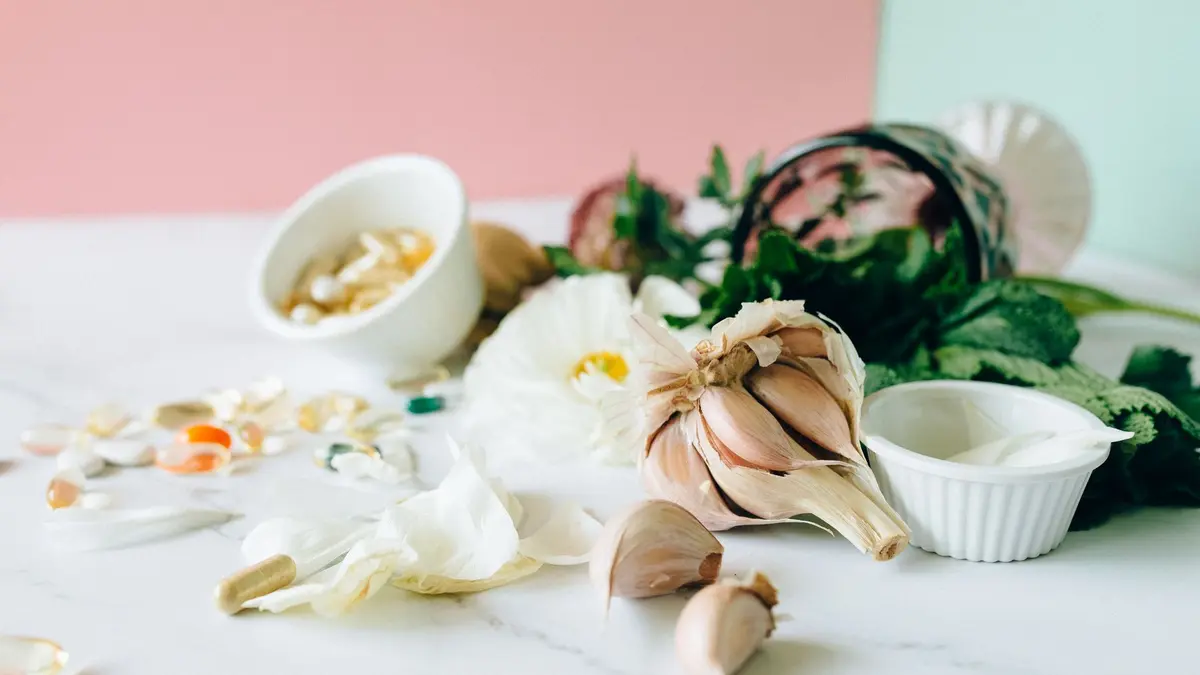
Garlic is a good example of why form matters. Garlic in food is one thing. Concentrated garlic supplements are another. NCCIH notes that garlic supplements may increase bleeding risk, especially for people taking anticoagulants, aspirin, or other medicines that affect bleeding, and before surgery (NCCIH).
Ginkgo deserves the same “bring it up” treatment if you take blood thinners such as warfarin, or if you’re heading toward a procedure. NCCIH says ginkgo may increase bleeding risk with anticoagulants and may interact with other drugs (NCCIH).
And ginseng? Not casual for everyone. NCCIH notes that Asian ginseng may affect blood clotting, blood sugar, autoimmune conditions, pregnancy safety, and medication interactions (NCCIH). That’s especially relevant for people with diabetes, autoimmune disease, multiple prescriptions, or pregnancy.
What to bring to the appointment #
Here’s the low-drama version: bring the bottle, the box, or a photo of the front label and ingredient panel. If it’s a loose tea, tincture, powder, mushroom blend, imported product, or custom herbal formula, bring whatever ingredient information you have. Include how often you use it, how long you’ve used it, why you take it, and whether you take it every day or only when symptoms flare.
Also bring your prescription medicines, OTC medicines, vitamins, minerals, protein powders, sleep aids, pain relievers, antacids, and anything you take “just sometimes.” I know, it’s annoying. But the once-a-week product can still matter if surgery is coming up, a new prescription is being added, or bleeding, blood sugar, sedation, mood, or heart rhythm are part of the picture.
Worth adding: tell more than one person. Your primary-care doctor, pharmacist, specialist, dentist or surgeon before procedures, and obstetric clinician during pregnancy may each catch a different issue.
When the conversation is higher priority #
Some situations deserve less casual handling. If you take blood thinners, antidepressants, seizure medicines, diabetes medicines, transplant drugs, HIV medications, cancer treatments, heart medicines, or several prescriptions at once, don’t wait for someone to ask. Put supplements on the agenda.
But pregnancy and breastfeeding are their own category too. A 2024 systematic review found that herbal medicine use during pregnancy was common, while disclosure to health care providers was low (PubMed). That’s a setup worth taking seriously, not because every herb is dangerous, but because pregnancy changes the safety calculation.
Cancer care is another place where disclosure matters. A systematic review of traditional and complementary medicine use among cancer patients in Asian countries found high use and relatively low disclosure (PubMed). Different population, different setting, yes. Still, the point travels: when treatment stakes are high, hidden supplements can complicate care.
Don’t stop things abruptly on your own #
Here’s the part that needs saying plainly: this is not an argument for quitting every herb or supplement. It’s also not permission to stop a prescribed medicine because you’re worried about an interaction.
If something looks concerning, ask a qualified health professional how to handle it. A pharmacist can often do a quick interaction screen. A physician, nurse practitioner, midwife, or specialist can help decide whether a supplement should be paused, switched, monitored, or left alone.
And if you’re using an herb because you can’t access care, or because your symptoms aren’t being taken seriously, that’s worth saying out loud too. A good clinician shouldn’t hear “I take herbs” as a confession. They should hear it as part of the health record.
When to seek urgent help #
Most supplement conversations can happen at a normal appointment or pharmacy counter. Some symptoms shouldn’t wait.
Seek urgent medical care for chest pain, fainting, severe allergic symptoms, severe bleeding, suicidal thoughts, rapidly worsening mental health symptoms, or signs that could fit serotonin excess, such as agitation, confusion, fever, heavy sweating, diarrhea, tremor, or muscle rigidity after combining products or changing medicines. Don’t try to troubleshoot those situations by adjusting herbs at home.
Bottom line #
The safest herbal remedy isn’t always the one with the longest tradition or the cleanest label. Sometimes it’s the one your care team actually knows you’re taking.
So yes, doctors should ask. Pharmacists should ask too. But patients don’t have to wait for the perfect question. Bring the list, bring the bottle, bring the photo, and say the quiet part: “I take this too. Does it matter with my medicines?”
Often, the answer will be manageable. Sometimes, it’ll prevent a real problem. Either way, the conversation is safer than silence.
Related


Garlic Supplements and Metabolic Health: What the New Review Really Shows