Chasteberry for PMS: The positive trial signal and the PMDD evidence gap
Table of Contents
If a chasteberry bottle promises relief from “hormonal” mood swings, the label is doing a lot of work. There are positive trials for premenstrual symptoms. But those trials don’t establish that the herb treats premenstrual dysphoric disorder (PMDD), and they don’t tell you that the bottle in your hand matches the extracts researchers tested. That’s the distinction worth making before buying it.
The National Center for Complementary and Integrative Health (NCCIH) says some low-to-moderate-quality studies suggest chasteberry could help PMS symptoms, including breast tenderness, but better research is needed. PMDD is a different, more impairing problem. Its mood symptoms deserve assessment and a care plan, not a supplement experiment in place of treatment (NHS).
The PMS studies aren’t the whole story #
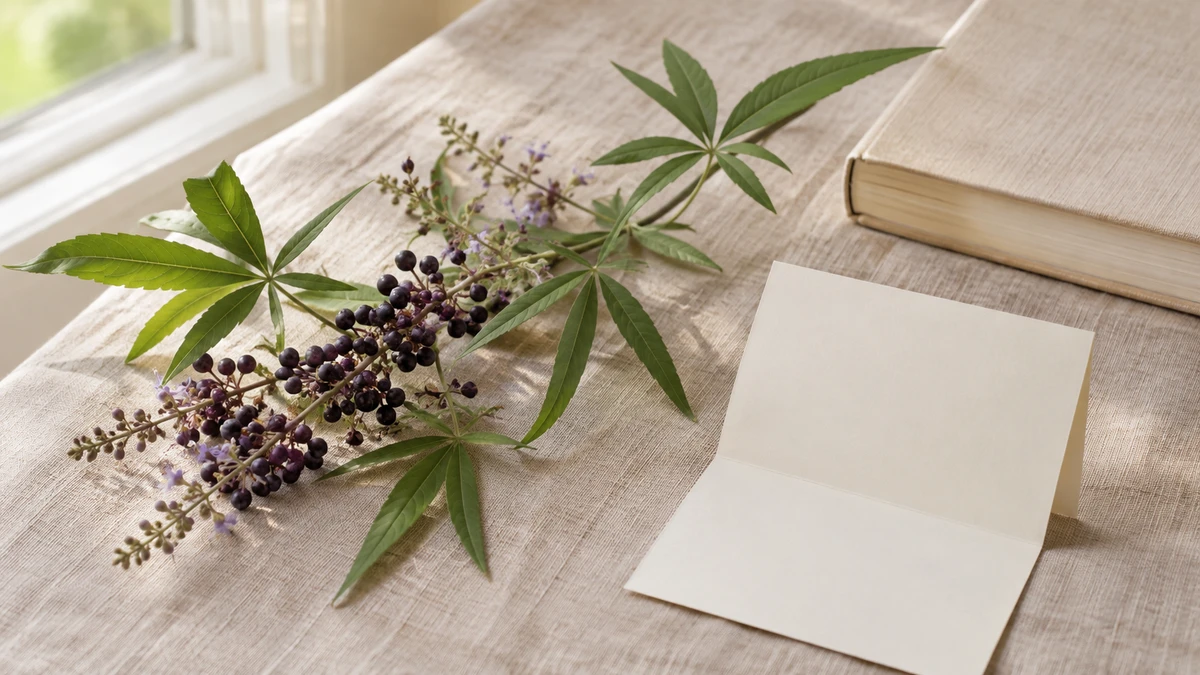
Chasteberry, also called Vitex agnus-castus, comes from the fruit of a Mediterranean shrub. It has a history of use for menstrual concerns, but historical use isn’t clinical proof (NCCIH). The contemporary question is narrower: did a particular fruit extract improve measured symptoms in a trial, and can the result travel beyond that product?
One 2017 systematic review found 17 randomized trials and pooled 14. On paper the placebo-controlled result was large. Yet the reviewers flagged striking differences between trials (I² of 91%), mostly high risk of bias, and possible publication bias. They cautioned that the pooled estimate was exploratory and probably inflated. In other words, the impressive-looking average isn’t a forecast of what an individual reader will feel next month.
And a 2019 analysis narrowed its question to properly characterized extracts. Only three of 21 screened trials, involving 520 participants, qualified. More people met those studies’ responder definitions with the studied extracts than with placebo. That’s a signal worth investigating - but it’s a finding about specific preparations and trial endpoints, not proof that every Vitex capsule eases every PMS symptom. The two analyses draw partly on overlapping research; they aren’t two independent confirmations of a universal effect.
Breast tenderness is one of the symptoms NCCIH specifically mentions. It’s tempting to stretch that into a claim about mood, sleep, irritability and severe functional impairment as one package. Don’t. PMS studies vary in whom they enroll, what they give participants and how they score a response (2017 review; NCCIH). Even a positive global symptom score doesn’t settle which complaint improved for a given person.
PMDD needs its own evidence #
For someone missing work or struggling in relationships every month, the distinction isn’t academic. PMDD involves substantial mood-related disruption around the menstrual cycle; a clinician can help assess the pattern and other possible explanations. The NHS suggests tracking symptoms over at least two cycles when PMDD is suspected. A diary is useful partly because “I feel awful before my period” can hide a pattern that’s hard to reconstruct in a brief appointment.
What do the chasteberry trials actually say about PMDD? A 2013 review found two direct PMDD comparisons with fluoxetine, and they didn’t agree: one reported similar outcomes, while the other favored the medication. In an identifiable 2003 single-blind trial, 41 people with PMDD were randomized for two months. Fluoxetine performed better on psychological symptoms and Vitex on physical symptoms. A difference in response rates that wasn’t statistically significant does not mean the herb was proven equivalent to fluoxetine. The trial was small and had no placebo group.
Another review of eight trials reported encouraging findings across PMS and PMDD studies. But combining cohorts with different diagnostic criteria doesn’t fill the PMDD-specific gap. So the honest answer is a bit unsatisfying: chasteberry has a tentative PMS signal, while evidence that it can address PMDD’s disabling mood symptoms remains too thin and mixed to use it as a substitute for established care.
That care isn’t one-size-fits-all. ACOG’s patient discussion and the NHS describe options including selective serotonin reuptake inhibitors (SSRIs), hormonal treatment and cognitive behavioral therapy. A 2024 Cochrane review found moderate-certainty evidence that SSRIs probably reduce premenstrual symptoms across its trial population. That isn’t a head-to-head verdict against chasteberry; it’s context for why a conversation about proven care matters. Don’t stop an SSRI, hormonal treatment or therapy to try an herb.
“Balances hormones” doesn’t explain the result #
You’ll see that phrase on marketing pages. It sounds tidy, doesn’t it? But the European Medicines Agency (EMA) herbal monograph describes possible dopamine and prolactin pathways based largely on preclinical work, alongside conflicting estrogen-receptor findings. None of that shows that a retail supplement normalizes someone’s hormones or treats PMDD.
There’s a regulatory wrinkle, too. The EMA monograph distinguishes a specified medicinal preparation with a European well-established-use PMS indication from preparations registered for traditional relief of minor premenstrual symptoms. Those categories attach to preparations and regulatory contexts, not to every US bottle bearing the word “chasteberry.” And the EMA’s classification doesn’t erase NCCIH’s caution about study quality (EMA monograph; NCCIH). A label that leaves out extract details can’t answer the question the narrower trials raise.
The safety conversation before the supplement aisle #
“It’s an herb” isn’t much of a safety assessment. NCCIH describes short-term use of fruit extract in studies up to three months, not established safety for indefinite use. Reported effects include nausea, stomach pain, diarrhea, headache and itching. The EMA monograph also lists menstrual changes, rash and dizziness, as well as severe allergic reactions of unknown frequency. Facial swelling or trouble breathing or swallowing calls for urgent medical help.
Pregnancy or breastfeeding? Avoid treating chasteberry as a harmless default. NCCIH says it may be unsafe in those circumstances, and the EMA advises against use during lactation because of possible effects on milk production (NCCIH; EMA). People with present or past hormone-sensitive cancers, including breast, uterine or ovarian cancer, should speak with their care team first. That’s a precaution - not a claim that chasteberry causes cancer.
Bring your medication list to that conversation. The EMA says interactions with dopamine-acting medicines and estrogen-related drugs can’t be excluded; that warrants a pharmacist or clinician check if you use such medicines, including endocrine treatment or hormonal contraception. It doesn’t prove birth-control failure or an interaction with every antipsychotic. A history of pituitary disease also matters: the monograph warns that a pituitary tumor’s symptoms could be masked. Unexplained nipple discharge or unusual cycle changes deserve assessment, not a self-directed trial of Vitex (EMA monograph). The EMA doesn’t recommend its listed preparations for people under 18 because data are lacking.
If you’re weighing a supplement alongside care for recurrent symptoms, ask: Is this PMS or could it be PMDD? Which exact extract was studied, and does this product identify it? Do my medicines, cancer history, pregnancy plans or pituitary history change the risk? Those are better questions than “How long until my hormones rebalance?” Bring the symptom diary. Bring the bottle, too (or a photo of its full label).
Bottom line #
Chasteberry may ease some PMS symptoms for some people, but the positive studies have quality and product-matching problems. PMDD is not just “stronger PMS,” and the small, mixed PMDD comparison base doesn’t establish chasteberry as a replacement for treatment. If symptoms interfere with daily life, get a qualified clinician’s assessment rather than waiting through repeated cycles to see whether a supplement works (NCCIH; NHS). And if you might harm yourself, seek immediate local emergency or crisis support - don’t wait on an herb or a routine appointment (NHS).
Related
Psyllium and LDL cholesterol: a useful number, not a heart-health shortcut
Propolis and metabolic health: two promising numbers aren't a treatment