Boswellia Capsules and Frankincense Oil Aren't the Same Knee-Arthritis Evidence
Table of Contents
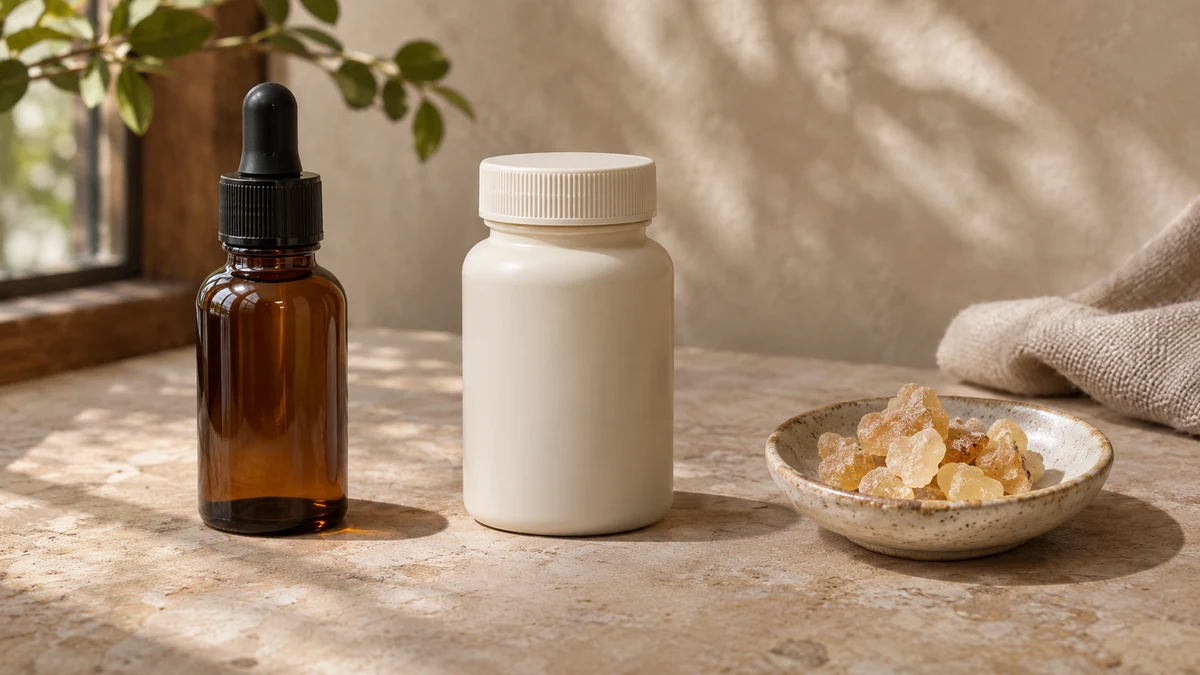
A capsule labeled “Boswellia” and a bottle labeled “frankincense oil” can look like two ways to buy the same arthritis remedy. They’re not two ways to use the same clinical evidence. Most human knee-osteoarthritis studies tested oral extracts; one short trial tested a dried resin extract mixed into carrier oils. Neither tells us that a retail essential oil rubbed on a knee will relieve pain. That’s the distinction worth checking before you buy anything, according to the NIH’s Boswellia evidence summary and the topical trial itself.
Boswellia’s use in Ayurveda has a long history (NCCIH). History isn’t a trial, though. And “frankincense” on a label doesn’t identify the preparation researchers gave people.
Three preparations, three different evidence questions #
| What you see | What was tested in people with osteoarthritis (principally knee OA) | What you can reasonably take from it |
|---|---|---|
| Standardized oral Boswellia extract | Several randomized trials and a 2024 review of nine trials, 712 participants assessed pain and function scores against control treatments. A separate 180-day trial measured MRI joint features. | Short-term symptom scores sometimes improved. This doesn’t establish that any capsule on a shelf works, or that cartilage grows back. |
| Topical dried frankincense resin extract in black-seed and olive oils | One four-week trial compared the resin-containing solution with the same carrier oils without the resin. Both groups also received acetaminophen. | The resin preparation showed a symptom-score signal in this setting. It wasn’t an essential-oil test or a test of replacing usual care. |
| Retail frankincense essential oil | Neither the oral-extract trials nor that topical resin-extract trial tested an ordinary retail essential oil for knee OA. NCCIH says evidence for topical Boswellia as an effective treatment is insufficient. | No demonstrated knee-OA benefit can be transferred from the other two preparations to the oil in your hand. |
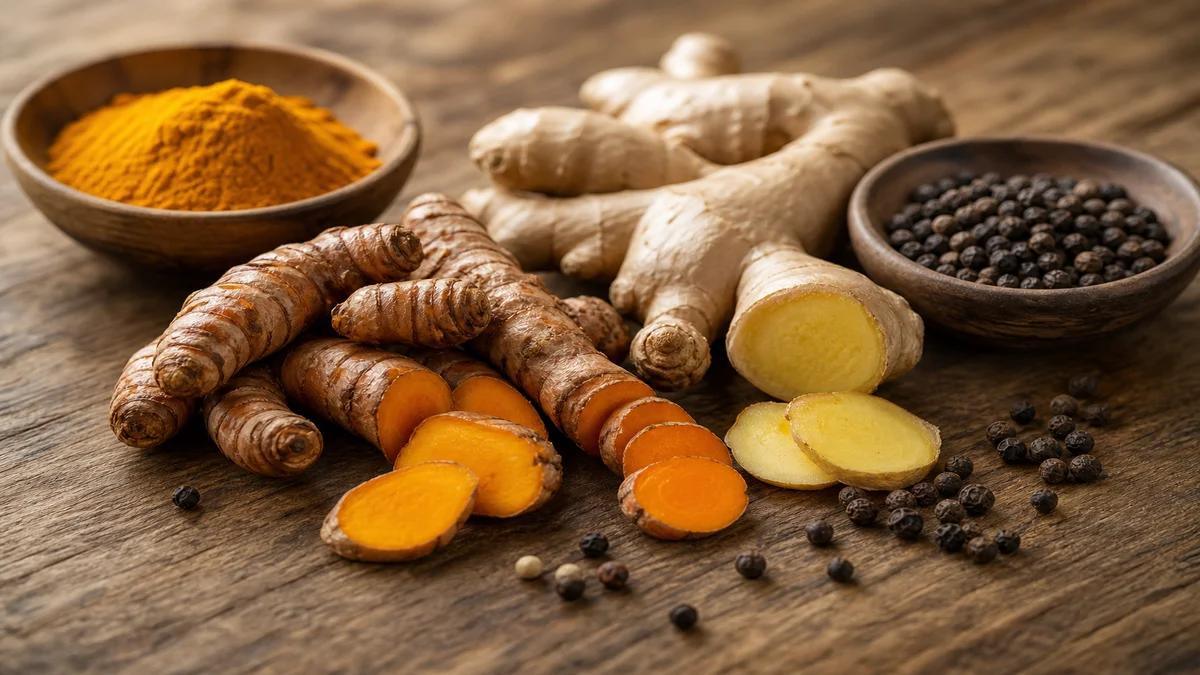
That middle row is easy to misread. The 2023 researchers put dried frankincense extract into a black-seed-oil and olive-oil solution. The oils were also in the placebo preparation. So if a seller calls this an “oil study,” ask what the active ingredient actually was. The answer is the resin extract - not retail frankincense essential oil, and not proof that the carrier oils themselves treated arthritis.
What the oral-extract results actually say #
The oral studies are the larger part of this story, but they’re not a product recommendation. A 2024 meta-analysis combined nine randomized trials involving 712 people with osteoarthritis and reported better pain, stiffness and function scores for Boswellia extracts versus controls. Its Aflapin subgroup looked more favorable than some other extracts. But that subgroup comparison wasn’t a direct trial putting every product against every other product (the authors called for comparative studies). And the trials and reviews overlap, so their participant totals aren’t separate piles of new evidence.
The NIH’s NCCIH assessment is more guarded: several small oral studies suggest reduced osteoarthritis pain or inflammation, but most Boswellia studies are small or low quality, and there isn’t enough high-quality evidence to establish usefulness for a health condition. A statistically better score doesn’t tell you whether your stairs will feel noticeably easier six months from now. If you want the wider context on supplements for arthritis, AMZ has a separate curcumin, ginger and Boswellia evidence overview; this article is about the form of Boswellia that was studied.
One more wrinkle: a small, 180-day Aflapin trial involving 80 people reported changes in MRI-measured cartilage volume, thickness and joint-space width alongside symptom measures. So it wouldn’t be accurate to say no human Boswellia trial has ever measured joint structure. It also wouldn’t be accurate to call that cartilage regeneration. It’s one proprietary-extract result; independent replication, full appraisal of the imaging methods and evidence of durable clinical benefit are still needed. An older Cochrane review couldn’t have assessed that later study.
The topical study isn’t a shortcut to essential oil #
In the four-week topical trial, 70 people completed the study from 90 who entered it; 20 were excluded for irregular use or use of similar products. Participants using the resin-containing solution had better pain and function scores at the end than those using carrier oils alone. Both groups were given acetaminophen. The trial was registered retrospectively.
That’s a real human study, not just a lab theory. But it’s a small, short study of one preparation used alongside pain medicine. It can’t tell you what happens with longer use, whether a different resin preparation performs the same way, or whether aromatherapy or bottled essential oil does anything for a painful knee. NCCIH’s newer summary says topical Boswellia has been studied but there’s still not enough evidence to call it an effective treatment. “No topical study” and “topical oil is proven” are both wrong - for different reasons.
Why fuss over a label? Because a route and a shared plant name aren’t a recipe. A capsule swallowed, a dried resin dispersed in oil and an essential oil sold for scent aren’t interchangeable study materials. The relevant question isn’t whether each says frankincense. It’s whether the product matches what researchers actually tested (and whether that evidence was strong enough in the first place).
What to ask before trying a product #
If you’re considering a capsule, take the exact label to a clinician or pharmacist: which species, which extract, which other ingredients, and which of your current medicines might matter? Don’t turn a trial’s study amount into a self-prescribed dose. NCCIH advises discussing herbal products with a health professional if you take medicines, because herbs and drugs can interact; the cited Boswellia studies haven’t settled specific interaction risks. That’s particularly worth a conversation if you’re on an anticoagulant, an antiplatelet drug, or several regular prescriptions - a precaution, not a claim that a particular Boswellia-drug interaction has been proven.
Pregnant or breastfeeding? NCCIH distinguishes food-level amounts from medicinal oral amounts and frankincense preparations: little is known about the latter during pregnancy or breastfeeding. People with significant chronic illness, including liver or kidney disease, shouldn’t assume they match the selected participants in short trials. And if a topical product irritates your skin, stop applying it and ask for advice. The topical trial excluded people with knee-area skin disease or product allergy, and pregnant or lactating participants. Its short-term side-effect reporting isn’t a long-term safety certificate.
Don’t swallow essential oil or apply it undiluted to damaged skin on the strength of these knee studies. They don’t establish an oil-specific therapeutic dose, route or benefit. NCCIH describes limited oral-extract trial safety and says topical/aromatherapy use may be safe; neither statement is a guarantee for every preparation or every person.
And knee pain needs a diagnosis, not just a botanical match. A hot or red joint, fever, rash, new unexplained swelling or worsening loss of function warrants medical assessment rather than assuming it’s routine osteoarthritis (NCCIH’s osteoarthritis guidance). Rheumatoid and other inflammatory arthritis aren’t covered by these knee-OA results. Don’t replace prescribed care with a supplement: the American College of Rheumatology’s 2026 OA recommendations summary strongly recommends exercise for knee OA, weight loss for people meeting overweight or obesity criteria, and topical NSAIDs for knee OA, with medication choices tailored to risks and circumstances.
The bottom line #
A trial of a Boswellia capsule isn’t a trial of frankincense essential oil. One small topical study does add a detail to the picture - a resin extract in carrier oils had a short-term symptom signal - but it doesn’t erase the gap between that preparation and a retail oil. If a claim depends on sliding between those labels, it’s asking the evidence to travel further than it can.
Related
Already exercising for knee osteoarthritis? What acupuncture might add
Calcium and Vitamin D for Bone Health: What a Major 2026 Review Actually Found