Probiotics with antibiotics: a C. diff prevention signal, not a rule for every prescription
Table of Contents
A prescription for antibiotics can prompt a quick second purchase: a probiotic to “protect your gut.” But protect it from what? A loose stool, a diagnosed C. difficile infection, and a positive stool test aren’t interchangeable outcomes. The distinction matters before anyone picks a bottle.
The 2025 Cochrane review found fewer cases of C. difficile-associated diarrhea (CDAD) among people assigned probiotics alongside antibiotics. That’s a prevention signal, not proof that whichever product happens to be on a pharmacy shelf will help you. The review rated this finding low certainty, and gastroenterology groups haven’t agreed on a blanket recommendation.
First, name the outcome #
Antibiotic-associated diarrhea (AAD) means diarrhea that occurs in association with an antibiotic course; it doesn’t automatically mean C. difficile. CDAD is the narrower, symptomatic outcome the review used for its main prevention question. And finding C. difficile in a stool sample without the relevant illness is another matter again: in the review’s smaller set of studies measuring detection, probiotics showed no clear difference (Cochrane review).
Why worry about C. difficile specifically? Antibiotics can disturb the gut microbes that normally help keep it in check. That gives a plausible reason to study probiotics, but plausibility isn’t a clinical result. The CDC explains the antibiotic connection and the need for clinical evaluation when C. difficile is suspected. It isn’t something to diagnose from the timing of diarrhea alone.
A relative drop can still mean a small absolute one #
Across 38 trials contributing to the symptomatic CDAD outcome, 110 of 6,787 people assigned probiotics developed CDAD, compared with 203 of 6,392 in the control groups - about 1.6% versus 3.2%. The pooled relative risk was 0.50 (95% confidence interval 0.38 to 0.64). Put another way, the observed difference was about 1.6 fewer cases per 100 people in those study populations. The review authors estimated that about 65 people would need to receive probiotics to prevent one case, with substantial uncertainty around that estimate (2025 review abstract).
That half-sized relative risk catches the eye. Yet it isn’t the same as saying half of people taking antibiotics are protected, or that your own chance of infection will fall by half. Starting risk differed across study settings. The authors judged the CDAD evidence low certainty, and the two largest studies didn’t show a clear benefit (Cochrane’s 2025 plain-language summary). Missing follow-up in many trials and financial links to probiotic companies in some studies add reasons for care, not grounds to throw out every result (updated review).
The review also looked at diarrhea from any antibiotic-associated cause. It found a lower pooled relative risk with probiotics (0.67; 95% confidence interval 0.57 to 0.78), again with low-certainty evidence (2025 review). But that’s a different endpoint. A product that appears to reduce general diarrhea hasn’t thereby proved it prevents a diagnosed C. difficile illness - much less that it treats one.
The guidelines don’t give the same answer #
It’s tempting to turn the review’s headline number into a shopping instruction. The professional advice is less tidy. In its 2021 guideline, the American College of Gastroenterology recommended against probiotics for primary prevention of C. difficile infection in people receiving antibiotics. It also recommended against using them to prevent recurrence after an infection; that’s a separate question with a different evidence rating (guideline recommendation text).
By contrast, the American Gastroenterological Association’s 2020 guideline suggested certain specified preparations for prevention in adults and children taking antibiotics. It didn’t endorse any probiotic, and for an active C. difficile infection it limited probiotic use to a clinical trial. Both society positions predate the 2025 Cochrane update; neither is a formal verdict on that newer analysis.
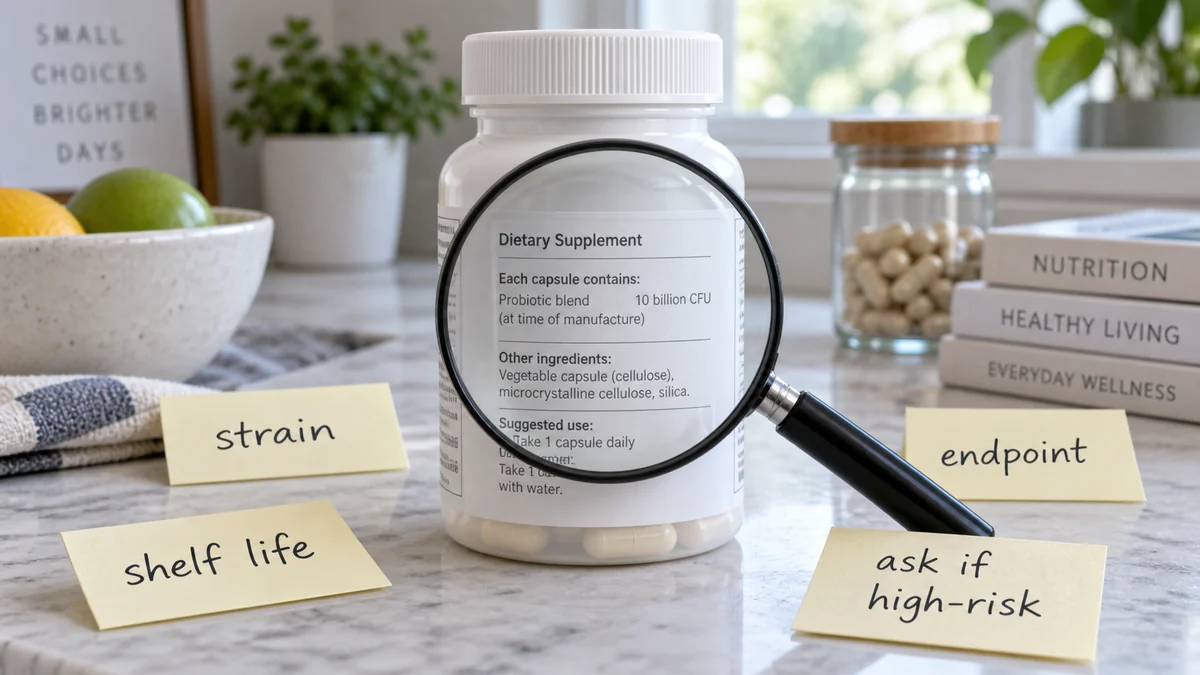
So which bottle matches the studies? There’s no simple answer. Trials used different organisms and preparations, and the review didn’t establish a head-to-head winner (Cochrane review). AGA’s preparation-specific suggestion isn’t a vote for every label marked “probiotic.” NCCIH also notes that effects can differ by strain and that the best product or use isn’t settled for many conditions. Food, an over-the-counter supplement and a preparation used in a study shouldn’t be quietly treated as identical.
The safety question comes before the purchase #
For a generally healthy adult, the question might be whether a possible, uncertain prevention benefit justifies taking an extra product. For someone with a weakened immune system, serious illness, complex hospital care or a central line, the stakes are different. NCCIH warns that harmful effects are more likely in people who are severely ill or immunocompromised, including the possibility of infection or contamination. Trial reports of gas, cramping, nausea and soft stools can’t rule out rare serious harm in people those trials may not represent (2025 review).
And premature infants are a particularly important exception to casual advice: the FDA has warned of invasive, potentially fatal infection after live-organism probiotic products, including a reported fatal sepsis case. That’s a warning about a vulnerable group, not an estimate of the same risk for a healthy adult. Don’t give a preterm infant a probiotic on the strength of this prevention review.
If you’re pregnant or breastfeeding, arranging a product for a child, taking other medicines, or living with a chronic condition, check with the prescribing clinician or pharmacist before adding a live-organism supplement. Bring the actual label - species and strains matter, and this evidence doesn’t supply a universal dose or timing rule (NCCIH safety guidance). Supplements aren’t automatically FDA-approved disease-prevention products just because probiotics have been studied (NCCIH).
Diarrhea during or after antibiotics deserves a call to a healthcare professional, especially if it’s severe or getting worse (CDC). Don’t stop or switch a prescribed antibiotic on your own, and don’t use a probiotic to put off testing or treatment. A diagnosed C. difficile infection needs clinician-directed care; this article is about a possible prevention measure, not self-treatment.
Bottom line #
There’s a real question here, not a universal checkout add-on. The pooled 2025 results suggest fewer symptomatic CDAD cases, but the evidence is low certainty, the absolute difference in the studied groups is modest, and the largest trials muddy the picture. ACG and AGA give different advice, with AGA narrowing its suggestion to particular preparations. If you’re considering a probiotic with an antibiotic, ask the prescriber what outcome you’re trying to prevent, whether your own health changes the risk, and whether the proposed product resembles one actually studied. That’s more useful than assuming all probiotic labels promise the same thing.
Related

Music During Cancer Care: What a Therapist Does That a Playlist Doesn't

Yoga for IBS: Why Two 2025 Reviews Sound Like They Disagree


Exercise for Hip Osteoarthritis: Small Gains, Still Worth Discussing