Hibiscus tea and blood pressure: what did the trials actually test?
Table of Contents
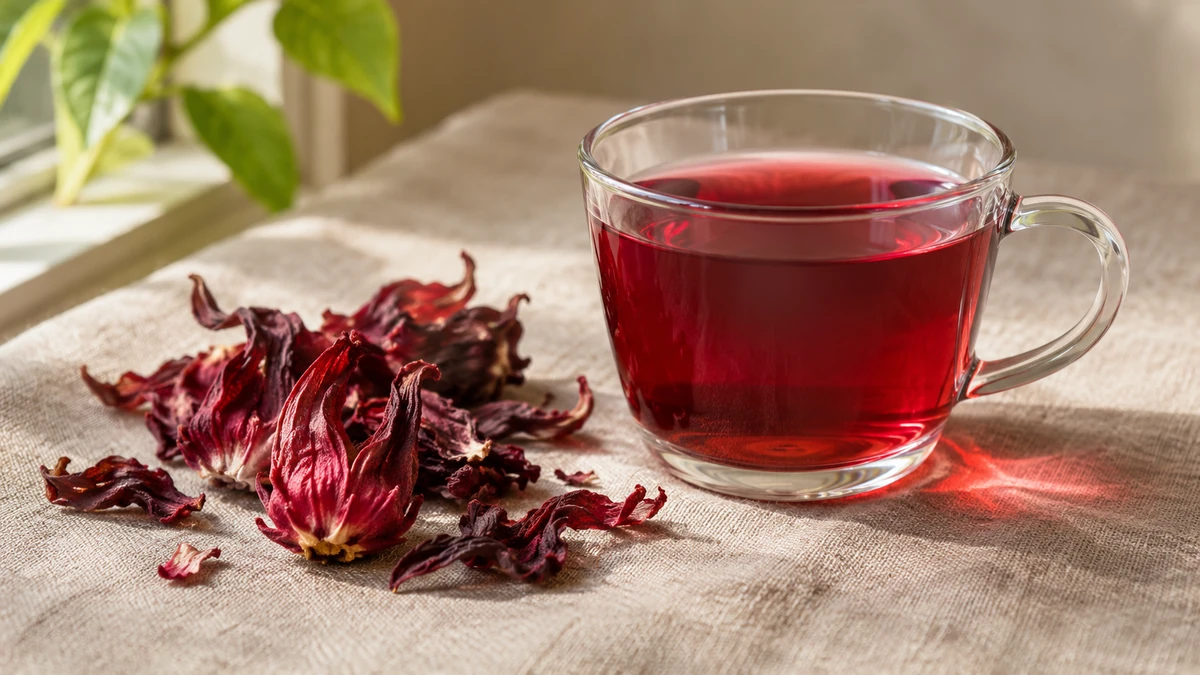
A red cup of hibiscus tea is easy to picture. The evidence behind the blood-pressure claim is harder to pin to that cup. Hibiscus sabdariffa (roselle) calyces can be brewed into a tart tea, but studies and reviews also include standardized extracts, capsules and products containing several plants. Swap one for another in a headline and you can make the research sound more certain than it is. There is a short-term blood-pressure signal, particularly for systolic readings (the top number). It isn’t a tested replacement for hypertension care, and the cited trials don’t show that hibiscus prevents heart attacks or strokes. 2022 trial review, NCCIH hypertension guidance.
The brewed-tea result is real, but narrow #
In a six-week placebo-controlled trial, 65 adults with elevated or mildly high blood pressure who weren’t taking blood-pressure drugs received brewed H. sabdariffa tea or a placebo beverage. Systolic pressure fell 7.2 mm Hg in the tea group versus 1.3 mm Hg in the placebo group; the between-group difference was statistically significant. The corresponding diastolic changes, 3.1 versus 0.5 mm Hg, weren’t clearly different between groups. That’s a useful distinction if you’ve seen the study described simply as proof that hibiscus “lowers blood pressure.”
But those participants weren’t people already managing hypertension with medication. And six weeks of readings cannot tell us what happens with years of use, another brand of tea, or a person’s risk of stroke. The trial’s preparation and exposure describe its experiment, not a cup-count instruction for readers. (McKay and colleagues’ trial.)
Why the larger reviews don’t give you a number for your tea bag #
A 2022 systematic review found lower average systolic readings when hibiscus interventions were pooled against non-drug comparators - a group that included placebo, other teas and diet controls. The estimated difference was 7.10 mm Hg, but variation between trials was exceptionally large (I²=95%). Its pooled diastolic result against those comparators wasn’t statistically conclusive. And the review covered beverage and capsule studies; it didn’t isolate the effect of a particular supermarket tea. The comparator matters as much as the red flower on the box.
A 2025 review abstract reports 26 randomized trials involving 1,797 participants and a blood-pressure signal. It draws on an overlapping literature, not 26 fresh confirmations of the 2022 findings. We could verify the abstract, not the full subgroup tables, so it can’t supply a dependable brewed-tea-only estimate here. In particular, the authors’ description of results against blood-pressure drugs as “comparable” shouldn’t be read as proof of equivalence. A comparison that fails to detect a difference isn’t automatically a trial designed to show that two treatments work equally well. NCCIH still describes the roselle evidence as limited and says no supplement has demonstrated effects comparable to hypertension drugs.
An extract isn’t tea; a blend isn’t hibiscus alone #
Here’s where a quick search can mislead you. A four-week trial of standardized hibiscus calyx extract against lisinopril found improvement in the extract arm, but lisinopril performed better. It didn’t test a brewed cup. In a 2026 trial among 70 people with diabetic nephropathy, both groups took valsartan, then received either hibiscus extract tablets or hydrochlorothiazide. Blood pressure improved in both arms, with greater systolic lowering in the drug-comparator arm. That’s a comparison of add-on regimens in a specific clinical population - not evidence that ordinary hibiscus tea and a prescription are interchangeable.
The label on a blended product makes another difference. A review of seven trials examined hibiscus combined with other botanical extracts. Any result belongs to the combination; you can’t assign it all to roselle. If you’re looking at research alongside a product, check whether it studied brewed H. sabdariffa calyces, a measured extract or a mix of herbs (and whether the control was a placebo, a different tea or a drug). “Hibiscus-flavored” alone doesn’t settle any of that.
A changed reading isn’t a prevented stroke #
Blood pressure is a useful clinical measure, and a small trial signal is worth investigating. But a reading taken over weeks is not the same outcome as fewer heart attacks, strokes or deaths. The trials and reviews cited here don’t establish those clinical benefits for hibiscus. Nor do they show that someone can safely reduce a prescribed medicine after drinking tea. The 2025 AHA/ACC guideline summary puts diet, activity, home monitoring and medicines into a risk-based care plan; it doesn’t substitute a botanical for that plan.
If you’re curious whether a change in routine is affecting your readings, use a validated upper-arm home monitor, record readings as your clinician recommends and bring the log to an appointment. Don’t change medication on the strength of a few numbers. Tea may be part of an ordinary food routine; trying to use it to lower your blood pressure is a different decision, especially if you already take treatment.
The safety questions before you try to change your BP #
Hibiscus isn’t automatically harmless because it’s served in a mug. The Egyptian Drug Authority’s hibiscus monograph cautions about blood pressure falling too low alongside antihypertensive medicines, and flags potential interactions with diabetes medicines and simvastatin. A 2026 safety-review abstract describes human studies reporting changes in concentrations of selected drugs, including chloroquine and acetaminophen. The clinical effect isn’t established for every medicine, preparation or cup of tea. So take the exact tea or supplement label and your medication list to a pharmacist or prescriber before deliberately using hibiscus to alter BP - particularly if you take blood-pressure drugs or diuretics, have low readings or feel dizzy.
Short studies often reported tolerability, with transient stomach symptoms among the more commonly reported effects. But incomplete adverse-event reporting and uncertain long-term exposure leave gaps, according to that safety review. If you have kidney or liver disease, or a complex diabetes regimen, don’t extrapolate from small extract trials in selected patients to your own safety. The monograph also lists hibiscus or related-plant hypersensitivity as a reason to avoid it and advises disclosing use before surgery.
Pregnant or breastfeeding? Don’t use hibiscus as a blood-pressure remedy without individual obstetric advice. Human safety evidence is insufficient and the Egyptian Drug Authority monograph doesn’t recommend medicinal use in either setting. That isn’t a claim that incidental food exposure has been proved harmful; it is a reason not to self-treat a potentially serious condition.
What to do with the signal #
I’d keep the question modest: was the thing tested the thing I’m drinking? For brewed roselle tea, there is one short placebo-controlled study with a systolic signal. The bigger reviews mix preparations and comparisons, while direct extract-versus-drug studies don’t justify a medication-equivalence claim. Nothing here establishes protection from cardiovascular events. If you have persistent high readings, discuss them with a qualified clinician rather than making stronger tea or changing a prescription. For an unexpectedly very high home reading, follow the AHA’s repeat-reading and urgent-care guidance; severe readings with chest pain, breathlessness or stroke-like symptoms warrant emergency help.
Related
Beetroot juice and blood pressure: the clinic number isn't the whole day