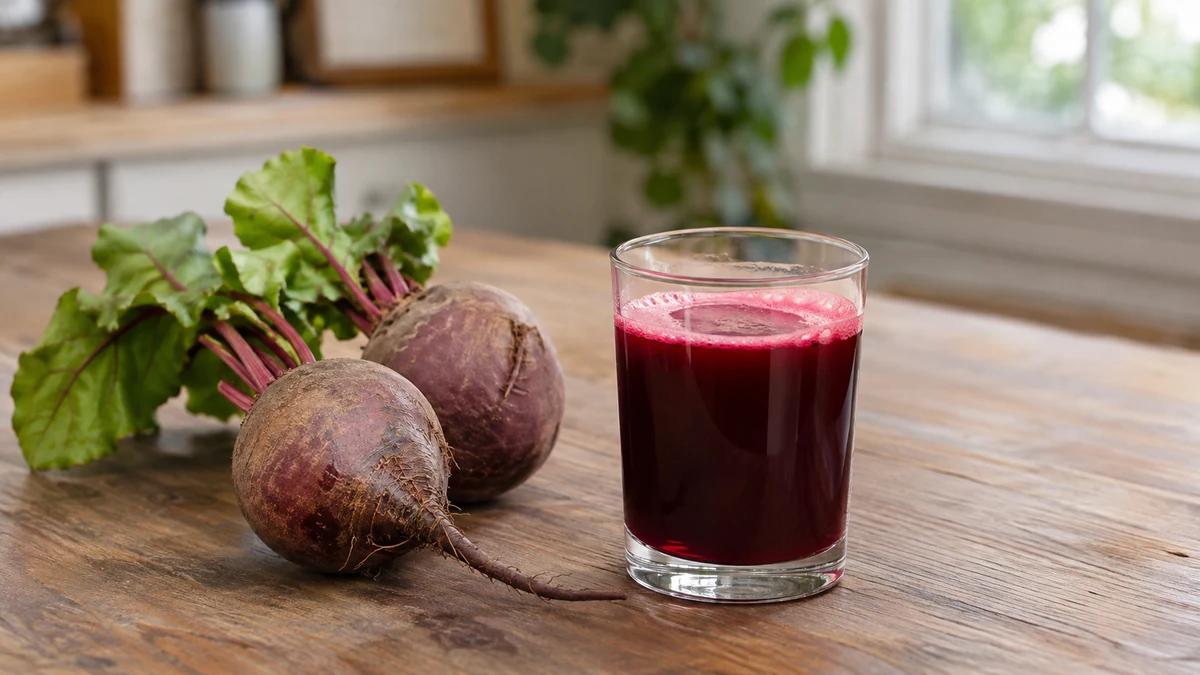
Beetroot juice and blood pressure: the clinic number isn't the whole day
Table of Contents
A beetroot juice trial can look promising if you stop at the clinic reading. In a 2024 review of 11 randomized trials involving 349 adults with hypertension, the average clinic systolic reading - the top number - was about 5 mm Hg lower in the juice groups than in the comparison groups. The reviewers rated that evidence low certainty. And when they pooled 24-hour blood pressure measurements, they didn’t find a statistically significant improvement.
That’s not a neat yes-or-no verdict on beets. It’s a problem with treating one kind of measurement as if it answered a different question. If you’re already managing high blood pressure, the useful question isn’t whether a drink can change a reading at an appointment. It’s whether the evidence shows dependable control beyond that appointment. So far, it doesn’t.
A lower clinic reading, but no clear 24-hour result #
The 2024 beetroot-juice review estimated a 5.31 mm Hg lower clinic systolic pressure versus comparators, with a 95% confidence interval from 3.16 to 7.46 mm Hg lower. That figure is a pooled group difference, not a forecast for the next person who buys a bottle. Results also varied across trials, and the reviewers graded the evidence low certainty. They didn’t find a statistically significant effect on clinic diastolic pressure (the bottom number) or on the pooled 24-hour blood pressure outcomes.
The last point is easy to mishandle. A nonsignificant pooled result doesn’t prove beetroot juice never affects blood pressure at any hour. It means these studies didn’t establish a reliable 24-hour improvement. Nor does a lower average office number establish that juice prevents strokes or heart attacks; the review assessed blood pressure measurements, not those outcomes.
A clinic reading is a snapshot. A 24-hour ambulatory monitor collects readings as someone goes about the day and sleeps. Home readings are another useful source of information, but a home cuff isn’t the same test as a 24-hour monitor. The American Heart Association’s home-monitoring guidance recommends a validated upper-arm cuff and recording readings for a clinician to interpret alongside office care. One isolated number, wherever it was taken, can’t tell that whole story.
The nitrate explanation only gets us so far #
Here’s why beetroot juice keeps showing up in blood pressure conversations: beets contain nitrate, which can be converted through a pathway involving bacteria in the mouth into nitrite and then nitric oxide. Nitric oxide is involved in blood-vessel function. That’s a plausible biological mechanism, not proof that a daily juice habit controls hypertension.
In one four-week crossover trial of 15 older adults already being treated for hypertension, beetroot juice raised nitrate-related measures but didn’t produce a between-treatment difference in home or ambulatory blood pressure. The pathway responded; the readings didn’t separate. It’s a tiny study, of course, but it shows why a mechanism and a clinical result shouldn’t be used interchangeably.
A 12-week trial involving 77 adults with prehypertension or hypertension compared nitrate-rich vegetables, beetroot juice and a control diet. The juice arm didn’t show a statistically significant change in its 24-hour systolic reading. The vegetable arm had a different ambulatory pattern versus control. That doesn’t make whole vegetables categorically better than juice; the study is too small and its comparisons too specific for that sweeping claim. It does make the blanket claim that all nitrate sources produce the same blood pressure result harder to defend.
And there’s a source mix-up worth avoiding. A separate review of sodium nitrate supplementation explicitly excluded beetroot-juice studies. Whatever it found about nitrate supplements can’t be passed off as a beetroot-juice trial result.
If you’re thinking of drinking it for your blood pressure #
I wouldn’t turn that roughly 5 mm Hg clinic average into a personal target. The review’s low-certainty estimate doesn’t tell you how much your own pressure will change (or whether it will change at all), and its 24-hour findings don’t establish sustained control. There’s no evidence-based juice volume to prescribe from this research pack. If you enjoy beetroot juice as food, that’s a different proposition from using it as treatment.
If you want a clearer picture of your pressure, ask your care team how to measure it at home with a validated upper-arm cuff and how to share a series of readings. The AHA explains how to prepare for and take home measurements; home monitoring helps your clinician assess control, but doesn’t replace appointments. And don’t stop or adjust a prescribed medicine because a few readings improve. The 2025 AHA/ACC guideline summary puts diet and other lifestyle changes alongside medication when indicated, not in place of it. NCCIH likewise cautions against replacing prescribed hypertension care with an unproven approach.
A couple of cautions depend on your circumstances. If you take blood pressure medication or tend to get low readings, speak to your prescribing clinician before using juice deliberately to lower pressure. That isn’t a claim of a proven beetroot-drug interaction - the cited trials don’t establish one. It’s a sensible precaution when you’re trying to influence the same measurement your treatment is managing. Tell your care team about new dizziness or fainting; AHA lists these among symptoms to take seriously when pressure is too low.
If you’ve had calcium oxalate kidney stones or high urinary oxalate, concentrated beet juice deserves a separate conversation with your stone-care clinician or dietitian. The National Kidney Foundation identifies beets as a high-oxalate food and favors individualized advice for people at risk; it doesn’t say everyone should avoid beets. People with kidney disease, prescribed fluid or potassium restrictions, diabetes, or complex medication regimens should also check substantial diet changes with their clinician or dietitian (that’s individualized diet caution, not a proven juice-specific interaction).
Pregnant? High blood pressure in pregnancy calls for medical assessment, not a juice experiment. A small feasibility trial in pregnant women with hypertension found no overall blood pressure reduction versus placebo juice over eight days; it can’t establish longer-term safety or treatment value. And this research pack doesn’t establish breastfeeding-specific safety evidence for concentrated, BP-focused use. Ask your pregnancy or postpartum care team rather than trying to manage readings with juice.
Finally, don’t use a food trial to wait out worrying symptoms. For an unexpectedly high reading, follow the AHA’s advice to repeat it and seek appropriate clinical help. If blood pressure is over 180/120 mm Hg and you have chest pain, shortness of breath, weakness, vision changes or trouble speaking, call emergency services (911 in the US). A drink isn’t an emergency plan.
The bottom line #
Beetroot juice has a plausible nitrate pathway and a low-certainty signal in clinic systolic readings. But the same 2024 review didn’t establish a significant 24-hour benefit. That’s a reason to keep the claim narrow, not to sneer at the juice or promote it as a substitute for care. If blood pressure is the reason you’re reaching for it, bring your readings and the question to a clinician who knows your treatment plan.
Related


Coffee and Dementia: What 35 Percent Lower Risk Really Means