Can Guava Juice Help Your Body Use Iron? What the Evidence Really Says
Table of Contents
Guava juice is having a bit of a moment because of iron.
That sounds simple enough: guava is rich in vitamin C, vitamin C helps with plant-based iron absorption, and anemia is still a huge problem in many parts of the world. So why not call guava juice a natural anemia fix and move on?
Because that would be too neat, and honestly, unsafe.
The more useful story is narrower. Guava, whether as fruit or juice, may help the body absorb non-heme iron from some meals. It may also support better hemoglobin results in certain groups when paired with iron supplements or iron-rich foods. But it is not an anemia treatment by itself, and it should not replace testing, iron therapy, prenatal care, or a clinician looking for the reason someone is anemic.
That distinction is the whole article.
Why guava is being talked about now #
The new hook is a 2026 systematic review and meta-analysis in BMJ Nutrition, Prevention & Health, summarized by BMJ Group. The review looked at guava juice and hemoglobin levels in Indonesian females, including adolescent girls and pregnant women. In five studies, guava juice plus iron supplementation was linked with a 1.29 g/dL greater hemoglobin difference compared with iron supplementation alone (BMJ Group).
That is worth paying attention to.
But - and this is the part that needs to travel with the headline - the evidence base was limited. BMJ noted that all included studies were from Indonesia, many were quasi-experimental, sample sizes were small, interventions varied, and longer-term follow-up was missing. The linked commentary also cautioned that guava juice could not be recommended as an alternative to conventional treatment without better research.
So the finding is promising. It is not permission to tell people to treat anemia with juice.
And that is especially important because anemia is not one thing. Iron deficiency is common, yes, but anemia can also involve B12 deficiency, folate deficiency, chronic inflammation, kidney disease, inherited blood disorders, pregnancy-related needs, blood loss, or gastrointestinal disease. A fruit drink cannot sort that out.
The vitamin C and non-heme iron connection #
The basic mechanism is real. NIH’s Office of Dietary Supplements says vitamin C improves absorption of non-heme iron, the form of iron found in plant foods and fortified foods (NIH ODS).
That matters because dietary iron comes in two broad forms: heme iron from animal foods and non-heme iron from plant foods, fortified foods, and supplements. NIH’s iron fact sheet explains that non-heme iron is more affected by what else is in the meal (NIH ODS). In plain English: the same bowl of beans, lentils, mungbean dal, rice, or fortified cereal can behave differently depending on what it is eaten with.
Vitamin C can nudge absorption upward. Tea, coffee, calcium, fiber, phytates, and some polyphenols can work in the other direction, according to clinical nutrition sources including AAFP and NIH ODS.
So guava makes sense as part of a meal conversation. It is vitamin-C-rich, familiar in many food cultures, and easier to imagine with a meal than a high-dose supplement.
Still, mechanism is not the same as a guaranteed clinical result. Bodies rarely cooperate that neatly (also: diets, inflammation, menstrual blood loss, pregnancy, medication use, and gut conditions all complicate the picture).
What the human studies actually show #
A small adolescent absorption study gives the mechanism some human support. In that study, adding 100 g of guava to a rice-based meal increased labeled non-heme iron absorption in 16 adolescents (PubMed).
That is useful, but it is also small and short-term. It tells us something about absorption from a meal. It does not prove that guava reverses anemia over months.
A more practical food-to-food trial came from India. In a randomized controlled trial of 200 schoolchildren, vitamin-C-rich guava eaten with mungbean dal over seven months reduced anemia and increased hemoglobin. But the same trial did not show a clear improvement in body iron stores as a whole (PubMed).
That little wrinkle matters. Hemoglobin improved, but iron stores did not clearly improve. So if someone turns the result into “guava builds iron stores,” they have overstepped the study.
Then there is the adult iron-supplement question, which makes the story less tidy. A 440-person randomized clinical trial in adults with iron deficiency anemia found oral iron alone was equivalent to oral iron plus vitamin C for hemoglobin recovery and iron stores (PubMed). In other words, vitamin C was not essential for everyone already taking iron.
So what do we have? A plausible mechanism, a small meal-absorption study, a child feeding trial with encouraging but mixed outcomes, and a 2026 review suggesting guava juice may help in specific settings when used alongside iron supplementation. We also have adult data saying vitamin C add-ons are not automatically necessary.
Not a miracle. Not nothing.
Where guava may fit in a real meal #
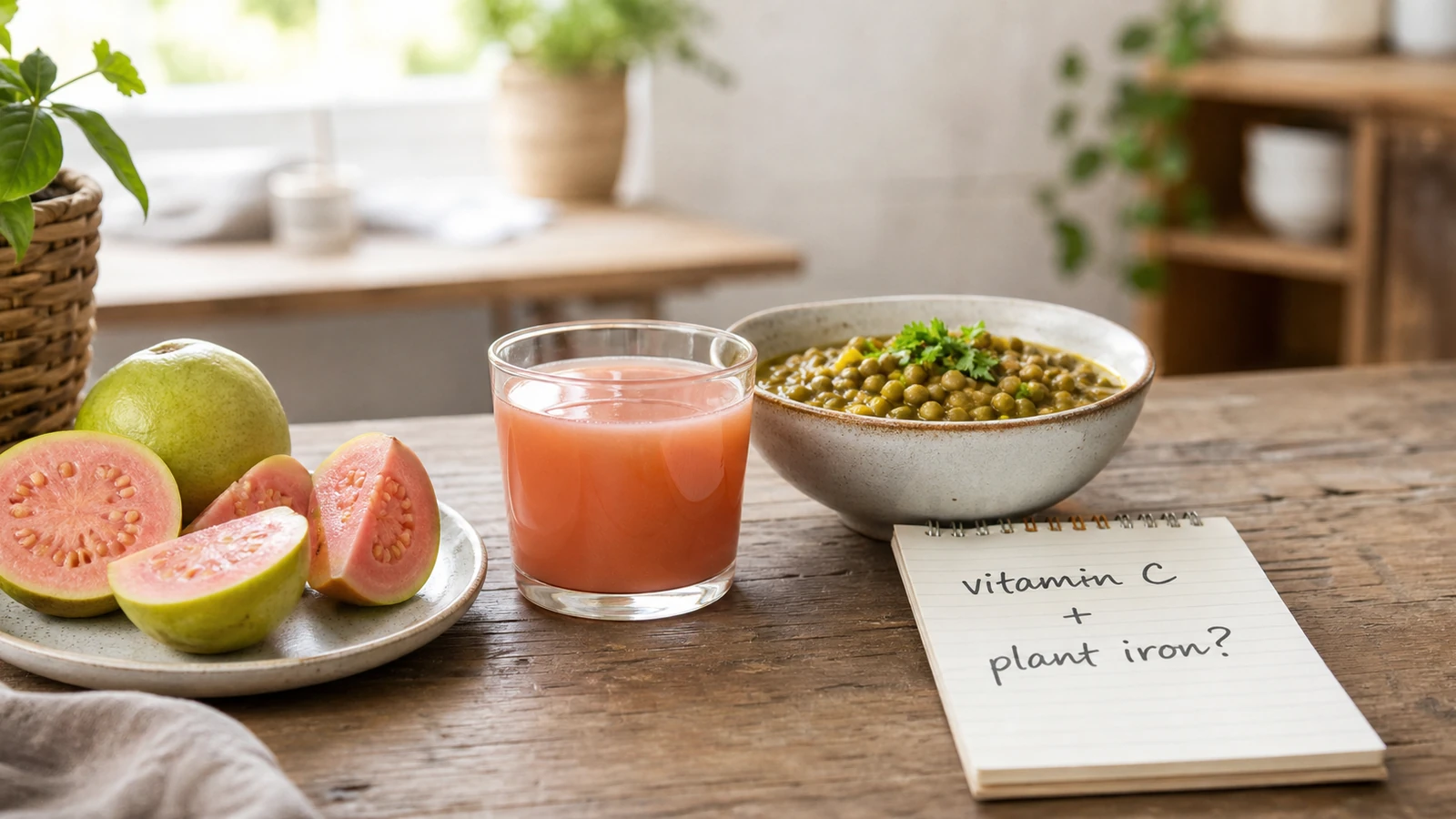
The safest practical idea is food-based and modest: pair vitamin-C-rich foods with meals that contain non-heme iron.
That could mean guava with beans, lentils, mungbean dal, fortified grains, tofu, leafy greens, or other plant-forward meals. It could also mean citrus, strawberries, kiwi, peppers, or other vitamin-C-rich foods. Guava is not the only option.
And if we are talking juice, the details matter. Unsweetened guava juice is different from a sweetened juice drink. Whole guava brings fiber and chewing, while juice can be easier to overdo. For people with diabetes, blood-sugar concerns, or calorie targets, “more juice” is not automatically the healthier move.
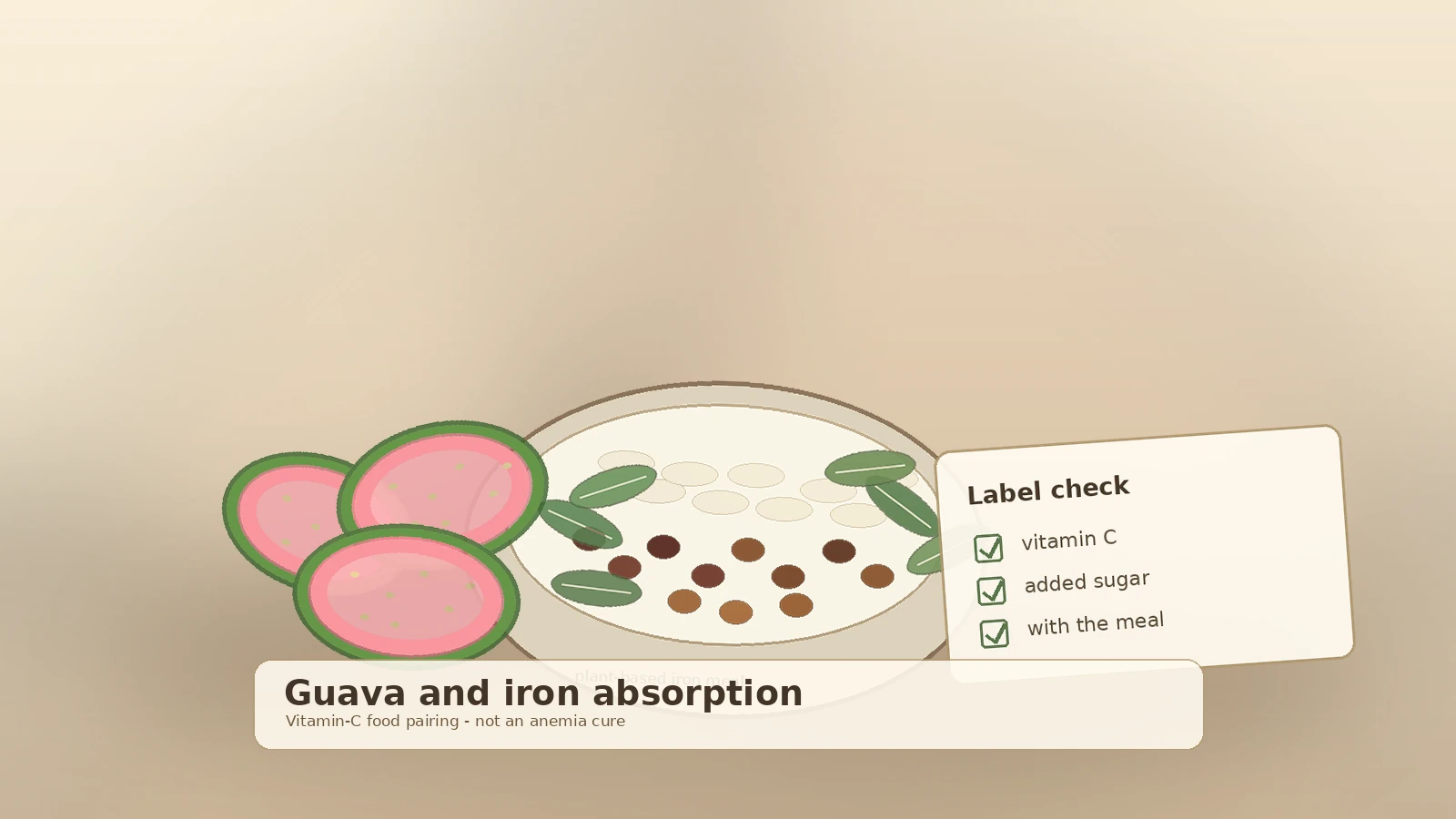
Worth knowing: the meal still matters. A vitamin-C-rich food may help the plant-iron side of the plate, while tea or coffee with that same meal may reduce non-heme iron absorption. Calcium can also interfere. That does not mean readers need a rigid kitchen schedule or a panic chart on the fridge. It means the whole meal pattern has more influence than a single heroic glass of juice.
The reasonable version is boring, but useful: if you already eat plant-based iron foods, adding a vitamin-C-rich fruit at the same meal may be a smart habit.
What guava juice cannot do #
Guava juice cannot diagnose iron deficiency.
It cannot tell whether fatigue is from low iron, poor sleep, thyroid disease, depression, heavy bleeding, pregnancy demands, infection, kidney disease, B12 deficiency, or something else. It cannot check ferritin, hemoglobin, transferrin saturation, inflammation, or hidden blood loss.
And it should not be used to delay medical care.
Mayo Clinic’s iron deficiency anemia guidance is blunt on this point: people should not diagnose or treat iron deficiency anemia on their own, and clinicians should look for the cause (Mayo Clinic). AAFP also emphasizes that iron deficiency anemia is not the end of the story; the underlying cause matters, including possible blood loss or gastrointestinal disease in relevant groups (AAFP).
So if someone has symptoms such as unusual fatigue, shortness of breath, dizziness, chest symptoms, pale skin, rapid heartbeat, heavy periods, black or bloody stools, pregnancy, or anemia that keeps coming back, the next step is not a juice habit. It is testing and a clinician conversation.
I know, that is less clickable. It is also the sentence that keeps the article honest.
Be careful with iron supplements, too #
Iron pills are not casual wellness add-ons.
MedlinePlus says iron supplements should be taken exactly as directed, not more often than prescribed. Side effects can include constipation, stomach pain, diarrhea, nausea, and teeth staining. It also warns that accidental overdose of iron-containing products is a leading cause of fatal poisoning in children under 6, so iron products need to be kept out of reach (MedlinePlus).
There are medication issues as well. NIH ODS notes that iron supplements can reduce the absorption or effectiveness of medications such as levodopa and levothyroxine, while proton pump inhibitors can reduce non-heme iron absorption and may contribute to a poor response in some iron-deficient people. MedlinePlus also flags timing issues with tetracycline-class antibiotics (NIH ODS; MedlinePlus).
And for people with hemochromatosis or iron-overload risk, pushing iron absorption without medical guidance can be the wrong direction entirely. More absorption is not always better.
So no, the answer is not adding iron pills on your own and washing them down with guava juice. If iron supplements are needed, they should be clinician-directed.
Pregnancy deserves its own caution #
The 2026 guava juice review included pregnant women, which is one reason the topic is interesting. But pregnancy anemia is not a DIY nutrition experiment.
Pregnant readers should not replace prenatal vitamins, prescribed iron, lab monitoring, or prenatal care with guava juice. If anything, the guava conversation belongs inside prenatal nutrition and clinician-directed anemia care, not outside it.
That does not make guava off-limits for most people as food. It just means the claim has to stay in its lane: possible food-based support for non-heme iron absorption, not pregnancy anemia treatment.
Bottom line #
Guava juice may help in the right context: as a vitamin-C-rich food or drink alongside plant-based iron foods, and possibly as an adjunct to iron supplementation in some high-risk settings. The 2026 BMJ-linked review makes that worth discussing, especially because the idea is low-cost and food-based.
But the evidence is not strong enough to make guava juice an anemia treatment. The studies are promising but limited, and the results do not apply to every person, every anemia type, or every iron plan.
So the practical takeaway is pretty simple: guava can be part of an iron-smart meal pattern. It is not a substitute for finding out why you are anemic, taking prescribed iron when needed, or getting medical care.
A glass of guava juice may help the meal do a little more work. It should not be asked to do the doctor’s job.
Related
Guava and Iron Absorption: What the Science Says About the Juice Claim

Coffee and Dementia: What 35 Percent Lower Risk Really Means
Common Herbal Supplements That Can Interfere With Medications