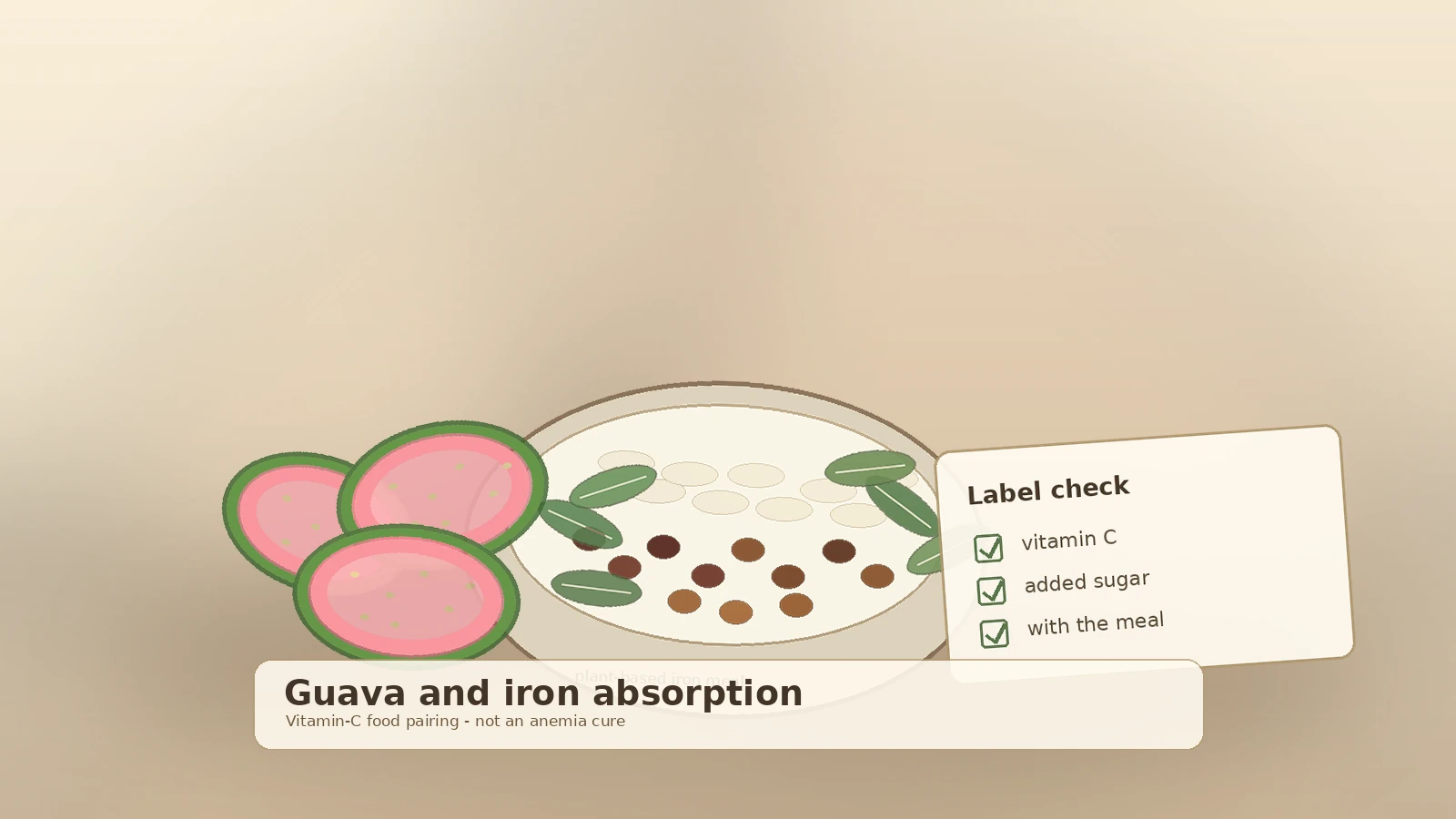
Guava and Iron Absorption: What the Science Says About the Juice Claim
Table of Contents
Guava does have a real iron story. Just not the one that usually gets flattened into “drink guava juice for anemia.”
The better claim is narrower, and honestly more useful: vitamin-C-rich guava can help your body absorb more non-heme iron from a plant-based meal. That’s the form of iron found in beans, lentils, grains, leafy greens, fortified cereals, nuts, seeds, and plenty of rice-based or vegetarian meals. It isn’t absorbed as easily as heme iron from meat, so what you eat alongside it can matter.
But that’s meal-level absorption. It’s not the same as curing anemia, fixing low ferritin, or replacing prescribed iron. If you have symptoms of iron deficiency, known low iron, heavy menstrual bleeding, pregnancy or postpartum symptoms, shortness of breath, unusual fatigue, or a child with suspected anemia, guava juice isn’t the plan. Medical assessment is.
So, with that safety line drawn, what’s actually supported?
The best-supported claim is about food pairing #
The strongest modern guava-specific study didn’t use a bottled guava drink. It used 100 g of guava fruit added to a rice-based meal in adolescents.
In that small isotope study, 16 participants ate rice meals with and without guava. When guava was included, fractional non-heme iron absorption was higher: about 24% versus 10% in girls, and about 19% versus 9% in boys (PubMed). That’s a meaningful meal-level change.
And yes, “roughly doubled” is fair for that test meal. But here’s where the wording matters: it did not show that guava doubled anyone’s blood iron, treated anemia, improved fatigue, raised ferritin long term, or worked the same way in every meal.
An older human study in Indian women also found that fruits and fruit juices changed iron absorption from a rice meal, and that the effect tracked closely with ascorbic acid, better known as vitamin C. Guava was among the fruits with a marked enhancing effect (PubMed).
That’s the kernel of truth behind the juice claim. Pairing vitamin-C-rich guava with a plant-based iron meal can help absorption. The internet version often skips the “with the meal,” “non-heme,” and “not anemia treatment” parts - which are the parts that keep the advice honest.
Why vitamin C helps non-heme iron #
Non-heme iron is fussy. It has to be kept in a form the gut can absorb, and other meal components can push absorption up or down.
Vitamin C helps because of basic chemistry, not a special guava effect. StatPearls describes ascorbic acid as forming a soluble chelate with ferric iron in the acidic stomach, helping keep it available for absorption in the duodenum (NCBI Bookshelf). MedlinePlus gives the practical version: vitamin-C-rich foods increase iron absorption (MedlinePlus).
So a guava-and-rice example makes sense. Rice and other grains can contain phytates, which can make non-heme iron harder to absorb. Add a high-vitamin-C food at the same meal, and you can tilt the meal in a better direction.
And guava is genuinely rich in vitamin C. USDA FoodData Central values vary by entry, but the research pack found raw guava around 228 mg vitamin C per 100 g, while guava nectar and some guava juice examples were far lower, around the low-20 mg range per 100 g (USDA FoodData Central). That doesn’t make every bottled drink useless. It means labels matter.
Whole guava is not the same as bottled guava juice #
This is the practical catch.
If someone says “guava improves iron absorption,” they’re usually leaning on evidence that is strongest for guava fruit, not a sweetened pink nectar drink with a little guava flavor. Bottled guava juices and nectars can vary a lot in vitamin C, fruit content, added sugar, dilution, fortification, and processing. Some may be decent vitamin-C sources. Others are mostly a sweet drink.
So if the goal is iron absorption from a plant-based meal, whole guava is the cleaner bet when available. It brings vitamin C without turning the whole thing into a big glass of sugar. If you’re using juice, check the nutrition label for vitamin C and added sugars, and think of it as part of a meal rather than a stand-alone “iron booster.”
For people watching blood sugar, managing diabetes, dealing with metabolic concerns, or just trying not to drink a dessert with lunch, that distinction isn’t nitpicking. It’s the difference between a sensible food pairing and a wellness habit that quietly adds sugar every day.
What to pair guava with #
The basic idea is simple: put the vitamin-C food in the same meal as the plant-based iron food.
That might mean guava with rice and beans, lentils, chickpeas, tofu, fortified cereal, leafy greens, pumpkin seeds, or a grain bowl. Citrus, strawberries, tomatoes, bell peppers, and kiwi can do a similar job. Guava is a strong example, not the only option.
But meal context can work against you, too. Tea and coffee can reduce non-heme iron absorption when taken with iron-rich meals. So can phytates in grains and legumes, calcium-rich foods or supplements, polyphenols, some proteins, and oxalates, depending on the meal and the person (NCBI Bookshelf; ACS Omega review).
Does that mean you need to panic about beans, tea, or calcium? No. Please don’t turn lunch into a spreadsheet. But if you’re specifically trying to improve non-heme iron absorption, the boring timing details can matter. Have the vitamin C with the iron-containing meal; consider moving tea or coffee away from that meal if low iron is a real issue; and don’t assume one glass of juice overrides everything else on the plate.
What guava doesn’t prove #
Here’s the line I wouldn’t cross: guava is not an anemia treatment.
A 2023 systematic review and meta-analysis looked at vitamin C or ascorbate given alongside iron therapy for anemia and did not find clear significant improvements in hemoglobin or ferritin outcomes in pooled estimates; the certainty of evidence was very low (PubMed). That’s an important counterweight. Vitamin C can improve meal-level absorption, but that doesn’t automatically translate into better treatment results for people already being treated for anemia.
And anemia isn’t one thing. Iron deficiency is common, but low hemoglobin can also involve bleeding, inflammation, chronic disease, B12 or folate issues, kidney disease, pregnancy-related changes, or other causes. Trying to solve that with juice can delay the workup someone actually needs.
So yes, guava belongs in the “smart food pairing” bucket. It doesn’t belong in the “natural cure” bucket.
Who should be more cautious #
Most people can treat guava as food. The caution is about deliberately trying to increase iron absorption, using high-dose supplements, or ignoring symptoms.
If you’re pregnant, postpartum, having heavy periods, short of breath, unusually tired, dizzy, pale, or already told your ferritin or hemoglobin is low, don’t manage that with guava juice. Ask a clinician what needs testing and whether iron therapy is appropriate.
Children are a separate caution. Pediatric iron deficiency and supplementation should be handled with medical guidance, not fruit-juice advice. And iron supplements should be kept away from children, because very high iron doses can be dangerous and even fatal (NHS).
People with iron-overload conditions need the opposite kind of care. NIDDK notes that people with hemochromatosis may be advised to avoid vitamin C supplements because vitamin C increases iron absorption (NIDDK). If you have hemochromatosis, thalassemia, repeated transfusions, or another iron-overload concern, ask your clinician before intentionally boosting iron absorption.
And one more thing: food vitamin C isn’t the same as megadose vitamin C pills. MedlinePlus notes that more than 2,000 mg per day isn’t recommended and can cause stomach upset, diarrhea, and rarely kidney stones; large doses aren’t recommended during pregnancy (MedlinePlus). This article is about food pairing, not vitamin C loading.
Bottom line #
Guava can help iron absorption, if we say it carefully.
The best-supported version is this: guava fruit, rich in vitamin C, can improve non-heme iron absorption when eaten with a plant-based iron meal. The direct human evidence includes a small adolescent study using 100 g guava fruit with a rice meal, plus older absorption research linking guava’s effect to ascorbic acid.
But bottled guava juice isn’t automatically the same thing, and the claim shouldn’t be stretched into anemia treatment. Whole guava or a label-aware guava drink with a meal is a reasonable food-pairing idea. Persistent low iron, suspected anemia, pregnancy/postpartum symptoms, heavy bleeding, childhood iron concerns, or iron-overload conditions need proper medical guidance.
That’s less catchy than the viral anemia-cure version. It’s also much closer to the science - and a lot safer for readers.