Mud therapy for osteoarthritis pain: Promising scores, no proof of joint repair
Table of Contents
A sore knee and a warm mud pack make an appealing pair. Now there’s a 2026 review of mud therapy reporting lower pain scores after treatment, especially in people with knee osteoarthritis. That’s worth a look. It isn’t evidence that mud rebuilds cartilage, though, and it isn’t a reason to swap an exercise plan for a spa booking.
The useful question is narrower: Could a supervised course of mud applications help some people feel and move better alongside their usual care? The review gives that question a qualified yes, at least for symptom scores in the trials it pooled. What it can’t tell you is whether the mud itself, the warmth, the setting or some combination deserves the credit in any particular case.
What the researchers actually pooled #
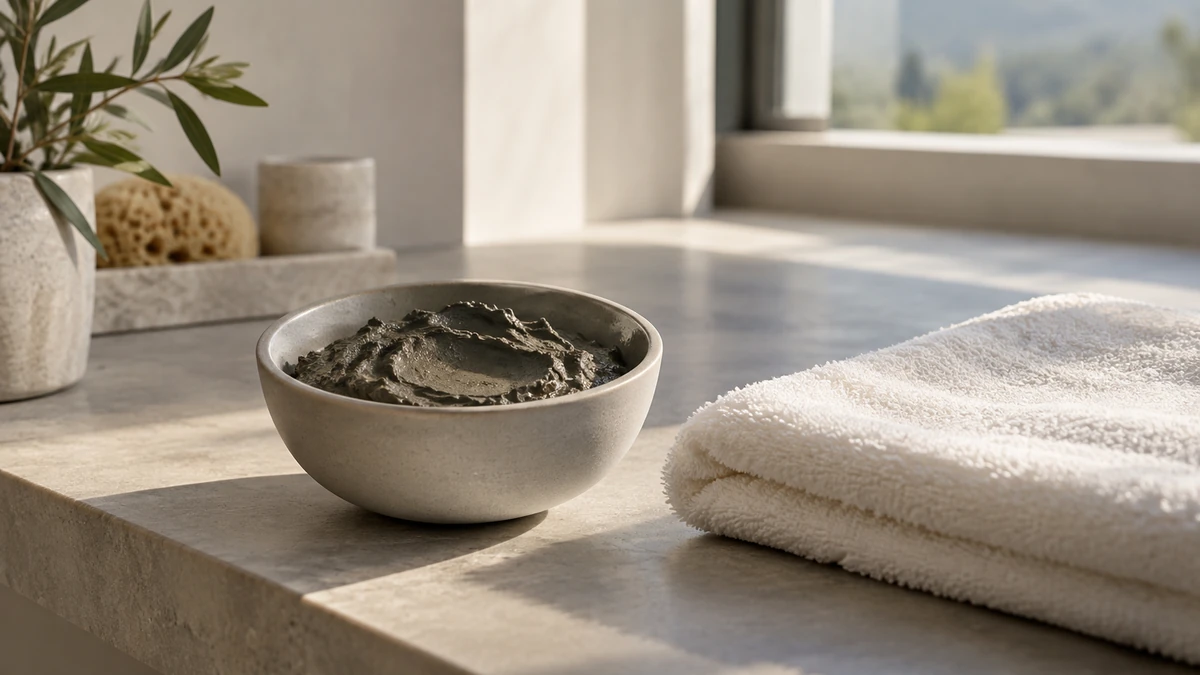
Pelotherapy is the therapeutic use of mud, peat or clay, often warmed and applied as a pack, wrap or bath. It’s a longstanding spa and naturopathic practice; longstanding isn’t the same as proven. In the new systematic review, the treatments ranged from topical packs to immersion and sometimes included thermal mineral water. Materials and temperatures differed. So did the comparison groups: sham treatment, usual care, waiting lists or no treatment. This wasn’t a test of one standardized clay product you could buy for your bathroom.
The authors included 33 controlled studies with 2,651 adults in their qualitative review. Of those, 28 randomized trials with 2,186 participants contributed to the pooled post-treatment pain analysis. The population wasn’t exclusively people with osteoarthritis - it included several musculoskeletal conditions - although the review reported an osteoarthritis subgroup separately. Courses in the included studies generally ran across two to three weeks in clinical or spa settings, not as an occasional home mask. The review’s study characteristics matter because the phrase “mud therapy” hides an awful lot of variation.
Across those mixed conditions, the pooled pain result favored pelotherapy over its various comparators: a standardized mean difference (SMD) of −0.74 after treatment, with a 95% confidence interval from −0.91 to −0.57. A standardized difference lets researchers combine trials that measured pain on different scales. It doesn’t mean your own knee pain will drop by 0.74 points. The review rated the immediate pain result moderate-certainty, but variation between study results was substantial (I² 62%). Those figures come from the authors’ meta-analysis, not from a head-to-head trial against physiotherapy or pain medication.
And the knee-specific result? In 11 trials involving 863 people with knee osteoarthritis, the pooled pain estimate was SMD −0.86 (95% CI −1.09 to −0.63). That’s the most relevant number if your question is about an aching arthritic knee. It’s still an average across different materials and treatment programs, not a forecast for one person or a ranking of brands. The broader pooled physical-function result also favored pelotherapy (22 studies, 1,742 participants; SMD −0.69), but that analysis, too, combined diagnoses and functional measures. Both subgroup and function figures are in the review.
Relief isn’t cartilage repair #
Pain is real. Better function is real if people can do more of what matters to them. Yet neither measure shows that the underlying joint has changed structurally. The review pooled symptom and function outcomes, not evidence that cartilage grew back or osteoarthritis was reversed. Its authors discuss possible thermal and mineral-related explanations, but mineral penetration and a specific human joint-repair mechanism remain unproven here.
The follow-up numbers also need a little air around them. The review reported a smaller pooled pain difference at three months (19 studies; SMD −0.61) and again at six months (13 studies; SMD −0.49). It rated the six-month finding low-certainty. But these are results from participants available at those follow-ups, not proof that any one treatment has a predictable six-month effect. Blinding a mud treatment is hard, the regimens varied, and the authors noted gaps in reporting of rescue medicines and other care during follow-up. They also flagged possible publication bias; their adjusted immediate-pain estimate was −0.66 rather than −0.74. Those limitations are in the paper.
A separate Cochrane review of mineral baths for osteoarthritis was much more guarded about positive findings because the older trials had methodological and reporting problems. Those were mineral-water baths, not this newer set of mud interventions, and its search ended in 2006. It isn’t a direct mud-versus-mud rebuttal. It does remind us that “spa therapy” can refer to different things, with very different evidence behind them.
Could an ordinary warm pack do just as much for you? These studies don’t settle that. The NHS lists hot or cold packs among options that can relieve some people’s osteoarthritis symptoms, alongside exercise, weight management where relevant, medicines and other support. Mud may be part of a comfortable treatment experience; the available comparisons don’t show it beats a sensible heat pack, a tailored exercise program or standard medicines. And they don’t establish that minerals crossing the skin are what account for the pain scores.
Safety is more than “no serious events” #
The 2026 review reported skin redness in 6.5% of pelotherapy participants and temporary fatigue in 4.8%. It didn’t find a statistically significant difference in serious adverse events (reported relative risk 0.98; 95% confidence interval 0.61 to 1.58). That interval is wide enough that “proven safe” would be a stretch, and the authors acknowledged inconsistent adverse-event reporting and limited long-term safety data. Those trial observations don’t clear an unsupervised home product or a medically fragile person.
Heat deserves respect, even when it feels soothing. Gloucestershire Hospitals NHS guidance advises gentle rather than hot application, a protective towel and regular skin checks; it says not to use heat for a new injury. Avoid putting a heated mud preparation on broken or infected skin, or on a newly injured, hot or swollen joint. If you have reduced skin sensation (including diabetic neuropathy), poor circulation, a skin condition or trouble checking your own skin, ask a clinician before considering heat-based treatment. That’s a precaution based on heat safety and the research gaps - not a claim that the mud trials tested every one of those circumstances.
For pregnancy, frailty, cardiovascular instability, immunocompromise or significant chronic illness, check with a qualified health professional before thermal immersion or a spa course. The trial review doesn’t establish safety for those situations. And if the program includes a shared hot tub, there’s a separate water-hygiene issue: the CDC describes infections linked to hot tubs. A supervised topical pack isn’t the same exposure as shared warm water.
Nor does “natural clay” tell you where a home product came from or what’s in it. The FDA warned about elevated lead in one named bentonite product marketed for ingestion and topical use. That specific finding doesn’t prove every therapeutic mud contains lead, or that intact-skin contact carries the same exposure as ingestion. It does make unverified sourcing and cleanliness reasonable questions for a provider. Don’t ingest mud or clay on the strength of this osteoarthritis research.
One boundary is non-negotiable: sudden severe pain in one joint, a hot or swollen joint, changed skin color, difficulty putting weight on it, or feeling unwell calls for urgent medical assessment, not a mud wrap. Fever isn’t always present with a joint infection, according to the NHS guidance on septic arthritis.
Where it fits, if anywhere #
If you’re curious about a supervised course, bring up the specifics with the clinician who knows your joint diagnosis and treatment plan. Is heat appropriate for your skin, circulation and sensation? What material is being applied, how is it sourced, and what are the provider’s hygiene practices? If baths are part of the package, how are those managed? And perhaps the easiest question to forget: How will you keep up the exercise, physiotherapy or medicines already helping you?
The NHS osteoarthritis treatment guidance puts regular exercise and healthy-weight measures where appropriate at the center of care, with medication and supportive treatments considered according to a person’s needs. Mud treatment, if chosen, belongs beside that plan - not in its place. The evidence supports a conversation about possible symptom relief; it doesn’t promise a repaired joint or a reliable do-it-yourself protocol.
Related

Glucosamine and Alzheimer's: A Caution Flag, Not a Panic Button