Hay fever and nasal rinses: the water rule matters more than the neti pot
Table of Contents
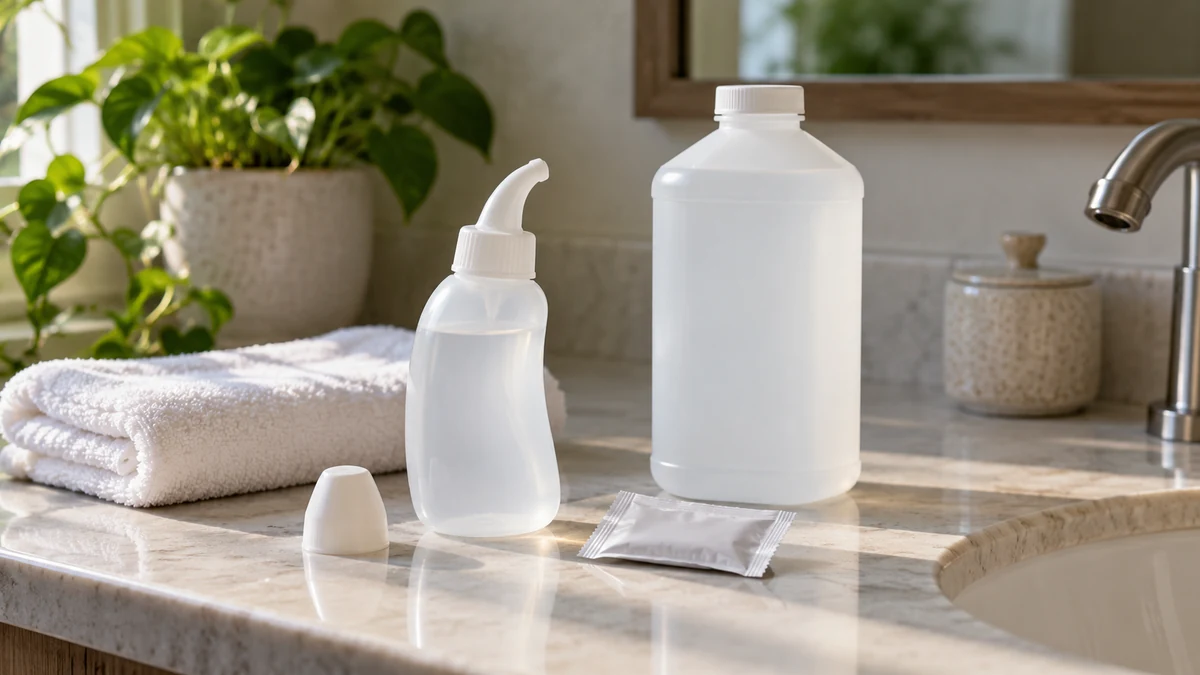
A neti pot can look like the simplest way to deal with hay fever. The part that deserves your attention first isn’t the pot, though. It’s the water. For a nasal rinse, the FDA and CDC say to use water labeled sterile or distilled, or tap water that’s been boiled and cooled. Don’t pour untreated tap water into the device, even if it’s safe to drink.
As for whether rinsing helps, the answer depends on what you’re comparing it with. Small trials suggest symptom relief compared with not rinsing. They don’t establish that adding a rinse to allergy medication gives extra relief, or that a rinse can replace that medication. Cochrane’s review makes those distinctions easy to miss if you read only a headline.
Three comparisons, three different answers #
If the choice is saline rinse versus no rinse, there’s a case for trying it. Cochrane brought together 14 trials involving 747 people with allergic rhinitis. In comparisons with no saline, people who rinsed reported less severe symptoms at up to four weeks and at four weeks to three months. But the certainty of those symptom findings was low: the studies were small and varied in how they measured improvement. We can’t turn the pooled result into a reliable promise about how much your sneezing or congestion will change. And the review had no outcomes past three months. Cochrane, 2018.
Now change the question. You’re already using an antihistamine or a nasal steroid spray. Will a rinse on top make a noticeable difference? That result is much less clear. The add-on symptom estimates in the Cochrane review were based on very-low-certainty evidence and didn’t establish a benefit. The studies comparing saline directly with intranasal steroids were inconclusive too. Cochrane. So “some benefit versus doing nothing” isn’t shorthand for “less medicine needed.”
And replacement is a third question altogether. The AAAAI/ACAAI rhinitis practice parameter favors intranasal corticosteroid monotherapy for persistent allergic rhinitis. A saltwater rinse hasn’t been shown to work just as well. If you’re relying on prescribed treatment, don’t stop it because a rinse feels useful; talk with your clinician about symptoms that remain disruptive.
A 2026 review of seven controlled pediatric studies reported symptom-score improvement, but graded that evidence low certainty and its antihistamine-use result very low certainty. Its accessible abstract combines different comparators. It doesn’t settle the add-on question for adults - and it doesn’t turn this into a recommendation to rinse a child’s nose without pediatric advice.
The safe-water decision, every time #
The distinction between drinking water and rinse water is odd at first. You can swallow ordinary tap water safely in many places; that doesn’t mean it belongs up your nose. The FDA explains that organisms which stomach acid can deal with may survive in nasal passages. The CDC has documented rare, devastating infections associated with contaminated water used for sinus rinsing, including infections involving Naegleria fowleri and Acanthamoeba. Rare doesn’t mean impossible. FDA; CDC.
Here’s the short version: choose commercially labeled sterile or distilled water, or previously boiled and cooled tap water, for the rinse. Not water straight from the tap. Not a bottle that’s merely labeled “drinking water.” And don’t assume a household filter makes water safe for this purpose unless its suitability is specifically verified against current public-health guidance. Follow the FDA’s instructions and the CDC’s rinse-water guidance rather than improvising a shortcut.
Use saline prepared according to the product and device directions, rather than plain water (which can irritate the nose). Follow the device maker’s instructions for use, cleaning and drying between rinses. A freshly prepared safe-water solution isn’t much help if you’re using a dirty bottle. And please don’t add essential oils, herbs or other DIY ingredients to it; research on medicated nasal formulations isn’t a recipe for home mixing. FDA device and solution guidance.
When rinsing isn’t a casual experiment #
Saline isn’t automatically comfortable. Burning, irritation, nosebleeds or ear discomfort can happen; harms were not captured consistently in the trials, so a report of no adverse effects isn’t proof of none. Nor has research established one best bottle, salt concentration, volume or schedule for hay fever. Cochrane; AAAAI/ACAAI practice parameter.
If your immune system is weakened, ask a clinician before you rinse. For a child, ask a pediatrician about an age-appropriate device and whether rinsing makes sense at all. The FDA specifically flags both groups. Pregnancy or a chronic condition doesn’t make untreated water acceptable either; if you’re unsure about managing your allergy symptoms alongside either, get individual advice rather than treating a rinse as a substitute for care.
What if it stings or your symptoms worsen? Stop and ask for medical advice, particularly if you have fever, headache or nosebleeds after rinsing, as the FDA advises. A severe headache or fever after a rinse with potentially contaminated water calls for urgent assessment; tell the clinician about the rinse-water exposure. That’s a precaution in light of the CDC’s rare but severe infection warning, not a suggestion that an ordinary headache means an amoebic infection.
Bottom line #
Trying a saline rinse for hay-fever symptoms is a reasonable conversation to have, especially if the alternative is no rinse. The evidence for symptom relief is limited, and the extra payoff alongside medicine is unresolved. A rinse isn’t a proven swap for a steroid spray or other prescribed allergy care. But the water rule isn’t speculative: use sterile, distilled or previously boiled-and-cooled water, and care for the device as directed. That’s the practical decision to make before buying a particular pot. Cochrane; FDA; CDC.
Related