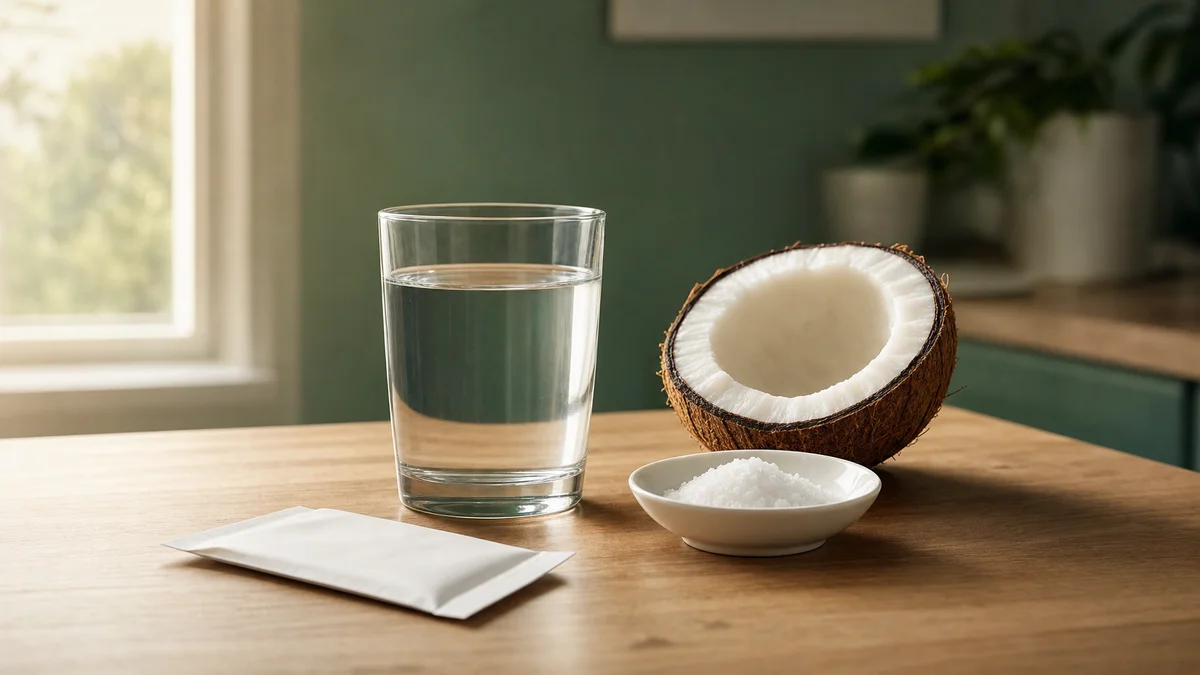
You Probably Don't Need Electrolyte Drinks Every Day - A Consumer Guide to Hydration Hype
Table of Contents
Every few months, wellness social media decides we’re all doing hydration wrong. You’ve seen the videos: someone squeezes a lemon into a giant water bottle, adds a pinch of pink sea salt, and explains that plain water “doesn’t actually hydrate you” — you need electrolytes, apparently, or the water just passes through. Coconut water gets called “nature’s IV.” Electrolyte powder brands run ads showing people at desks, on walks, in grocery store aisles, all sipping their way to optimized cellular function.
It’s compelling marketing. And if you spend enough time watching, you might start wondering whether your glass of tap water is letting you down.
But here’s the less viral version: for most people, most of the time, plain water handles everyday hydration just fine. Electrolytes aren’t a daily wellness tax. They matter in specific loss-heavy situations, and understanding which ones those are is a lot more useful than adding sea salt to every bottle you drink.
When plain water is enough #
The CDC puts it simply: getting enough water every day supports body temperature, cushions joints, protects your spinal cord, and helps remove waste. Water has zero calories. It can replace sugary drinks, which is relevant because many sports drinks, energy drinks, and sweetened waters are — despite the health-adjacent packaging — significant sources of added sugar.
So if you’re sitting at a desk, walking the dog, running errands, or doing a moderate gym session, plain water is still the baseline. Not because it’s boring or because you’re settling — because your body is good at managing fluid balance under normal conditions, and it doesn’t need help from a $30 electrolyte stick pack to do it.
Fluid needs do go up with heat, activity, fever, diarrhea, and vomiting. That’s when paying attention to what you’re losing matters more. But for everyday life? The tap, the filter pitcher, the office water cooler — they’re not letting you down.
When electrolytes actually start to matter #
Electrolytes (sodium, potassium, and the rest) help with nerve signals, muscle contraction, and fluid balance. Your body regulates these tightly under normal conditions. The times they need deliberate replacement are the times you’re losing them faster than usual.
Heavy or prolonged sweating is the obvious one. If you’re doing vigorous exercise in the heat, working outdoors for hours, or running a long race, water alone may not be enough — especially if you’re a heavy sweater or the session runs past an hour. Sports nutrition guidelines describe hydration as individual: it depends on your sweat rate, the environment, how long you’re going, and how much salt you typically lose (PubMed 28806049 and 19033609).
Vomiting and diarrhea are a different category. When you’re losing substantial fluid and minerals through illness, the body needs more than water to bounce back. But — and this is where a lot of wellness content collapses into dangerous category error — the right tool for that job isn’t a sports drink, an electrolyte powder, or salt water. It’s oral rehydration solution, and it’s a very specific thing.
ORS is not a sports drink (and sports drinks are not ORS) #
Oral rehydration solution (ORS) is a glucose-electrolyte formula designed to treat and prevent dehydration from diarrhea. The World Health Organization describes it as appropriate for all but the most severe cases. It uses a specific ratio of sugar and salts because glucose helps your gut absorb sodium and water more efficiently.
The Merck Manual, the NHS, and clinical overviews are all consistent on this point: sports drinks, fruit juice, fizzy drinks, and homemade salt water are not adequate substitutes for ORS when someone is dehydrated from vomiting or diarrhea. The electrolyte concentrations aren’t the same. The sugar content is often wrong. And in young children, especially, using the wrong fluid can make things worse.
Worth knowing: pharmacists can recommend ORS powders, and keeping a few sachets in the cabinet is a more useful health move than subscribing to an electrolyte drink mix for daily use.
The reverse is also true. ORS isn’t a casual hydration upgrade. It’s a medical-style rehydration tool for illness-related fluid loss — not something to sip during a Zoom call because you read that plain water isn’t “bioavailable” enough.
Coconut water — fine if you like it, not a hydration upgrade #
Coconut water has genuine cultural and traditional use in tropical regions. It contains potassium, some sodium, and natural sugars. But the idea that it’s objectively better than water — that it’s “nature’s sports drink” or a clinical-grade rehydration beverage — doesn’t hold up when you look at the evidence.
A 2025 systematic review examined three trials that compared coconut water with plain water and sports drinks after exercise-induced dehydration. The finding: no significant differences in hydration or volume-status outcomes at multiple time points. The evidence was rated very low certainty (PubMed 38116818).
Small individual trials going back to the early 2000s show a similar pattern. One crossover study in eight men found coconut water, plain water, and a carbohydrate-electrolyte drink all produced similar rehydration after exercise (PubMed 12056182). A 2012 trial in twelve trained men found no performance difference between coconut water and sports drink — but the coconut water group reported more bloating and stomach upset (PubMed 22257640).
The short version: coconut water is a reasonable beverage option if you like the taste and don’t mind the natural sugars. It’s not a proven hydration upgrade for everyone, and the “nature’s IV” framing is marketing, not medicine.
Sea salt is sodium. “Natural” doesn’t change that. #
Sea salt, pink salt, Celtic salt: they’re all sold as mineral-rich, unprocessed, and somehow different from the stuff in the blue cylinder. But the nutrient that matters for hydration is sodium, and sea salt supplies plenty of it.
The FDA notes that sodium is essential in small amounts, but most Americans already consume more than they need; the recommended adult limit is less than 2,300 mg per day. For context, the FDA says Americans eat on average about 3,400 mg of sodium per day — nearly 50% above that limit. Diets higher in sodium are associated with increased blood pressure risk. Sea salt may sound more natural, but the relevant issue is still sodium load.
Adding a pinch to your water bottle because a wellness influencer does it isn’t a harmless universal upgrade. For people with hypertension, kidney disease, heart failure, liver conditions, or anyone on diuretics or sodium-restricted diets, it can be actively harmful. And even for healthy adults, the trace minerals in sea salt aren’t present in amounts that make a meaningful difference to hydration status — the sodium is what’s doing the work, and most people are already getting plenty.
“Natural salt” is still salt. If you want to add it to food for taste, that’s one thing. Adding it to every bottle of water because it sounds healthier is mainly adding sodium you probably don’t need.
Red flags: when hydration isn’t a DIY situation #
Most everyday thirst and mild dehydration respond to drinking water. But some signs shouldn’t be treated with a glass of water and a hope it passes.
The NHS and Merck Manual describe serious dehydration symptoms that warrant urgent medical care: confusion, unusual sleepiness or difficulty waking, cold or blotchy skin, fast heart rate, breathing difficulty, fainting or light-headedness that doesn’t improve, passing very little urine, and — in infants — a sunken soft spot on the head or few or no tears when crying.
There’s also the opposite problem, and it’s worth naming because overhydration trends circulate in the same wellness spaces that push electrolytes. Drinking too much water without enough sodium can dilute blood sodium to dangerous levels. The condition is called hyponatremia. The Merck Manual lists sluggishness, confusion, nausea, muscle twitching, seizures, and loss of consciousness as possible symptoms. Endurance athletes are at higher risk when they replace heavy sweat losses with plain water only, but it can also happen with certain medications, medical conditions, or forced overdrinking.
The practical takeaway isn’t to fear water. It’s to recognize that both underdoing it and overdoing it have limits, and that some hydration problems need a clinician, not a supplement hack.
Who should skip the DIY electrolyte approach #
Some people really shouldn’t experiment with sea-salt water, high-potassium coconut water routines, or electrolyte powders without talking to a healthcare professional first. Here are the groups the research flagged:
- Kidney disease or potassium restrictions. Coconut water is potassium-rich and the kidneys regulate potassium balance — getting this wrong can be serious.
- Heart failure, hypertension, liver disease, or cirrhosis. Sodium and fluid balance get complicated fast when these organs aren’t working normally.
- Anyone on diuretics, blood pressure medications, or drugs that affect electrolyte levels. These medications already shift your electrolyte picture; DIY additions can push things out of range.
- Diabetes, adrenal disorders, or thyroid conditions that influence fluid regulation. Your baseline isn’t the same as someone without these conditions.
- Pregnant or breastfeeding. Hydration needs change during pregnancy and nursing, and so do safety considerations.
- Infants and young children. Do not water down formula. Do not use sports drinks or juice for diarrhea.
- Older adults. Age-related changes in thirst response and kidney function mean both dehydration and overhydration risks are higher.
If any of these apply to you, an electrolyte habit that looks harmless on TikTok might not be harmless for your body.
Bottom line #
Most day-to-day hydration does not need a supplement. Plain water is still the baseline, and it’s not failing you just because nobody made a TikTok about it.
Electrolytes earn their place in specific situations — prolonged or vigorous exercise in the heat, heavy sweating, fever, and illness-related fluid loss. That’s where deliberate electrolyte replacement becomes useful, and where sports-nutrition or clinical guidance applies.
ORS is a medical-style rehydration formula for vomiting and diarrhea. It is not interchangeable with sports drinks, electrolyte powders, or salt water. Confusing those categories isn’t just imprecise — it can be unsafe.
Coconut water is a beverage, not a proven hydration upgrade. The evidence says it hydrates about as well as water, not better. If you enjoy it, drink it. Just don’t pay a premium for a health claim the evidence doesn’t support.
And sea salt? It’s sodium. The “natural” label doesn’t cancel out what sodium does in your body — and most people are already getting more than enough.
If hydration curiosity has you wondering whether your water needs an upgrade, the better question is usually simpler: am I drinking enough, is my situation actually electrolyte-demanding, and do I have a health condition that changes the rules? The answers, for most people in most moments, point back to the tap.