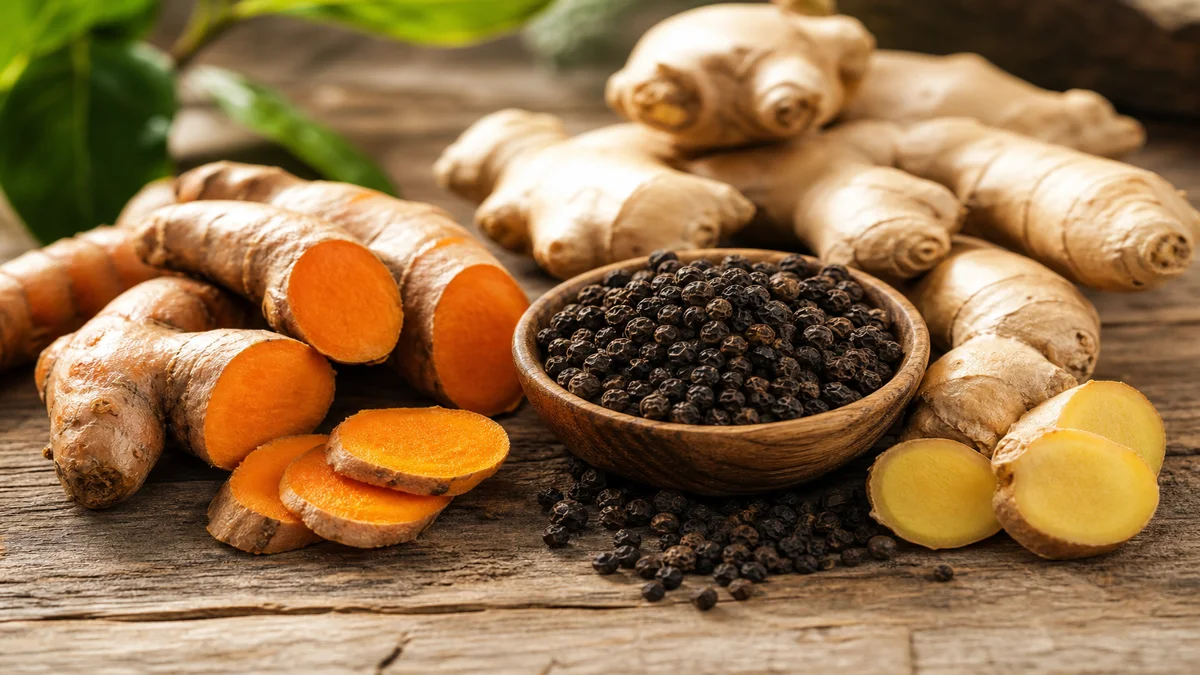
If you’ve spent any time in the wellness corners of the internet, you’ve seen the claim: add black pepper to turmeric and it becomes 2,000% more effective.
The number is real, sort of. But the way it usually gets shared skips over almost everything that matters - the dose, the context, the fact that it was a small pharmacokinetic study measuring absorption in healthy volunteers, not a cure for anything. And that gap, between a lab finding about bioavailability and a wellness post about inflammation cures, is where a lot of readers get misled.
The useful version of this conversation isn’t “do spices cure inflammation?” It’s: what does the research actually say about turmeric, black pepper, and ginger - and what should make you pause before treating them as interchangeable with medication?
Three Layers of Evidence (Only One Is Strong)#
The research on spice synergy falls into three buckets, and they’re not equal.
Layer 1: Piperine really does boost curcumin absorption (but in a specific setup)#
Piperine, the active compound in black pepper, interferes with how the body processes and eliminates certain substances - including curcumin, the main active compound in turmeric. In a classic 1998 pharmacokinetic study, 20 mg of piperine given alongside 2 grams of curcumin increased curcumin bioavailability by roughly 2,000% in healthy volunteers (Shoba et al., Planta Medica).
That 2,000% figure is where most of the internet stops reading. But the study was short, the dose was supplement-style (2 grams of curcumin is a lot - you’d need to eat a frankly implausible amount of turmeric powder to get there), and it measured blood levels, not clinical outcomes. Absorption is step one. Whether that translates into better results for a specific condition is a different question, and the answer is less satisfying than the 2,000% number makes it sound.
Worth knowing: piperine’s absorption-boosting effect is a double-edged sword. The same mechanism that increases curcumin exposure can also affect how the body processes medications (more on that in the safety section). A 2017 review of piperine’s effects on drug metabolism noted that piperine can alter the pharmacokinetics of coadministered drugs by inhibiting metabolic enzymes and transporters (PubMed). That’s not a reason to avoid black pepper in your dinner. It is a reason to think twice about concentrated piperine supplements if you take regular medication.
Layer 2: Ginger and turmeric show synergy in lab models, not humans#
A 2022 cell study found that ginger and turmeric extracts suppressed inflammatory mediators - nitric oxide, TNF, and IL-6 - more strongly together than either extract alone, particularly at a 5:2 ginger-to-turmeric ratio (Zhou et al., Molecules).
That’s interesting for researchers. It is not a dosing recommendation for your smoothie.
The 5:2 ratio is specific to that cell model. Cell studies use isolated extracts applied directly to immune cells in a dish. They skip digestion, absorption, metabolism, distribution, and every other step between “swallowing something” and “seeing an effect in a human with a condition.” The study author didn’t claim the ratio was a human dosing guide, and neither should anyone writing about it for a general audience.
Layer 3: Human evidence is narrow - knee osteoarthritis is the strongest niche#
There is some human evidence for turmeric/curcumin in knee osteoarthritis, but it sits in the “promising but not definitive” category, not “proven treatment.”
A 2020 randomized, double-blind trial in 60 people with chronic knee osteoarthritis compared a turmeric extract + ginger + black pepper formulation against naproxen over 4 weeks (Heidari-Beni et al., Phytotherapy Research). The herbal combination reduced PGE2 - an inflammatory marker - similarly to naproxen. That’s a real finding. But the trial was small (60 people), short (4 weeks), and the primary endpoint was a biomarker, not a full pain-and-function assessment. It doesn’t mean the spice blend “works as well as naproxen for arthritis pain.”
Two systematic reviews add some weight without removing the uncertainty. A 2021 review of 10 turmeric/curcumin RCTs for knee osteoarthritis found that benefit on pain and function appears plausible, but noted the optimal dose, frequency, and formulation remain unclear (Paultre et al., BMJ Open Sport & Exercise Medicine). A 2022 meta-analysis of turmeric/curcumin in arthritis reached a similar conclusion: results were promising but limited by small trials, low study quality, and heterogeneity across studies (Zeng et al., Frontiers in Immunology).
And the official institutional view is more cautious than the individual studies suggest. The National Center for Complementary and Integrative Health (NCCIH), in its clinical digest on nutritional approaches for musculoskeletal pain and inflammation, says preliminary lab findings suggest curcumin may have anti-inflammatory properties, but there is still insufficient evidence to support turmeric supplementation broadly for inflammatory disorders (NCCIH Clinical Digest).
Safety note: what the turmeric-and-black-pepper enthusiasm can miss
Medication interactions are the biggest concern. The Welsh Medicines Advice Service warns that medicinal turmeric and curcumin should be used cautiously with anticoagulants and antiplatelets (warfarin, clopidogrel), antidiabetic drugs, anti-cancer therapies, immunosuppressants, and narrow therapeutic index drugs such as lithium, digoxin, and phenytoin - along with any medicine metabolized by CYP enzymes (WMAS Turmeric Interactions Guide). Piperine’s bioenhancing effect can compound these risks.
Liver injury has been reported. The Drug-Induced Liver Injury Network documented 10 turmeric-associated liver injury cases, including 5 hospitalizations and 1 death. Latency was 1-4 months after starting supplements, and some products involved contained piperine (DILIN, published in PubMed). Symptoms to watch for: jaundice, dark urine, pale stools, severe itching, right upper abdominal pain, or unexplained fatigue after starting a turmeric supplement.
Ginger has its own cautions. NCCIH notes that ginger supplements are generally safe but can cause abdominal discomfort, heartburn, diarrhea, and gas. People with gallstone disease, pregnant people, and anyone on blood thinners should consult a healthcare provider before using ginger supplements (NCCIH Ginger).
Pregnancy, breastfeeding, chronic disease, and upcoming surgery all raise the stakes. Turmeric, curcumin, ginger, and piperine supplements should not be started during pregnancy or breastfeeding without clinician guidance - and should not replace prescribed treatment for diabetes, autoimmune disease, liver disease, kidney disease, bleeding disorders, or cancer.
If you take regular medication - especially blood thinners, diabetes drugs, cancer treatments, immunosuppressants, or narrow-therapeutic-index drugs - ask your clinician or pharmacist before using curcumin or piperine supplements. This is not a “natural means safe” situation.
Kitchen Spice vs. Supplement Capsule: They’re Not the Same Thing#
A teaspoon of turmeric in a curry with a pinch of black pepper is not the same as a high-dose curcumin extract with concentrated piperine. Food use is generally low-risk for most people. Supplement use is a different category, with real biological effects - both wanted and unwanted.
The 2,000% bioavailability figure came from 2 grams of curcumin - far more than you’d get from even a turmeric-heavy meal. And the 20 mg of piperine used in that study is also a supplement-style dose. Ordinary black pepper contains roughly 2-7% piperine by weight, so you’d need to consume a substantial amount of isolated pepper to match that study setup, which is not how people eat.
This distinction matters because supplement marketing often borrows the language of food - “just spices,” “kitchen herbs,” “nature’s pharmacy” - to make concentrated extracts seem gentler than they are. If a product delivers pharmaceutical-level doses of bioactive compounds, the caution level should match the dose level.
How to Think About It#
A reasonable reader can hold several things at once, and the order matters.
Piperine genuinely increases curcumin absorption in supplement-style dosing - that part is scientifically solid, and you don’t need to be skeptical about the 2000% number in its original context. But absorption is not the same thing as clinical benefit. More curcumin in your bloodstream doesn’t automatically mean less arthritis pain, lower inflammation, or better health outcomes (the evidence for that is still limited and mixed, which is frustrating but honest). Ginger-turmeric synergy in cell models is real and worth studying further - it is not proof that a specific spice blend will reduce inflammation in your body, and the people selling it like it is are skipping a lot of steps. And here’s where it gets uncomfortable: turmeric/curcumin may help some people with knee osteoarthritis symptoms, but the evidence isn’t strong enough to replace clinician-directed care or NSAIDs, however much you might prefer the spice version.
So, yeah - concentrated piperine and curcumin supplements are biologically active products, which means they can also be biologically risky if you take certain medications. That last part gets left out of a lot of the enthusiasm.
Questions Worth Asking a Health Professional#
If you’re considering turmeric, curcumin, ginger, or black pepper supplements - especially for a specific health concern - bring these to your next appointment:
- Given my medications and health conditions, is this supplement appropriate for me?
- Could it interact with anything I’m already taking?
- Are there any symptoms or lab changes I should watch for?
- For my particular situation, does the limited evidence justify trying this?
You don’t need to perform skepticism. You just need the version of the evidence that doesn’t come filtered through supplement marketing.
Bottom Line#
The turmeric-and-black-pepper story has a real kernel of science: piperine can dramatically increase curcumin absorption in the right dosing setup. But “better absorption” has been stretched into “proven cure” by too many corners of the internet, and the gap between those two things is where the risk lives - for disappointment, for wasted money, and, if you’re on certain medications, for something more serious.
The ginger-turmeric synergy research is genuinely interesting. The knee osteoarthritis evidence is worth taking seriously, even if it’s not definitive. And none of this means turmeric, ginger, and black pepper aren’t worth using in your cooking - they’re food, and food can be part of a healthy pattern without needing a research citation.
But the moment someone tells you that a specific spice blend “works as well as” anti-inflammatory drugs, cures chronic inflammation, or is “completely safe because it’s natural” - that’s your cue to slow down and ask better questions.