About half of American adults take dietary supplements. About one in four people on prescription medications also take supplements. And most of them don’t tell their doctor or pharmacist. That silence creates a gap - and sometimes that gap is dangerous.
Why supplements and prescriptions don’t always mix#
Prescription drugs are tested for interactions with other drugs. They’re not systematically tested for interactions with supplements. The same liver enzymes that process medications , particularly the CYP450 family , also process many botanical compounds. When a supplement speeds up or slows down those enzymes, it can change how much of a medication reaches your bloodstream.
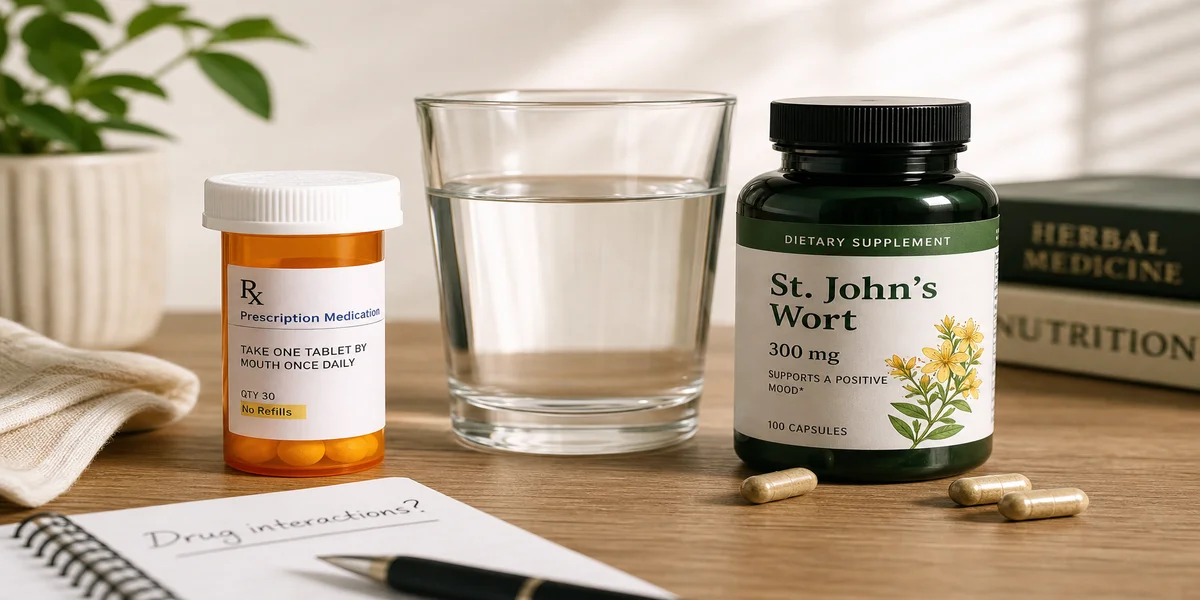
St. John’s wort is the classic example: it induces CYP3A4, the enzyme that metabolizes roughly half of all prescription drugs. Taking St. John’s wort with oral contraceptives, blood thinners, or immunosuppressants can reduce their effectiveness significantly. It’s not that the herb is toxic. It’s that it makes the medication stop working.
The scale of the problem is hard to measure precisely because most interactions go unreported. But we know the overlap is large: roughly 70% of Americans take at least one prescription drug, and roughly half take supplements. A 2018 survey published in JAMA Internal Medicine found that among older adults taking prescription medications, 38% also took supplements with a known risk of interaction. Only about a third of those people had discussed their supplement use with a healthcare provider.
The most concerning interactions#
Blood thinners and the supplements that amplify bleeding risk#
Warfarin works by blocking vitamin K recycling. Taking a supplement that contains vitamin K directly counteracts warfarin’s effect, potentially causing your INR to drop below the therapeutic range and increasing clotting risk. But the danger runs both ways. If you’ve been consistently taking a vitamin-K-containing multivitamin while your warfarin dose was calibrated, suddenly stopping the multivitamin can push your INR dangerously high, increasing bleeding risk.
Vitamin K isn’t the only concern with blood thinners. Ginkgo biloba inhibits platelet aggregation, which means it can increase bleeding risk when combined with warfarin or clopidogrel. A widely cited case report published in the New England Journal of Medicine in 2001 described a 78-year-old man on warfarin whose INR became unstable after he started taking ginkgo. He subsequently developed a spontaneous intracerebral hemorrhage.
Garlic supplements carry a similar risk. A case series in JAMA documented prolonged bleeding times and postoperative bleeding in patients taking garlic preparations alongside anticoagulants. Garlic’s antiplatelet effects appear to be dose-dependent, with concentrated extracts posing more risk than dietary amounts.
Fish oil at doses above 3 grams per day can reduce platelet aggregation by competing with arachidonic acid in the cyclooxygenase pathway, similar to aspirin’s mechanism. The effect is usually modest, but in combination with prescription anticoagulants or antiplatelet drugs, the cumulative anti-clotting effect can become clinically significant. The FDA’s own labeling for the prescription omega-3 product Lovaza notes that patients on anticoagulants should be monitored when starting the drug.
Even cranberry juice has been implicated in warfarin interactions, though the evidence is inconsistent. A handful of case reports describe INR elevations in warfarin patients who drank cranberry juice, but controlled studies have not found a consistent effect. The safest approach with warfarin and any supplement is consistency: don’t start or stop anything without talking to your prescriber and getting an INR check within a week of the change.
Antidepressants and serotonin-affecting supplements#
St. John’s wort interacts with antidepressants through an entirely different mechanism than its CYP450 effects. The herb has serotonergic properties. It increases serotonin activity in the brain. When combined with SSRIs like fluoxetine, sertraline, or escitalopram, or with SNRIs like venlafaxine, the additive serotonin activity can trigger serotonin syndrome: confusion, rapid heart rate, high blood pressure, dilated pupils, muscle rigidity, hyperthermia, and in severe cases, organ failure and death.
The same risk applies to 5-HTP and SAM-e, two other supplements with serotonergic effects that people sometimes take for mood. 5-HTP is a direct serotonin precursor , the body converts it to serotonin in a single enzymatic step. Adding 5-HTP to an SSRI is pharmacologically similar to increasing the SSRI dose, but without any medical supervision. Between 2010 and 2020, the National Poison Data System received over 2,000 reports of serotonin syndrome involving supplements, with St. John’s wort and 5-HTP being the most commonly implicated products.
The practical problem is that many people don’t think of St. John’s wort or 5-HTP as “drugs” and may not mention them during a medication review. A person who would never combine two prescription antidepressants without asking their doctor might freely add an over-the-counter serotonin precursor, not realizing the pharmacology is overlapping.
Statins and red yeast rice#
Red yeast rice is a supplement that contains naturally-occurring monacolin K. Monacolin K is chemically identical to lovastatin, a prescription statin. This is not a loose analogy. It’s the exact same molecule. A 2006 analysis published in the Annals of Internal Medicine examined 12 commercial red yeast rice products and found that monacolin K content varied from 0 mg to 10 mg per daily dose. A 2017 study in the European Journal of Preventive Cardiology tested 28 red yeast rice products and found monacolin K ranging from 0.09 mg to 10.9 mg per daily dose. Some products also contained citrinin, a mycotoxin that can cause kidney damage.
The clinical implication is straightforward. If you’re already on a statin and you add red yeast rice, you’re essentially increasing your statin dose without your doctor’s knowledge. This raises your risk of muscle pain and weakness, liver enzyme elevations, and the rare but serious complication of rhabdomyolysis, where muscle breakdown products flood the bloodstream and can cause kidney failure. Patients sometimes add red yeast rice because they’ve heard it’s “natural” and don’t realize they’re taking a second dose of the same drug they’re already prescribed.
The variability between products adds another layer of unpredictability. Two bottles of red yeast rice from different manufacturers can contain wildly different amounts of the active compound, and some contain none at all. Your pharmacist knows exactly how much atorvastatin is in your prescription tablet. No one , not the manufacturer, not the regulator, not the consumer , knows how much monacolin K is in most red yeast rice supplements.
Blood pressure medications and licorice root#
Licorice root contains glycyrrhizin, a compound that inhibits the enzyme 11-beta-hydroxysteroid dehydrogenase type 2. This enzyme normally converts cortisol to its inactive form, cortisone. When 11-beta-HSD2 is inhibited, cortisol levels rise in the kidneys and other tissues. Cortisol activates mineralocorticoid receptors at high concentrations, causing the body to retain sodium and water while excreting potassium. Blood pressure climbs. The effect can be substantial.
A 2017 review in the journal Drug Safety documented cases of patients who required hospitalization for hypertension and hypokalemia after consuming licorice-containing products. Some were drinking licorice tea daily. Others were using herbal supplements or chewing tobacco flavored with licorice. Systolic blood pressures rose by 30 to 50 mm Hg in some cases. The amounts don’t need to be large. Consuming 50 grams of licorice daily , a few pieces of candy or cups of tea , can produce measurable blood pressure increases in susceptible individuals within two weeks.
For someone taking antihypertensive medications, the effect is directly oppositional. The medication is working to lower blood pressure while the licorice root is working to raise it. The net result depends on the relative strengths of each, but it’s never a neutral interaction.
Other supplements that can raise blood pressure include bitter orange (Citrus aurantium), which contains synephrine, a stimulant chemically similar to ephedrine and norepinephrine, and yohimbine, which blocks presynaptic alpha-2 receptors and increases sympathetic nervous system output. Ephedra itself has been banned since 2004, but its chemical relatives continue to appear in weight loss and energy supplements.
Diabetes medications and blood-sugar-lowering supplements#
Berberine, cinnamon, chromium, alpha-lipoic acid, and bitter melon can all lower blood glucose through various mechanisms. Berberine activates AMPK, the same metabolic pathway engaged by metformin. Cinnamon appears to improve insulin sensitivity. Chromium is a cofactor for insulin signaling. When any of these are added to prescription glucose-lowering medications, the risk of hypoglycemia is real.
A 2019 systematic review in the Journal of Ethnopharmacology examined adverse events from berberine-containing products and found that hypoglycemia was the most common interaction reported, particularly when berberine was combined with sulfonylureas or insulin. The effect is additive: the supplement pushes blood sugar down alongside the medication, and the combination can overshoot.
What your pharmacist wishes they could ask#
Most pharmacy consultations last under two minutes. The pharmacist verifies the prescription, checks for drug-drug interactions in the dispensing software, and asks if you have any questions. What the computer system almost never flags is supplement interactions. The databases that reliably catch warfarin-aspirin interactions routinely miss warfarin-ginkgo interactions because supplement data isn’t systematically integrated into most pharmacy software platforms.
Pharmacists are trained to ask about supplements. In practice, they usually don’t. A 2019 survey of community pharmacists published in the Journal of the American Pharmacists Association found that 87% believed supplement screening was important for patient safety, but only 24% reported routinely asking patients about supplement use during counseling sessions. The most cited barrier was time pressure. The second was inadequate access to reliable supplement interaction databases.
The gap between what pharmacists know and what they have time to discuss means the responsibility falls heavily on patients. Pharmacists can identify interactions if they have the information. They can’t identify interactions they don’t know about because nobody told them about the ginkgo or the red yeast rice or the licorice tea.
A practical checklist#
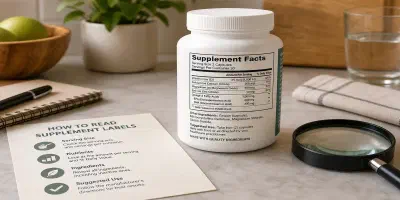
Write down every supplement you take. Include the name, brand, dose, and how often you take it. Update this list when anything changes. Keep a copy in your wallet and a photo on your phone. This takes five minutes and it’s the single most effective thing you can do for medication safety.
Hand the list to your pharmacist and your doctor at every visit. Don’t assume they remember from last time. Don’t assume your electronic health record is current. Give them the list. Ask the specific question: “Do any of these interact with my prescriptions?”
Before starting a new supplement, run it through an interaction checker. The Drugs.com interaction checker includes supplement entries and is free. Epocrates and Lexicomp, used by clinicians, also cover many botanical products. These tools aren’t comprehensive , the research base for supplement interactions is thin , but they flag the interactions that are well documented.
If you take warfarin, get your INR checked within seven days of starting or stopping any supplement. The greatest instability occurs in that first week. Many potential bleeding or clotting events are caught this way before they become clinical emergencies.
Separate your supplements and medications when mineral binding is the concern. Calcium, magnesium, iron, and zinc can bind to tetracycline and fluoroquinolone antibiotics in the gut, reducing antibiotic absorption by 50% or more if taken simultaneously. A two-hour gap between the supplement and the medication usually resolves this. Ask your pharmacist whether timing matters for your specific combination.
If you take multiple medications or have a complex medical history, ask your pharmacist about a comprehensive medication review. Many pharmacies offer this service, and Medicare Part D covers it for eligible beneficiaries. It’s a dedicated session , usually 20 to 30 minutes , where a pharmacist reviews everything you’re taking, including prescriptions, over-the-counter products, and supplements, and identifies potential problems.
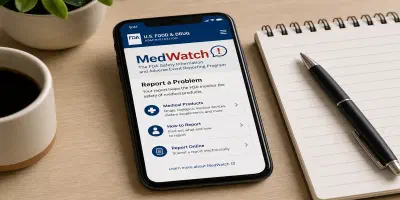
Report suspected interactions to FDA MedWatch at fda.gov/medwatch or by calling 1-800-FDA-1088. The FDA’s supplement interaction database depends on reports from consumers and clinicians. Every filed report adds to the evidence base that future interaction warnings will rely on.
The big picture#
Supplements are pharmacologically active. The fact that they’re sold without a prescription or that they come from plants doesn’t change their potential to interact with medications. Ginkgo affects platelet function. St. John’s wort revs up drug-metabolizing enzymes. Red yeast rice contains the same active ingredient as a prescription statin. Licorice root can push blood pressure up by 30 points. These aren’t hypothetical risks. They’re documented pharmacological effects with case reports and mechanistic explanations behind them.
None of this is an argument against supplements. It’s an argument for taking them as seriously as the medications they can interact with. Tell your doctor. Tell your pharmacist. Keep a list. The supplement you don’t disclose is the interaction you don’t prevent.