A new 2026 clinical trial has stevia back in the blood sugar conversation. If you’ve seen headlines suggesting stevia helps control glucose, you’re not the only one - the study gave people different cola drinks and measured hormone and glucose responses. One of the drinks had a sucrose/stevia blend.
Sounds promising, right?
But here’s the catch. The trial had 20 people. All healthy. And the stevia wasn’t tested by itself - it was mixed with actual sugar in the drink. Yes, the glucose read lower at 60 minutes compared to the all-sucrose version. But calling that “blood sugar control” is a stretch the evidence can’t really hold (2026 crossover trial, pubmed/41016269).
And honestly, that’s the whole stevia-and-blood-sugar story in a nutshell. Something IS real: replacing sugar with stevia cuts the immediate sugar load from what you eat and drink. But the evidence for anything past that? Thin. Mixed. Not what the supplement aisle wants you to think.
What people are claiming#
Walk through any wellness space and you’ll hear it. Stevia doesn’t spike blood sugar, so it must be good for diabetes. Good for weight. Good for metabolic health. Some brands actually push it as a glucose-control ingredient. They’ll mention traditional use in South America - stevia leaves sweetening things for centuries - and that gets framed as proof. Because natural and old equals effective, supposedly (Cleveland Clinic).
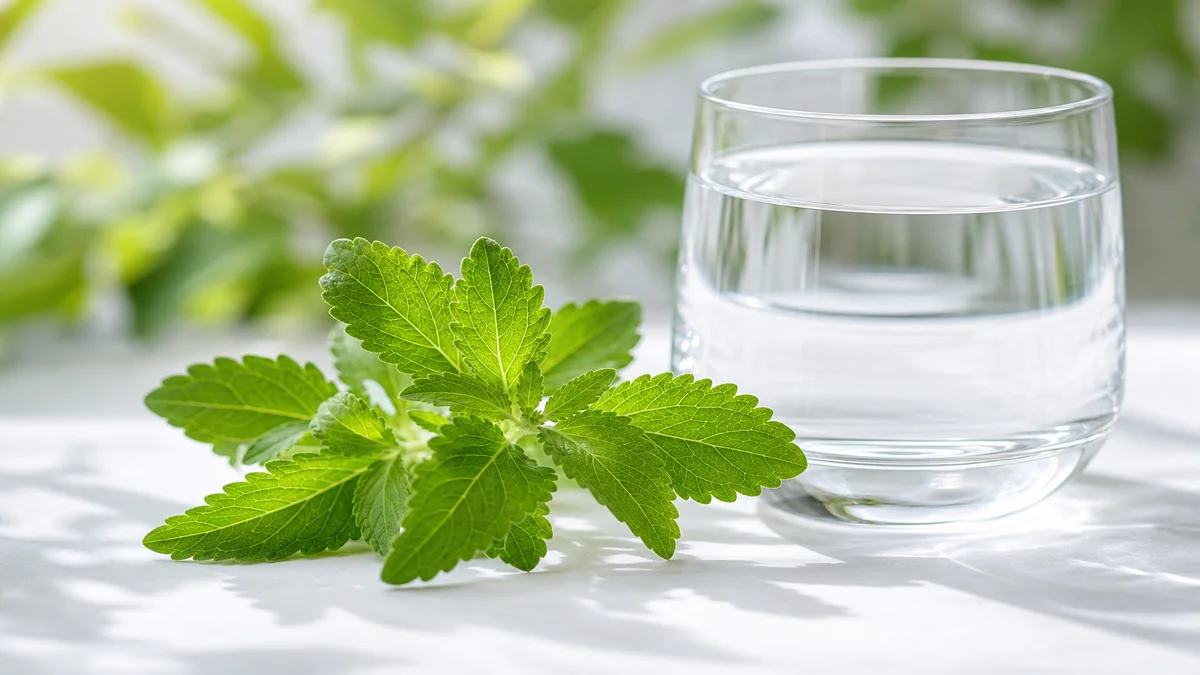
You’ll also notice nobody can agree on what “stevia” even means. Green powder at the health-food store. White packets at the coffee shop. Drops at the keto bakery. All labelled stevia. Not the same thing at all. And that difference really matters once you look at what the evidence actually shows.
What the evidence actually shows#
Let me start with the clearest signal, because it’s actually pretty simple.
Swap a sugar-sweetened drink for one with non-nutritive sweeteners like stevia, and you’re dumping less sugar into your system. Less sugar means less of an immediate glucose and insulin spike. Not because stevia’s doing something special - just because you removed the sucrose. A 2023 systematic review of acute beverage trials confirmed exactly this: the non-nutritive sweetened drinks acted more like water than like sugar-sweetened drinks for short-term glucose and insulin (pubmed/36839408).
That’s the replacement benefit. It’s real. Worth something, especially if you’re trying to cut added sugar. But it’s not a drug effect.
Past that, things get messier fast.
Two 2024 meta-analyses checked whether stevia - the purified steviol glycosides, not leaf powder - might improve blood sugar markers over time.
The first one pooled 12 RCTs and 871 adults. It found a small fasting glucose drop (about -4.10 mg/dL). But HbA1c? Nothing significant. And HbA1c is the marker that actually tells you if blood sugar control is getting better over weeks and months, not minutes. Evidence quality: low (pubmed/38512280).
The second review covered 26 studies and 1,439 people. Also found a small blood glucose signal. Also found no real insulin or HbA1c effect. Certainty: low to very low (pubmed/39098209).
Here’s the thing about a small fasting-glucose shift without an HbA1c change. That doesn’t look like diabetes treatment. It looks like a signal that might mean something minor - or might just be noise. The reviews themselves flagged poor study quality and lots of inconsistency.
And then there’s what happened when researchers actually tested stevia in people with type 2 diabetes. The results? Blunt.
One trial: placebo-controlled crossover, 30 people with T2DM, single 3-gram dose of rebaudioside A (that’s one of the purified steviol glycosides). It didn’t lower OGTT glucose, insulin, or C-peptide excursions. At all. Nothing (pubmed/36057030).
A separate 16-week trial gave people with T2DM 1,000 mg of rebaudioside A daily. No significant change in HbA1c. Or fasting glucose. Or insulin. Or C-peptide. Or blood pressure. Or body weight. Or lipids. Versus placebo - nada (pubmed/18555575).
If stevia actually had a meaningful glucose-lowering effect, these trials should’ve caught it. They didn’t.
The FDA stuff most people miss#
One of the biggest sources of confusion - and honestly, risk - is the gap between what regulators evaluated and what you might actually buy.
The FDA hasn’t questioned the GRAS status of certain high-purity steviol glycosides when used as sweeteners under intended conditions. These are purified extracts. 95% purity or higher. 200 to 400 times sweeter than sugar. They’re what’s in most branded tabletop stevia and zero-cal drinks (FDA).
But whole stevia leaves? Crude extracts? “Stevia leaf powder”? Not permitted as sweeteners in the U.S. (FDA). They didn’t go through the same safety process. So when a supplement label says “stevia leaf powder,” you’re looking at something different from what the FDA actually reviewed.
And just to make it more interesting, there’s a ClinicalTrials.gov listing from 2025 testing stevia leaf powder in diabetic patients. Enrolling by invitation. No results published. So that form of stevia is entering research - not proven safe or effective for blood sugar (NCT06645002).
The WHO warning (and no, it doesn’t contradict the FDA)#
In 2023, WHO said don’t use non-sugar sweeteners for weight control or NCD prevention if you don’t already have diabetes. That includes stevia and stevia derivatives (WHO, 2023 guideline).
Sounds like it contradicts the FDA, right? But they’re answering different questions.
The FDA and JECFA check whether something is safe at the amounts people typically consume. They set an Acceptable Daily Intake for steviol glycosides: 4 mg/kg/day in steviol equivalents.
WHO’s 2023 recommendation is about something else entirely: do non-sugar sweeteners actually work as a public-health strategy for weight and NCD prevention? Their read of the evidence: they don’t seem to. People shouldn’t rely on them for that.
The guideline is conditional, not some kind of toxicology alarm. It doesn’t mean approved stevia sweeteners are dangerous. It means the evidence for the “healthy swap makes you thinner and healthier” story just isn’t there.
Safety box: what to actually watch for#
At the food-sweetener level, the safety picture is pretty calm. High-purity steviol glycosides are generally well tolerated. Some trials have reported abdominal fullness, nausea, bloating, and dizziness though (older systematic review, pubmed/25412840; Cleveland Clinic).
But a few situations call for real caution:
Pregnancy and breastfeeding. MSKCC says don’t consume the herb during pregnancy - there’s just not enough known about non-nutritive sweeteners and what they mean for offspring. WebMD agrees the pregnancy effects aren’t studied well (MSKCC; WebMD). If you’re pregnant or nursing, ask a clinician before using stevia supplements or concentrated products.
Blood sugar medications. MSKCC flags that stevia might add to what your glucose-lowering meds are already doing. The interaction research is incomplete (WebMD). So if you take anything for diabetes - insulin, metformin, sulfonylureas, whatever - talk to your prescriber before adding stevia supplements or high-intake products. And please: don’t mess with your medication on your own, and don’t stop your prescribed diabetes care.
Blood pressure medications. Stevia might also lower blood pressure. Same caution if you’re on antihypertensives (MSKCC).
Read the damn label. “Stevia” on the front means nothing about what’s inside. Consumer products often blend steviol glycosides with sugar alcohols (erythritol is common), other sweeteners, or bulking agents. Cleveland Clinic says read the actual ingredient list - especially if sugar alcohols mess with your stomach.
It’s not a diabetes treatment. The direct T2DM trials of rebaudioside A? No meaningful antidiabetic effects. Anyone dealing with high fasting glucose, hyperglycaemia or hypoglycaemia symptoms, medication-related lows, or diabetes treatment questions needs qualified medical advice. Not self-treatment with stevia.
Better framing: it’s a sugar swap, not a remedy#
So where does this actually leave you?
If you want to cut back on added sugar - coffee, tea, the occasional soda - and your body handles steviol glycosides fine, a high-purity stevia product is a reasonable replacement. The benefit is reducing the immediate sugar load. Simple enough.
But if you’re looking at stevia because someone said it controls blood sugar, treats diabetes, or replaces medication? The evidence doesn’t support any of that. The meta-analyses show a small glucose signal with no HbA1c improvement. The T2DM trials are flat-out null. And that 2026 trial everyone’s excited about gave 20 healthy adults a sugar-stevia cola blend and took some acute measurements. That’s not glucose control. It’s a small metabolic snapshot that happened to include stevia.
If you see “stevia leaf powder” in a supplement marketed for blood sugar, know it’s a completely different product category from the purified steviol glycosides the FDA actually looked at. And that leaf-powder clinical trial? Still no published results.
Bottom line#
Stevia sweeteners can help you cut sugar. That’s the honest use case. Excess added sugar is linked to a bunch of health problems, and cutting back is generally a good move. No argument there.
But stevia is not a glucose-lowering therapy. The best human evidence: no reliable HbA1c benefit. No meaningful diabetes-marker improvement when tested directly in people with T2DM. No WHO support for using non-sugar sweeteners as a weight-control or NCD-prevention tool.
If you want to swap sugar for stevia day to day, you’re probably fine with a high-purity commercial product - just watch the label, know what’s actually in there, and pay attention to how your body handles it. If you’re managing diabetes, pregnant or breastfeeding, or on blood sugar or blood pressure meds, talk to a qualified health professional before stevia becomes a regular thing. And if what you really want is better blood sugar control, the evidence says stevia isn’t the answer.