In September 2023, the FDA issued a warning that should have made people stop and stare. Certain weight-loss supplements sold on Amazon, Etsy, and TikTok - labeled as tejocote root - did not contain tejocote root at all. They contained yellow oleander, a plant poisonous enough to kill.
The FDA kept adding brands to the list through November 2025. More than a dozen products, all marketed as natural weight-loss aids, all containing a cardiotoxic plant instead of the ingredient on the label. Some of those products are still turning up on marketplace sites in 2026.
This is not a one-off. It is a window into how the supplement industry actually works - and where the gaps are.
What happened#
Tejocote root (Crataegus mexicana) has been used in traditional Mexican medicine, mostly for digestive complaints. In recent years it gained traction online as a weight-loss supplement - the kind of thing promoted in TikTok videos with before-and-after photos and claims about “ancient wisdom” and “metabolism boosting.”
The problem is that tejocote root looks almost identical to yellow oleander (Thevetia peruviana) once it is dried and ground. Every part of the oleander plant contains cardiac glycosides - the same class of compounds that make foxglove and certain heart medications dangerous at the wrong dose. Ingesting even a small amount can cause vomiting, irregular heartbeat, seizures, and cardiac arrest.
FDA lab testing confirmed the substitution in products sold under brands including Alipotec, VidaSlim, SdB, Nutraholics, and Elv Control Herbal. These were not obscure brands operating from someone’s garage. Alipotec alone had thousands of reviews on Amazon.
The human cost#
The most stomach-turning detail comes from a 2022 case reported by the Center for Science in the Public Interest. A 23-month-old child got into their mother’s weight-loss supplement - one of the adulterated tejocote products - and was poisoned. The child survived, but the fact that a toddler was harmed by a product sold openly on a platform with billions in revenue tells you something about how broken the system is.
Jensen Jose, regulatory counsel at CSPI, described the enforcement dynamic bluntly: “It is whack-a-mole where consumers lose.”
Why the FDA could not stop this before it happened#
Most people assume the FDA tests supplements before they hit the market. It does not. The Dietary Supplement Health and Education Act of 1994 (DSHEA) created a framework where supplements are regulated as food, not drugs. Manufacturers are responsible for safety and labeling - but they do not need FDA approval before selling a product.
The FDA can only act after a product is already on shelves and only after it has evidence of a problem. That evidence often comes from consumers filing reports through MedWatch - a system most people have never heard of.
By the time the FDA’s 2023 warning went out, these products had been circulating for months, possibly years. The agency’s investigation found the adulteration was not accidental contamination. It was substitution - someone in the supply chain was buying cheap oleander and selling it as tejocote root, either knowing what it was or not caring enough to check.
How widespread is this?#
The oleander case is dramatic - a literal poison in a weight-loss pill - but supplement adulteration is not rare. A 2023 academic review published in PMC found that adulteration is most common in supplements marketed for weight loss, sexual enhancement, and bodybuilding. These categories consistently show the highest rates of undeclared pharmaceutical ingredients, substituted botanicals, and contamination.
ConsumerLab, an independent testing organization, reported in 2024 that roughly one in four supplements it tested had some kind of quality issue - wrong ingredient amounts, contamination, or failure to dissolve properly. That is not an FDA statistic, and it comes from a testing program that specifically targets high-risk categories, so it is not representative of the entire market. But directionally, it is not reassuring.
The supplement industry in the United States is estimated at around $55 billion annually. It operates on an honor system with post-market enforcement that is reactive, underfunded, and - as the oleander case shows - often too slow.
How to protect yourself#
None of this means supplements are inherently dangerous. It means the system has structural gaps, and navigating those gaps requires more than reading the label. Here is what actually helps:
Check FDA alerts. The FDA maintains a public list of safety alerts and recalls. If a product you are taking or considering shows up there, stop immediately. Bookmark the page - it updates regularly.
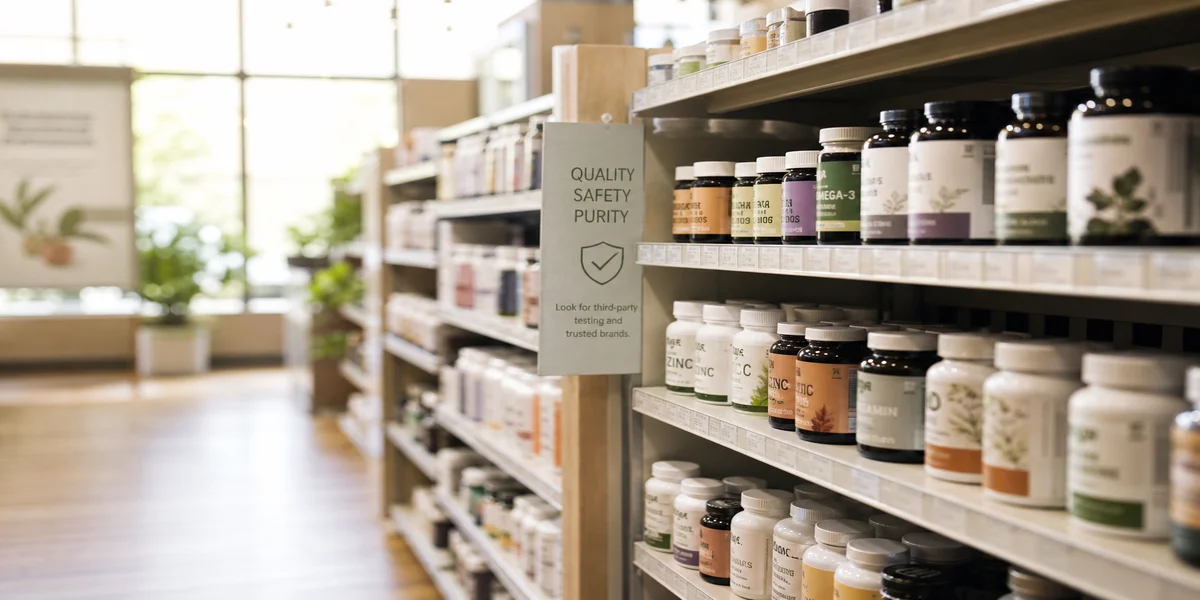
Look for third-party certification. Organizations like USP (United States Pharmacopeia), NSF International, and ConsumerLab test supplements for identity, purity, and potency. A seal from one of these groups is not a guarantee - testing is batch-based, not continuous - but it reduces the probability that what is on the label does not match what is in the bottle.
Be skeptical of weight-loss and bodybuilding supplements. These are the categories where adulteration is most common. If a product promises rapid results with a “natural” or “ancient” framing, that is not evidence of safety. It is a marketing pattern that has been exploited repeatedly.
Know the red flags for adulteration. Products that cause jitters, racing heart, or unexpected mood changes may contain undeclared stimulants. Products that suppress appetite dramatically may contain pharmaceutical ingredients. If something feels wrong, it probably is.
Report problems to MedWatch. The FDA’s adverse event reporting system is at accessdata.fda.gov/scripts/medwatch. If you have a bad reaction to a supplement, file a report. Keep the product and its packaging - the FDA may ask for it. These reports are how the agency builds the evidence it needs to act.
Know the Poison Control number. 1-800-222-1222. If someone has taken a supplement and is experiencing serious symptoms - seizures, loss of consciousness, irregular heartbeat, severe vomiting - call immediately. Do not wait to see if it passes.
What not to take away from this#
The oleander case is not a reason to throw out every supplement in your cabinet. It is a reason to be selective about what goes in there in the first place.
It is also not an indictment of traditional medicine. Tejocote root has legitimate traditional uses - this was not a case of a traditional remedy turning out to be dangerous. It was a case of industrial supply-chain fraud. Someone substituted a cheap toxic plant for the real ingredient and sold it through the same platforms people use to buy toothpaste and phone chargers.
And it is not an argument that “natural” equals “unsafe.” It is an argument that “natural” is not a safety certification. Poison ivy is natural. Oleander is natural. The word on the label means nothing without verification behind it.
The $55 billion supplement industry is not going away. Neither is consumer demand for products that promise better health through natural means. What needs to change is the expectation that the market will police itself. It has demonstrated, repeatedly, that it will not.