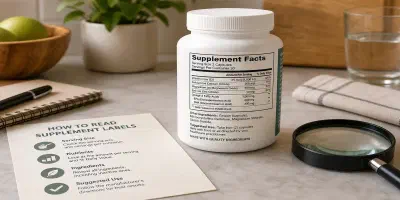
Imagine walking into a pharmacy, picking up a bottle labelled “all natural herbal formula,” and taking it home - only to discover later that you’d been swallowing Viagra, a banned diet drug, and an antidepressant. None of them listed on the label.
That is not a hypothetical. In its most recent test-purchase sweep, the FDA bought close to 50 weight loss and male enhancement products from Amazon and eBay. Every single product from Amazon - 26 out of 26 - contained undeclared active pharmaceutical ingredients. On eBay, 20 of 25 products tested positive. Between the two platforms, 46 of roughly 50 “natural supplements” were secretly spiked with prescription or banned drugs.
These are not obscure products from dark corners of the internet. They are best-sellers, promoted with glossy listings, fake reviews, and promises that sound exactly like what a reasonable person might search for: “natural metabolism booster,” “herbal male vitality,” “clinically tested weight management.”
What They’re Hiding in the Pills#
The FDA’s laboratory analysis identified a recurring cast of hidden ingredients. They fall into three categories, and each comes with risks that are significantly more serious than most consumers realise.
The Viagra Imposters#
Sildenafil and tadalafil - the active ingredients in Viagra and Cialis - are the most common hidden drugs found in male enhancement supplements. The FDA also finds vardenafil (Levitra) and, increasingly, chemical variants of these drugs that have been structurally tweaked to evade detection. Researchers have now identified more than 80 different designer versions of PDE5 inhibitors, and many have never been studied in humans.
The danger is not just that someone takes an erectile dysfunction drug without knowing it. PDE5 inhibitors interact with nitrates - medications commonly prescribed for chest pain and heart conditions - in a way that can cause blood pressure to drop to life-threatening levels. People with diabetes, high blood pressure, high cholesterol, or heart disease are often on nitrates. They are also disproportionately likely to be the people searching for supplements to improve their health.
As Pieter Cohen, a physician at Harvard Medical School who studies supplement adulteration, put it: the untested designer variants could have “unknown or unpredictable side effects” that nobody has ever documented because nobody has ever run a human trial.
The Diet Drug That Was Pulled for Killing People#
In weight loss supplements, the most frequently detected hidden ingredient is sibutramine - an appetite suppressant that the FDA removed from the US market in 2010 after a large clinical trial found it significantly increased the risk of strokes and heart attacks, even in people without prior cardiovascular disease.
Sibutramine was not banned because it didn’t work. It was banned because it worked, and that mechanism - increasing norepinephrine and serotonin levels - also raised blood pressure and heart rate in ways that proved fatal for some users. The products that contain it today are not the remains of old inventory. Manufacturers are actively spiking new supplements with a drug that regulators determined was too dangerous to sell legally.
The Banned Laxative and the Hidden Antidepressant#
Some weight loss products also contain phenolphthalein, a stimulant laxative that the FDA removed from over-the-counter products in 1999 because animal studies linked it to cancer. Others have been found to contain fluoxetine - the generic form of Prozac - an SSRI antidepressant with its own substantial interaction profile. Fluoxetine should not be combined with MAOIs, other serotonergic drugs, or abruptly discontinued. None of this is printed on the supplement bottle.
The Numbers Are Worse Than They Look#
A ten-year analysis published in JAMA examined FDA data from 2007 through 2016 and identified 776 dietary supplements containing unapproved pharmaceutical ingredients. Nearly half were Viagra-like drugs in male enhancement products. The rest were split between weight loss products containing sibutramine or phenolphthalein, muscle-building products spiked with steroids, and pain supplements containing prescription NSAIDs or corticosteroids.
And those numbers are almost certainly an undercount. The FDA does not proactively test dietary supplements before they reach the market. It only tests products reactively - after consumers report problems, after doctors flag unusual symptoms, or after the agency receives complaints from competitors. The 776 products identified over a decade represent only the ones the FDA happened to analyse.
A separate analysis by the Center for Science in the Public Interest (CSPI) found something more troubling: in more than half of the cases where the FDA did find hidden drugs in a supplement, the agency never issued a formal recall. The product often stayed on the market until the manufacturer voluntarily withdrew it or rebranded under a new name.
Why This Keeps Happening#
Dietary supplements in the United States operate under a regulatory framework that surprises most consumers: they do not require FDA approval before they are sold. The agency cannot block a supplement from reaching Amazon’s virtual shelves, eBay’s listings, or a convenience store counter unless it can prove the product is unsafe after the fact. The burden is on the regulator to catch a problem, not on the manufacturer to prove safety.
This creates a predictable pattern. A manufacturer spikes a product with a drug that works - sildenafil for erections, sibutramine for appetite suppression. The product sells. Positive reviews accumulate because the drug IS effective. Consumers reorder. Eventually the product gets flagged, tested, and the FDA issues a warning. The manufacturer closes that listing, opens a new one under a slightly different brand name, and continues. The product names change - Rhino 7, Fifty Shades 6000, Grande X, Papa Zen, Zero Xtreme, mR.7 SUPER 700000 - but the underlying scheme does not.
Amazon and eBay remove flagged products when they are notified, but the whack-a-mole dynamic means relisting is trivial. Neither platform tests supplements before listing them. Neither is required to.
How to Check Your Own Supplements#
The FDA maintains a Health Fraud Product Database that lists nearly 1,000 tainted products identified through laboratory testing. It is searchable by product name, ingredient, or category, and it is the single most useful tool a consumer has for checking whether a supplement they are considering - or already taking - has been flagged.
The database lives at fda.gov/drugs/medication-health-fraud-notifications and is organised by product category: sexual enhancement, weight loss, pain and arthritis, sleep, skin, and bodybuilding. If a product appears on any of those notification lists, stop taking it and consult a healthcare professional - particularly if the hidden ingredient is a corticosteroid or SSRI, which may require supervised discontinuation.
Beyond the database, there are red flags that should make anyone pause:
- “Works within hours.” If a “natural” supplement produces effects that feel pharmaceutical - appetite suppression within a day, erectile effects within an hour - that speed is itself a warning sign.
- Claims of being an “alternative” to a specific prescription drug. Terms like “natural alternative to Viagra” or “herbal Ozempic” often signal adulteration, not innovation.
- Sold exclusively through third-party marketplaces. Products that appear only on Amazon, eBay, or direct-ship websites with no retail presence are harder to trace and have less reputational exposure.
- Vague ingredient lists. If the label says “proprietary blend” without disclosing specific amounts, you cannot verify what you are taking.
What to Tell Your Doctor#
Honesty about supplement use in medical settings is shockingly low. A significant number of people who take supplements do not disclose them to their doctors - sometimes because they assume “natural” means harmless, sometimes because they worry about judgment. This is dangerous in the opposite direction. If you are taking a supplement that secretly contains sildenafil and your doctor prescribes nitrates for chest pain, the interaction could be catastrophic. If you are unknowingly taking sibutramine and your blood pressure spikes, your doctor needs to know why.
The practical advice is straightforward: bring the bottle to your next appointment. Not a description of the product - the actual bottle, with the label and ingredients panel. And if you experience chest pain, shortness of breath, severe headache, or signs of a stroke while taking any supplement, seek immediate medical attention.
The Reform That Would Change This#
Experts who study supplement adulteration, including Pieter Cohen at Harvard, have proposed two structural changes that would fundamentally alter the dynamic:
First, require supplement manufacturers to register products with the FDA before sale. This is not pre-market approval - it is registration, the same basic requirement that applies to food facilities. If a product is found to be adulterated, the FDA could “turn off” its registration, making continued sale illegal and enforceable at the point of sale.
Second, prohibit companies from making health claims - “supports weight loss,” “enhances male performance” - without supporting human clinical data. Most supplement claims today rest on structure-function language that does not require proof of efficacy, which gives spiked products cover: when the drug inside actually works, the consumer has no reason to suspect anything is wrong.
Neither change requires new legislation that would be impossible to pass. Both could be implemented through FDA rulemaking under existing statutory authority.
Bottom Line#
The supplement industry includes many legitimate products and manufacturers. But alongside them runs a parallel market of deliberately adulterated products that exploit the same regulatory gap - no pre-market testing - to sell prescription and banned drugs disguised as natural supplements.
The FDA’s test-purchase results - 26 for 26 on Amazon - make clear that this is not a fringe problem affecting a few unlucky buyers. It is a systemic contamination of the online supplement marketplace, and the current enforcement approach of post-hoc warning letters is not containing it.
Checking the FDA’s database, telling your doctor what you actually take, and recognising the red flags of adulteration are the current best defences. The responsibility should not fall entirely on consumers, but until the regulatory structure changes, it largely does.