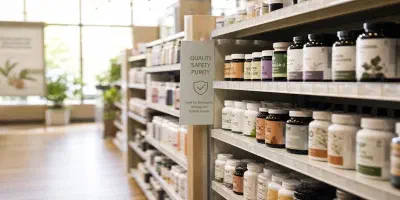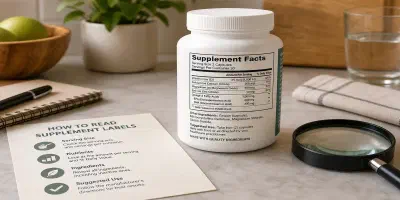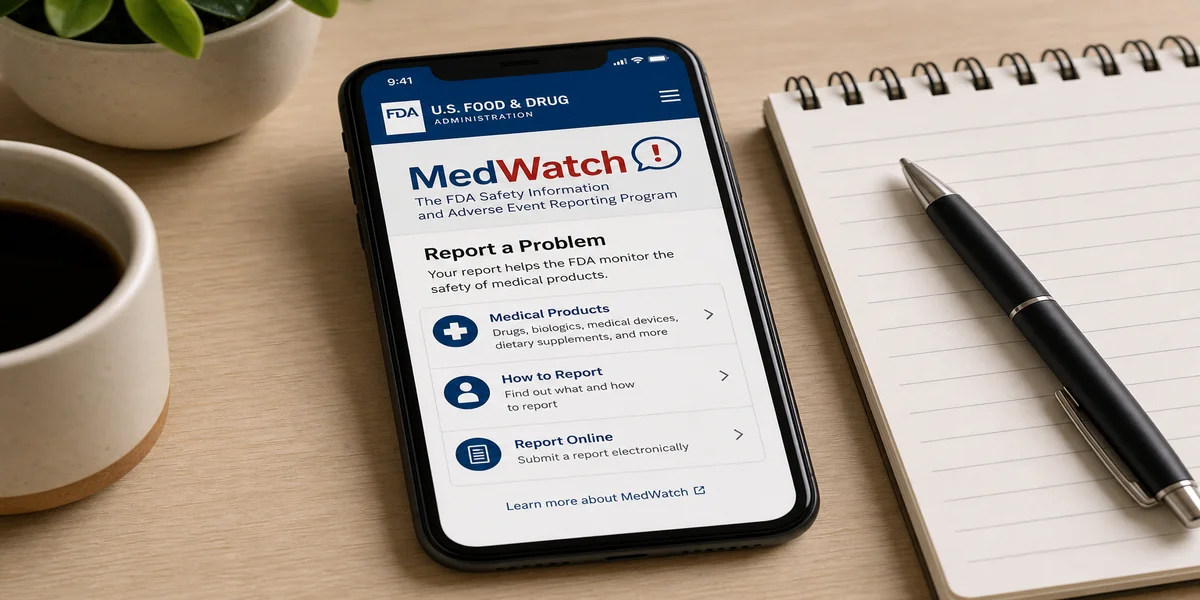
The FDA doesn’t test supplements before they reach the market. It can only act after a product is already on shelves - and only after it has evidence of a problem. That evidence largely comes from one source: reports filed by consumers and healthcare providers through MedWatch.
What MedWatch actually is#
MedWatch is the FDA’s Safety Information and Adverse Event Reporting Program. It launched in 1993 and serves as the front door for anyone , consumer, healthcare provider, or manufacturer , to report problems with FDA-regulated products including drugs, medical devices, and dietary supplements.
The reports feed into the FDA Adverse Event Reporting System, or FAERS, a database that contained more than 24 million reports as of 2023. FAERS is the same system the FDA uses to monitor prescription drug safety. Supplement reports sit alongside drug reports, analyzed by the same safety evaluators using the same methods. The difference is that for drugs, manufacturers are legally required to submit adverse event reports on strict timelines. For supplements, the system depends heavily on voluntary reports from people like you.
A single report rarely triggers action. But when multiple reports describe the same product causing the same kind of harm, patterns emerge. That’s how the FDA identified the yellow oleander contamination in weight-loss supplements. That’s how ephedra was banned in 2004 after tens of thousands of adverse event reports. That’s how the stimulant DMAA was pushed off the market in 2013. The pattern starts with individual reports filed by people who suspected a supplement made them sick.
How post-market surveillance works for supplements#
The regulatory framework for supplements dates to the Dietary Supplement Health and Education Act of 1994, known as DSHEA. Under DSHEA, supplement manufacturers don’t need to prove their products are safe or effective before selling them. The FDA can only intervene after a product is on the market and after it has evidence of harm.
This is fundamentally different from how prescription drugs are regulated. Before a drug reaches patients, the manufacturer must submit extensive safety and efficacy data from clinical trials. The FDA reviews that data and decides whether to approve the drug. For supplements, there is no pre-market review. The product goes on sale first. The evidence of safety , or lack of safety , accumulates afterwards.
The post-market system has three main data streams. First, MedWatch reports from consumers and healthcare providers. Second, reports from poison control centers, which field roughly 2 million calls per year and flag supplement-related cases to the FDA. Third, mandatory reports from supplement manufacturers, who have been required since 2006 to report serious adverse events to the FDA within 15 business days. The mandatory reporting requirement was a step forward, but compliance is inconsistent, and the definition of “serious” sets a high bar , death, hospitalization, disability, birth defects, or medical intervention to prevent one of those outcomes.
The result is a system that sees only a fraction of what’s actually happening. The FDA estimates it receives reports for 1 to 10 percent of supplement adverse events. The rest go unreported because people don’t know MedWatch exists, don’t think to connect their symptoms to a supplement, or assume someone else will report it.
Real cases where MedWatch reports led to FDA action#
Ephedra (2004). The most consequential supplement safety action in FDA history started with adverse event reports. Between 1993 and 2003, the FDA received over 18,000 MedWatch reports linking ephedra-containing supplements to heart attacks, strokes, seizures, and deaths. This included the widely publicized death of Baltimore Orioles pitcher Steve Bechler in 2003 at age 23, which Congress cited during hearings on ephedra regulation.
The reports, combined with a landmark study in the Annals of Internal Medicine that found ephedra products accounted for 64% of supplement adverse events despite representing less than 1% of supplement sales, led the FDA to ban ephedra in April 2004. The ban survived a legal challenge from supplement manufacturer Nutraceutical Corporation when a federal appeals court ruled that the FDA had met its burden of proving significant risk. The ephedra case established that the FDA could remove a supplement from the market when the evidence of harm was sufficient , but it took 11 years of accumulating reports to reach that point.
DMAA (2012-2013). 1,3-dimethylamylamine is a stimulant originally developed as a nasal decongestant in the 1940s. It began appearing in workout and weight-loss supplements around 2006, often labeled as geranium extract. Between 2010 and 2013, the FDA received 86 MedWatch reports of adverse events associated with DMAA-containing products, including five deaths. The reports described cardiac events, hemorrhagic strokes, and psychiatric symptoms in young, previously healthy people.
In April 2013, the FDA issued warning letters to 11 manufacturers, stating that DMAA was not a lawful dietary ingredient and that products containing it were adulterated. The FDA also began seizing products. Most major retailers pulled DMAA supplements from shelves. The ingredient has since reappeared periodically under different names and in products sold online, highlighting a persistent challenge: removing an ingredient from the market requires ongoing enforcement, not a one-time action.
OxyElite Pro (2013). In mid-2013, the Hawaii Department of Health noticed a cluster of acute hepatitis cases with no clear cause. All of the patients had taken OxyElite Pro, a weight-loss supplement. Hawaii public health officials reported the cluster to the FDA, and additional MedWatch reports from other states began arriving. The FDA ultimately received 72 reports of liver injury associated with the product, including cases requiring liver transplantation and one death.
FDA laboratory analysis identified aegeline, a compound from the bael tree, in the reformulated version of OxyElite Pro. Aegeline had never been tested for human safety. The manufacturer recalled the product in November 2013, and the company’s founder later pleaded guilty to criminal charges for introducing an adulterated food into interstate commerce. The OxyElite Pro case highlighted the importance of geographic clustering. The Hawaii public health department spotted the outbreak because it was concentrated on islands. MedWatch reports from across the country confirmed the scope.
Yellow oleander (2024). In 2024, the FDA issued a safety alert after identifying yellow oleander, a toxic plant containing cardiac glycosides, in weight-loss supplements labeled as containing tejocote root. The investigation began with MedWatch reports describing severe nausea, vomiting, dizziness, and cardiac arrhythmias in people taking products from multiple brands, all labeled as tejocote-based supplements. FDA laboratory analysis confirmed that some products contained yellow oleander substituted for tejocote root , either through misidentification of the raw botanical material or deliberate adulteration. The FDA warned consumers to stop using specific products and worked with distributors on recalls.
This case is still unfolding, but it demonstrates how MedWatch reports can flag contamination problems that would have been caught by pre-market testing if pre-market testing existed for supplements. Yellow oleander contains oleandrin, a cardiac glycoside similar to digoxin, which can cause fatal arrhythmias at relatively low doses. Without the MedWatch reports from consumers and clinicians who connected symptoms to a supplement, the substitution might not have been detected for much longer.
How to file a MedWatch report: step by step#
The FDA’s online reporting form is at fda.gov/medwatch. Click “Report a Problem” and select the option for consumers. The process takes about 10 to 15 minutes. Here’s what to expect at each step.
Step 1: Choose the reporting form. For consumers, select Form FDA 3500B. This is a simplified version of the healthcare provider form. It’s designed for people without medical training. Every field that might require medical terminology includes a plain-language explanation.
Step 2: Identify the product. The form asks for the product name as it appears on the label, the manufacturer name, and the lot number. The lot number is printed on the bottle, usually near the expiration date or on the bottom. If you’ve discarded the packaging or can’t find the lot number, provide what you can. Product name plus manufacturer is enough to begin. Partial information is always better than no report.
Step 3: Describe what happened. This is the core of the report. The form asks you to describe the adverse event in your own words. Be specific about timing: when did you start taking the supplement, when did symptoms begin, how long did they last. Describe the symptoms in plain language , “severe stomach pain that started three hours after taking the capsule” is more useful than “GI distress.” Include any medical care you received, any lab results or diagnoses, and whether you recovered fully. If you were taking other medications or supplements at the same time, list all of them. The FDA needs to assess whether the supplement itself caused the problem or whether an interaction was involved.
Step 4: Provide your contact information. This section is voluntary but strongly recommended. If you include your name, phone number, or email, an FDA safety evaluator can follow up for details that might distinguish a useful report from an incomplete one. Your personal information is protected under the Privacy Act. It is not disclosed to the public, and the FDA has data-use agreements and security protocols preventing the release of personally identifiable information from FAERS reports. Publicly released adverse event data is de-identified.
Step 5: Review and submit. Check the information for accuracy and click submit. You’ll receive a confirmation and a tracking number. If you remember additional details later, you can reference the tracking number when providing follow-up information.
You can also report by phone at 1-800-FDA-1088. A staff member will walk you through the same questions. Phone reports take slightly longer but may be easier if you’re not comfortable with online forms. Mail and fax options are also available using downloadable PDF forms from the FDA website. Healthcare providers can submit reports through the same consumer portal or through their electronic health record systems, which increasingly include direct MedWatch submission functionality.
What makes a useful report#
A useful MedWatch report includes: a specific product name and manufacturer, a clear timeline connecting the supplement to the adverse event, a description of the outcome (did you recover fully, were you hospitalized, is there lasting harm), and information about other medications and supplements you were taking. The most useful reports also include lab results or a doctor’s assessment when available. If your doctor told you “this is likely a reaction to supplement X,” include that statement and your doctor’s contact information so the FDA can request records if needed.
Reports that just say “I took a supplement and didn’t feel good” without specifics are hard to act on. Reports that say “I started taking Acme Brand Green Tea Extract, 500 mg daily, on March 1st, and on March 14th I developed jaundice and elevated liver enzymes , my ALT was 450 , and my gastroenterologist ruled out viral hepatitis” are much more actionable.
What happens after you submit a report#
Your report is entered into the FAERS database and undergoes initial processing. FDA staff , typically pharmacists, nurses, or physicians trained in pharmacovigilance , code each report using the Medical Dictionary for Regulatory Activities, a standardized terminology that allows the FDA to search for patterns across millions of reports.
For routine reports, this is largely an automated data-entry step. For reports describing serious or unexpected events, the case may be flagged for closer review. The safety evaluator assesses whether the reported event is consistent with the supplement’s known effects, whether alternative explanations exist (other medications, underlying conditions), and whether similar reports have been filed for the same product.
When enough similar reports accumulate to form a signal , a pattern suggesting a causal relationship , the FDA has several options. It can issue a public safety alert through its website and media channels. It can send a warning letter to the manufacturer demanding corrective action. It can request or negotiate a voluntary recall. In cases involving adulteration or unapproved drug ingredients, it can seize products or seek an injunction. It can refer cases where evidence of intentional fraud or adulteration exists to the Department of Justice for criminal prosecution.
Most individual reports don’t trigger dramatic action. That’s not a failure. The system is designed to detect patterns, not respond to every individual case. Every report you file becomes a data point. Enough data points form a signal. The signal is what triggers action. Without individual reports, there are no signals, and unsafe products remain on the market.
Why underreporting is the system’s biggest weakness#
A 2006 investigation by the Department of Health and Human Services Office of Inspector General found that the FDA received reports for fewer than 1% of all adverse events across all product categories. For dietary supplements, the rate is almost certainly lower.
People don’t report for predictable reasons. They don’t know MedWatch exists. They don’t connect their symptoms to a supplement, especially if the symptoms appear days or weeks after starting it. They assume someone else , the manufacturer, their doctor, the FDA itself , already knows. They think reporting won’t make a difference. They think it will take too long.
The yellow oleander case illustrates the cost of underreporting. Early cases of oleander toxicity appeared in emergency departments as what looked like accidental plant poisonings. No one connected them to a supplement. It took a cluster of geographically concentrated cases and alert clinicians in Hawaii to trigger the investigation. If those early cases had been reported to MedWatch, the substitution might have been identified months earlier.
Bottom line#
Filing a MedWatch report takes about 10 minutes. It’s the most direct way consumers contribute to supplement safety. If you experience a serious side effect, an unexpected reaction, or a suspected drug interaction involving a supplement, go to fda.gov/medwatch or call 1-800-FDA-1088 and report it. Don’t assume someone else will. Don’t assume the FDA already knows. The system runs on the data people provide. When people don’t report, the system runs blind.