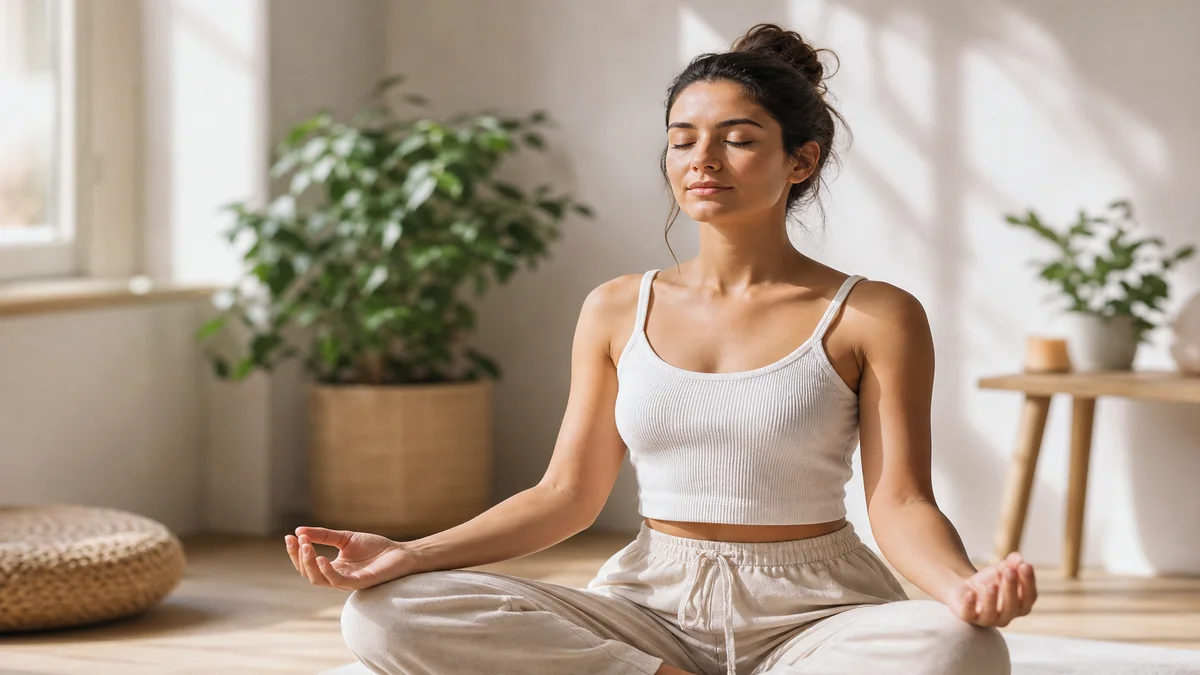
If you’ve ever been told to “just take a deep breath” while your heart was pounding and your thoughts were racing, you already know the gap between advice and reality. Breathing isn’t some magic off-switch for the nervous system - and the idea that it is gets people into trouble, because when it doesn’t work they feel like they’re the problem.
But here’s the thing: there is actual clinical research on this now. Not just yoga tradition and wellness-culture enthusiasm (though there’s plenty of that too), but randomized controlled trials, systematic reviews, and meta-analyses that ask a narrower, more honest question: can structured breathing practices help people manage stress, and if so, how much?
The short answer is yes - modestly. The longer answer is where it gets interesting, and it’s the answer most wellness content skips right past.
What slow breathing does inside your body#
Before we get to the evidence, it helps to know what the mechanism actually is. And the mechanism here is genuinely interesting, not just hand-waving.
Slow, deliberate breathing - particularly when the exhale is longer than the inhale - shifts the body toward what researchers call a parasympathetic-dominant state (the one that handles rest-and-digest, not fight-or-flight). Your heart rate drops a little. Your blood pressure edges down. Your respiratory rate slows. The vagus nerve, which runs from your brainstem down through your chest and abdomen, gets a stronger signal. That nerve is a big part of why your body calms down after a stressor passes.
None of this is new science. The “relaxation response” was first described decades ago, and the NCCIH still defines it today as a physiologic state of slower breathing, lower blood pressure, and reduced heart rate. The question has always been: does deliberately triggering that state through breathwork change how people actually feel day to day?
So yes, the mechanism is plausible. But plausible isn’t the same as proven, and that’s the cliff a lot of breathwork claims drive right off.
What the evidence actually says#
The most useful paper on this topic is a 2023 meta-analysis by Fincham and colleagues, published in Scientific Reports. They pooled data from 12 randomized controlled trials involving 785 adults and asked whether breathwork interventions reduced self-reported stress compared with control conditions.
They found something real but modest: a pooled effect size of g = -0.35 for stress (that’s small-to-medium in plain language), with breathwork groups reporting lower stress than controls. The finding was statistically significant but not earth-shattering - and the authors explicitly warned against letting the hype outpace the evidence.
The same meta-analysis also looked at anxiety symptoms (20 trials) and depressive symptoms (18 trials) and found similar small-to-medium effects: g = -0.32 for anxiety and g = -0.40 for depression. So there’s a signal across all three outcomes. That’s encouraging.
But - and this is the part wellness articles tend to leave out - most of the included studies were rated as moderate risk of bias. Heterogeneity was moderate for both anxiety and depression. And the studies used wildly different breathwork techniques: some tested diaphragmatic breathing, some tested pranayama, some used slow-paced breathing, some used cyclic sighing, some mixed in biofeedback. Lumping them together tells you something about breathwork broadly, but not much about which specific technique matters.
A 2019 systematic review on diaphragmatic breathing specifically, by Hopper and colleagues, could only find three eligible studies. Three. All three suggested stress reductions, but the reviewers couldn’t pool the data because the interventions and outcomes were too different. That’s not nothing - three positive studies is a start - but it’s not the kind of evidence base you build confident recommendations on.
More recently, a 2023 randomized trial by Balban and colleagues compared three five-minute daily breathwork practices (cyclic sighing, box breathing, and cyclic hyperventilation - though that last one is a different conversation) against mindfulness meditation over one month. The breathwork groups, especially cyclic sighing - where you inhale once, then take a second, shorter inhale through the nose before exhaling slowly - showed better mood improvement and a larger drop in respiratory rate than the meditation group. Worth knowing: this was a remote trial with self-reported outcomes, and the breathwork and meditation were both short, daily, guided practices. It tells you something about short-term mood and arousal, not about treating anxiety disorders.
What none of these studies answer is whether breathwork helps people with diagnosed generalized anxiety disorder or panic disorder in a clinically meaningful way. The trials mostly recruited healthy adults or people with elevated but subclinical stress and anxiety. For actual anxiety disorders, the evidence-based therapies are CBT and SSRIs/SNRIs - that’s the AAFP guideline, not just conservative caution. Breathwork could be a useful add-on for some people, but nobody should be told to swap it in for first-line care.
A breathing exercise you can actually do (gently)#
Since the NHS publishes a breathing exercise for stress that’s designed to be safe and not-forced, here’s a version grounded in that approach - not advanced breathwork, not hyperventilation, not retention. Just a few minutes of attention to your breath, on your own terms.
- Find a comfortable position - seated or lying down, somewhere quiet enough that you won’t be interrupted.
- Place one hand on your chest and one on your belly, if that helps with awareness.
- Breathe in slowly through your nose, as deep into your belly as feels comfortable without pushing or straining. The hand on your belly should move more than the one on your chest.
- Breathe out through your mouth - or through your nose, whichever feels more natural - and let the exhale take a little longer than the inhale. Don’t count seconds if it makes you tense. Just aim for a relaxed, unhurried out-breath.
- Do this for three to five minutes. If your mind wanders, just notice and come back to the breath. If you feel worse - more anxious, dizzy, tight-chested - stop. This isn’t an endurance exercise.
That’s it. No advanced protocols, no breath holds, no forced hyperventilation, no promises about what it will do for your panic attacks. Just a gentle way to engage the parasympathetic nervous system that doesn’t ask you to override what your body is telling you.
Who should be careful#
Breathwork is generally low-risk for healthy people - the NCCIH says so. But “generally low-risk” is not the same as risk-free, and there are some groups who should approach it with more caution than most articles acknowledge.
If you have panic disorder or severe anxiety: Relaxation practices can sometimes backfire. Some people report increased anxiety, intrusive thoughts, or a fear of losing control during breathing exercises. That’s not a failure on your part - it’s a known response. If breathing exercises make you feel worse, stop and talk to a mental health professional about other approaches.
If you have PTSD or a trauma history: The NCCIH notes rare reports of relaxation techniques worsening symptoms in people with trauma or abuse histories. Trauma can live in the body in ways that make breath-focused attention destabilizing rather than calming. Work with a trauma-informed therapist, not a YouTube video.
If you have epilepsy or a psychiatric condition: NCCIH specifically flags rare cases where relaxation techniques might trigger or worsen symptoms.
If you have respiratory or cardiac disease: Conditions like COPD, asthma, cardiac arrhythmia, or unexplained shortness of breath mean you should check with a clinician before experimenting with breathwork. Cleveland Clinic notes that COPD can make diaphragm function harder - breathing exercises aren’t automatically safe for everyone with lung conditions.
If you’re pregnant or postpartum: Gentle breathing is commonly used in relaxation, but intense breath holds, hyperventilation, or DIY anxiety treatment during pregnancy and postpartum should be avoided. Anxiety and shortness of breath in this period may need medical evaluation.
If you experience dizziness or fainting: Stop immediately and check in with a doctor before continuing.
For children and teens: Don’t apply adult breathwork evidence to kids. NCCIH says some relaxation techniques may help children with anxiety or pain, but much of the supporting research is low quality.
Where breathwork fits - and where it doesn’t#
Here’s the honest placement: breathwork belongs in the self-management toolkit, somewhere near gentle exercise, good sleep hygiene, and taking a walk when you’re wound up. For a lot of people, a few minutes of deliberate breathing can take the edge off stress and help them feel more settled. That’s a real benefit, and it’s backed by evidence - just not the kind of evidence that justifies calling it a treatment for anxiety disorders.
Persistent anxiety, panic attacks, depression, trauma symptoms, suicidal thoughts, chest pain, or symptoms that interfere with daily life are not a breathwork conversation. They’re a medical-care conversation. The NCCIH, NIMH, and AAFP all agree on this point, and articles that blur it do readers a disservice.
If you want to try breathwork, start gentle, pay attention to how you feel - not just during the exercise but in the hours afterward - and treat it as one small piece of stress management, not a replacement for therapy, medication, or medical evaluation.
Bottom line#
The evidence for breathwork and stress is real but modest. The 2023 meta-analysis found small-to-medium reductions in stress, anxiety, and depressive symptoms across trials that were mostly short and moderate-quality. Individual studies give us reasons to be curious about specific techniques like cyclic sighing and diaphragmatic breathing, but not reasons to be confident about which technique works best for whom.
And the safety picture matters. Breathwork is low-risk for most people - and genuinely risky for some, especially those with trauma histories, panic disorder, epilepsy, or respiratory conditions. If that contradiction makes you uncomfortable, good. It should. Most wellness content smooths it over; this article doesn’t, because readers deserve to know.